Programme in Emerging Infectious Diseases, Duke-NUS Medical School, Singapore.
Bioinformatics Institute, Agency for Science, Technology, and Research, Singapore.
Microbiol Spectr. 2023 Jun 15;11(3):e0348322. doi: 10.1128/spectrum.03483-22. Epub 2023 May 18.
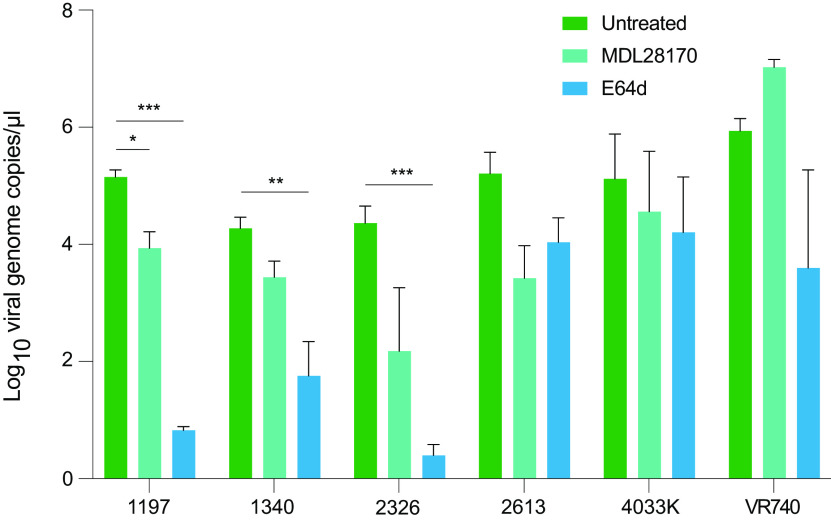
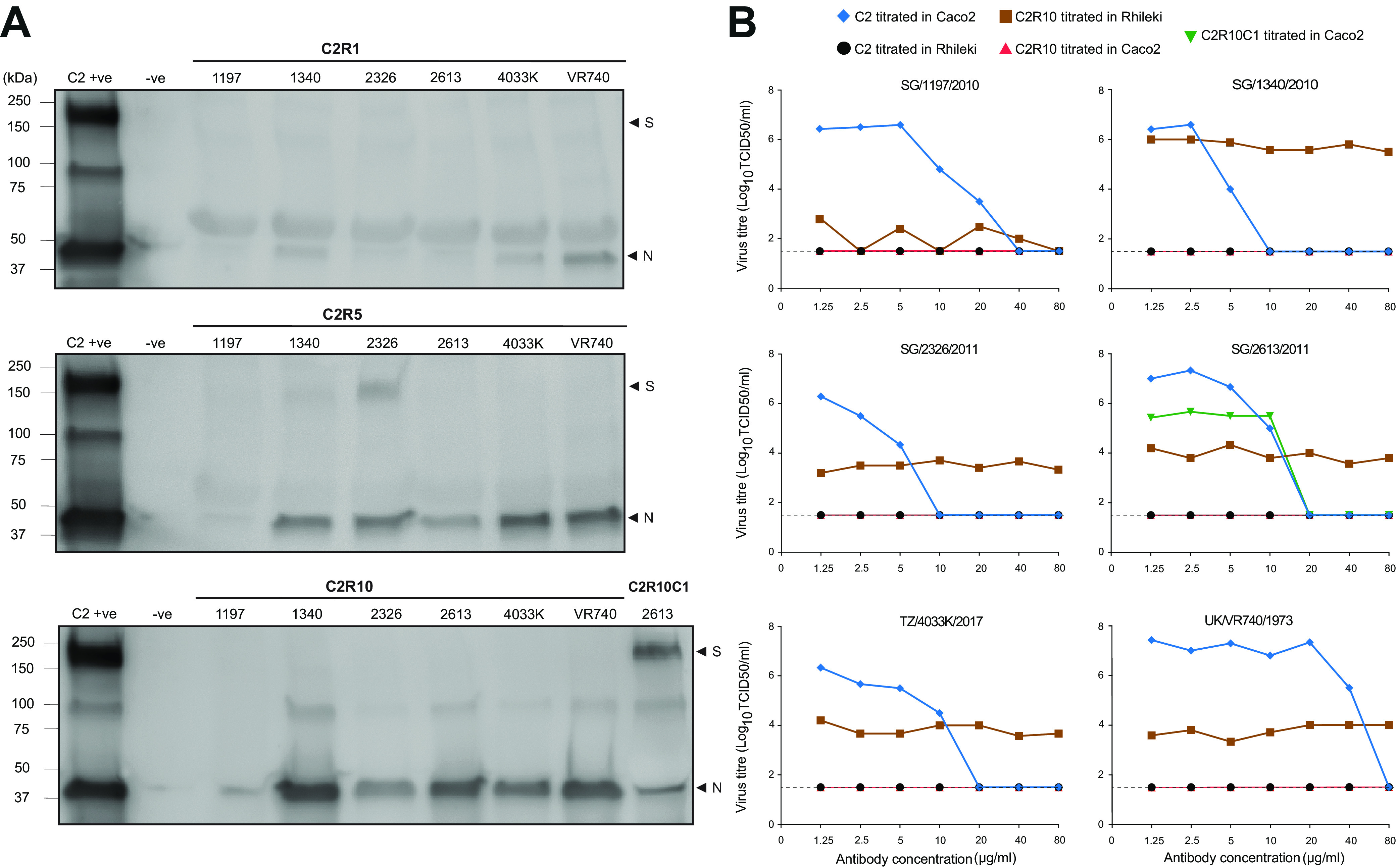
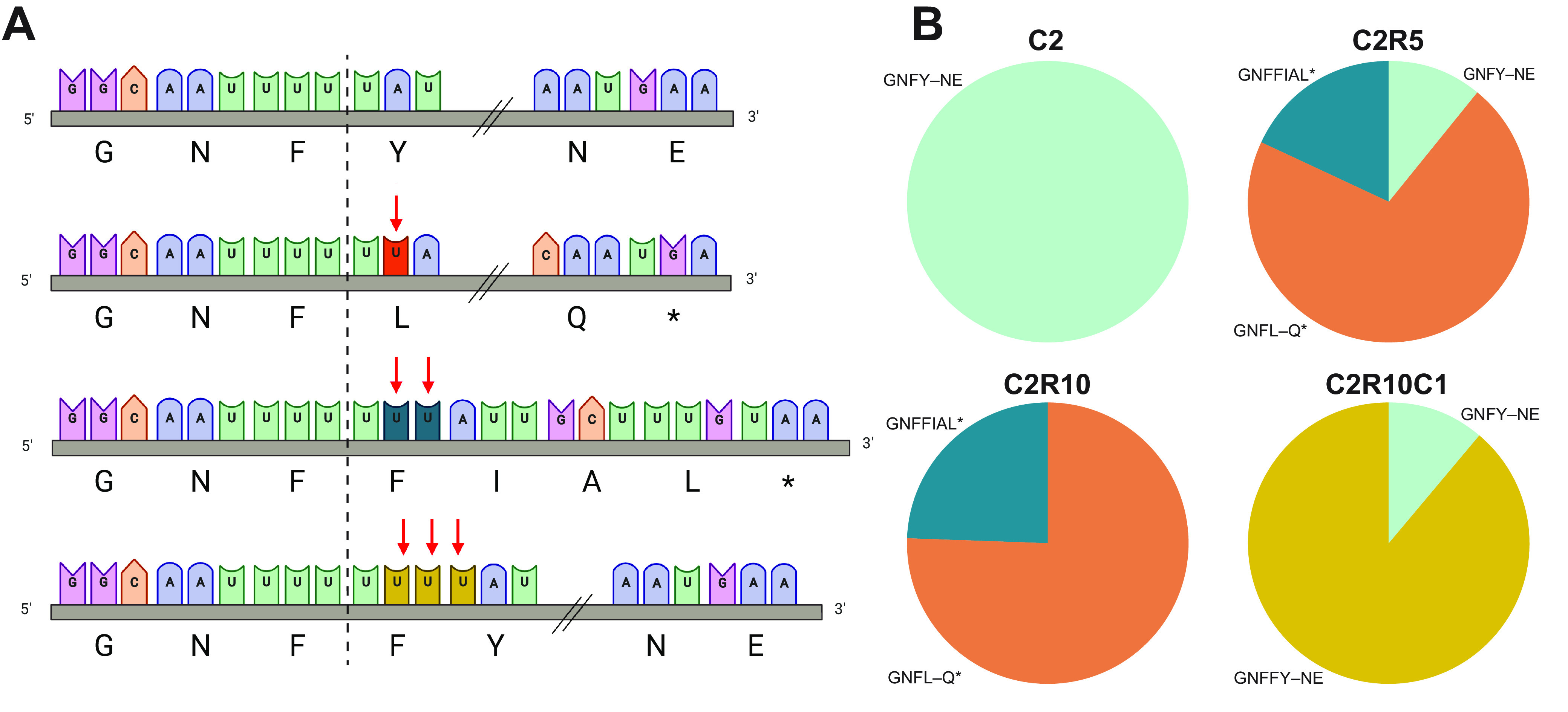
Bats are the reservoir for numerous human pathogens, including coronaviruses. Despite many coronaviruses having descended from bat ancestors, little is known about virus-host interactions and broader evolutionary history involving bats. Studies have largely focused on the zoonotic potential of coronaviruses with few infection experiments conducted in bat cells. To determine genetic changes derived from replication in bat cells and possibly identify potential novel evolutionary pathways for zoonotic virus emergence, we serially passaged six human 229E isolates in a newly established (horseshoe bat) kidney cell line. Here, we observed extensive deletions within the spike and open reading frame 4 (ORF4) genes of five 229E viruses after passaging in bat cells. As a result, spike protein expression and infectivity of human cells was lost in 5 of 6 viruses, but the capability to infect bat cells was maintained. Only viruses that expressed the spike protein could be neutralized by 229E spike-specific antibodies in human cells, whereas there was no neutralizing effect on viruses that did not express the spike protein inoculated on bat cells. However, one isolate acquired an early stop codon, abrogating spike expression but maintaining infection in bat cells. After passaging this isolate in human cells, spike expression was restored due to acquisition of nucleotide insertions among virus subpopulations. Spike-independent infection of human coronavirus 229E may provide an alternative mechanism for viral maintenance in bats that does not rely on the compatibility of viral surface proteins and known cellular entry receptors. Many viruses, including coronaviruses, originated from bats. Yet, we know little about how these viruses switch between hosts and enter human populations. Coronaviruses have succeeded in establishing in humans at least five times, including endemic coronaviruses and the recent severe acute respiratory syndrome coronavirus 2 (SARS-CoV-2). In an approach to identify requirements for host switches, we established a bat cell line and adapted human coronavirus 229E viruses by serial passage. The resulting viruses lost their spike protein but maintained the ability to infect bat cells, but not human cells. Maintenance of 229E viruses in bat cells appears to be independent of a canonical spike receptor match, which in turn might facilitate cross-species transmission in bats.
蝙蝠是许多人类病原体的宿主,包括冠状病毒。尽管许多冠状病毒都源自蝙蝠的祖先,但我们对病毒与宿主的相互作用以及涉及蝙蝠的更广泛进化史知之甚少。研究主要集中在冠状病毒的人畜共患潜力上,很少有在蝙蝠细胞中进行的感染实验。为了确定源自蝙蝠细胞复制的遗传变化,并可能确定人畜共患病病毒出现的潜在新进化途径,我们在新建立的(马蹄蝠)肾细胞系中连续传代了 6 个人源 229E 分离株。在这里,我们观察到在蝙蝠细胞中传代后,五种 229E 病毒的刺突和开放阅读框 4(ORF4)基因中广泛缺失。结果,在 6 种病毒中有 5 种病毒的刺突蛋白表达和对人细胞的感染力丧失,但对蝙蝠细胞的感染能力得以维持。只有表达刺突蛋白的病毒才能被 229E 刺突特异性抗体在人细胞中中和,而接种在蝙蝠细胞上不表达刺突蛋白的病毒则没有中和作用。然而,一个分离株获得了一个早期终止密码子,使刺突蛋白的表达失效,但仍能在蝙蝠细胞中感染。在该分离株在人细胞中传代后,由于病毒亚群之间获得核苷酸插入,刺突蛋白的表达得以恢复。人冠状病毒 229E 的刺突蛋白非依赖性感染可能为病毒在蝙蝠中的维持提供了一种替代机制,而这种机制不依赖于病毒表面蛋白和已知的细胞进入受体的兼容性。许多病毒,包括冠状病毒,起源于蝙蝠。然而,我们对这些病毒如何在宿主之间切换并进入人类群体知之甚少。冠状病毒至少在人类中成功建立了五次,包括地方性冠状病毒和最近的严重急性呼吸系统综合征冠状病毒 2(SARS-CoV-2)。在鉴定宿主切换要求的方法中,我们建立了一种蝙蝠细胞系,并通过连续传代使人类冠状病毒 229E 病毒适应。由此产生的病毒失去了它们的刺突蛋白,但仍能感染蝙蝠细胞,但不能感染人细胞。229E 病毒在蝙蝠细胞中的维持似乎独立于一种规范的刺突受体匹配,这反过来又可能促进蝙蝠中的跨物种传播。