Department of Cell Biology and Anatomy, Hotchkiss Brain Institute, Alberta Children's Hospital Research Institute, University of Calgary, Calgary, Alberta, Canada.
Department of Biological Sciences, University of Calgary, Calgary, Alberta, Canada.
Invest Ophthalmol Vis Sci. 2023 May 1;64(5):17. doi: 10.1167/iovs.64.5.17.
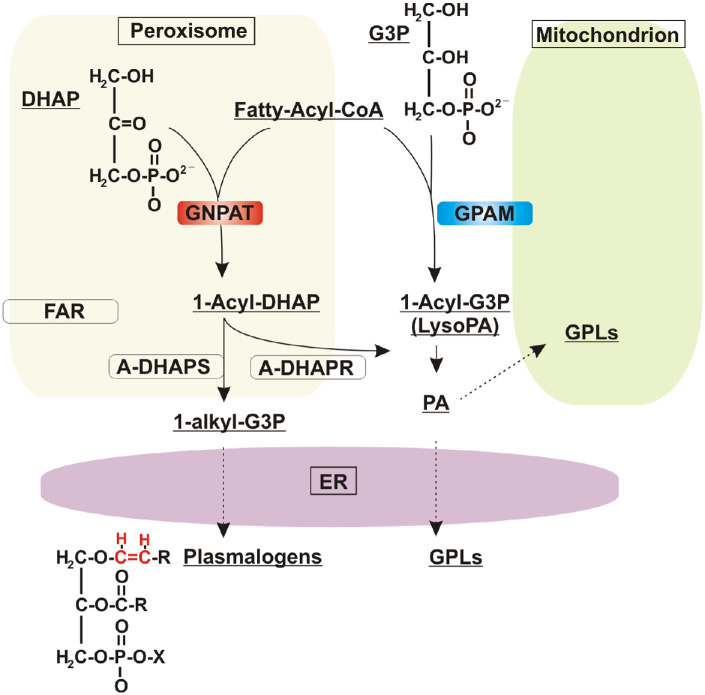
Plasmalogens (Plgs) are highly abundant lipids in the retina, and their deficiency leads to severe abnormalities during eye development. The first acylation step in the synthesis of Plgs is catalyzed by the enzyme glyceronephosphate O-acyltransferase (GNPAT), which is also known as dihydroxyacetone phosphate-acyltransferase (EC 2.3.1.42). GNPAT deficiency produces rhizomelic chondrodysplasia punctata type 2, a genetic disorder associated with developmental ocular defects. Despite the relevance of retinal Plgs, our knowledge of the mechanisms that regulate their synthesis, and the role of GNPAT during eye development is limited.
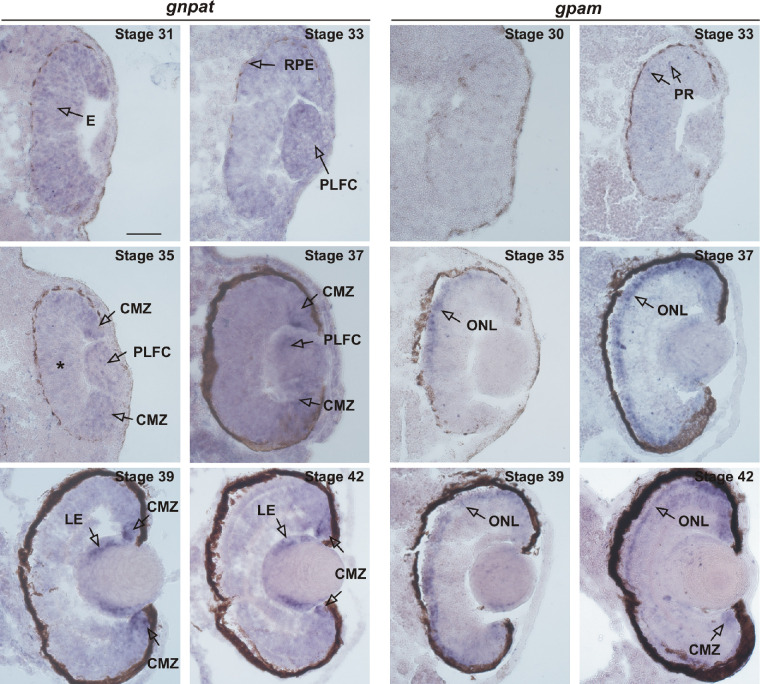
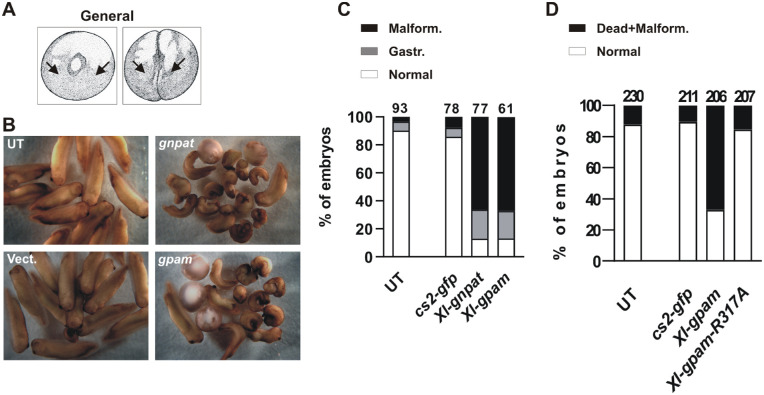
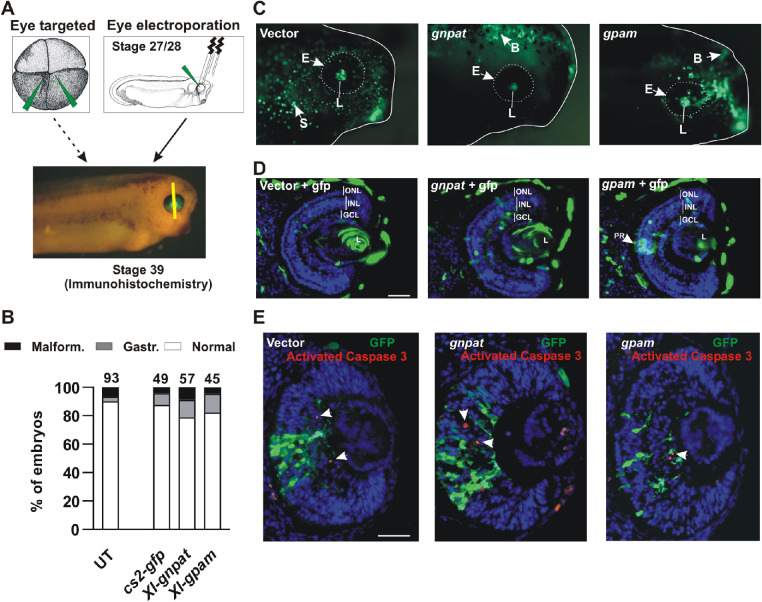
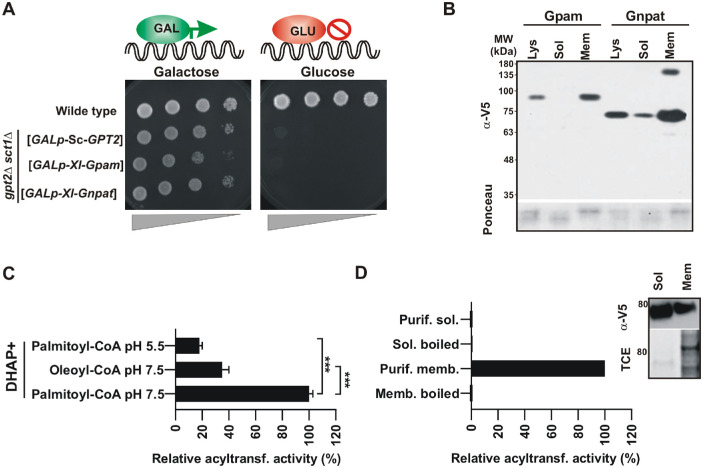
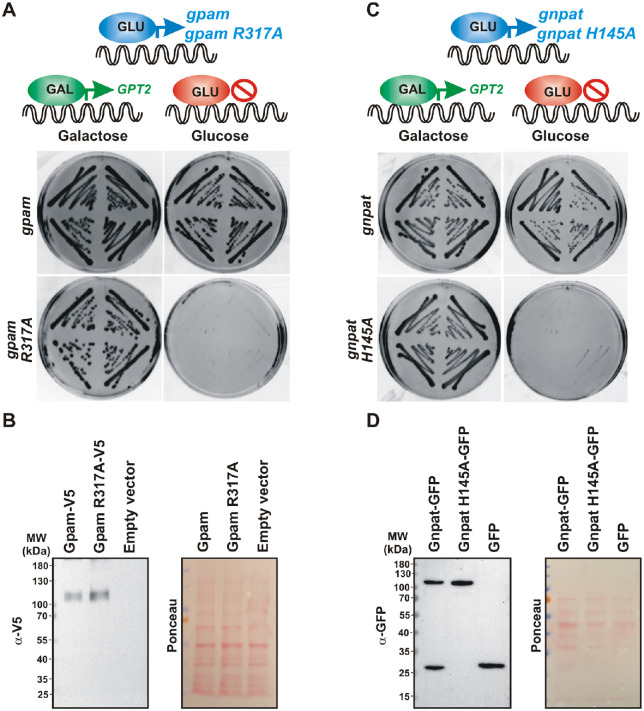
Using the Xenopus laevis model organism, we characterized by in situ hybridization the expression pattern of gnpat and compared it to glycerol 3-phosphate acyltransferase mitochondrial (gpam or gpat1) during eye neurogenesis, lamination, and morphogenesis. The Xenopus Gnpat was biochemically characterized in a heterologous expression system in yeast.
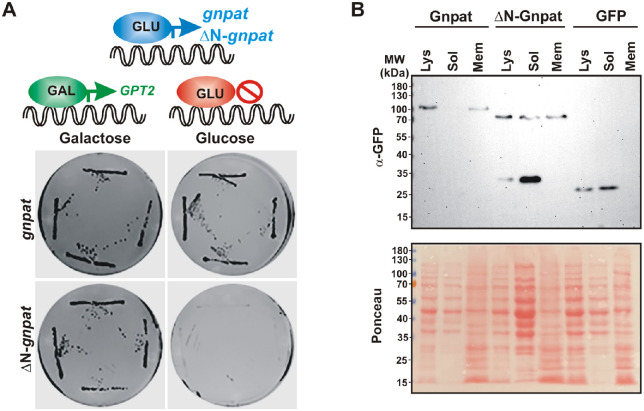
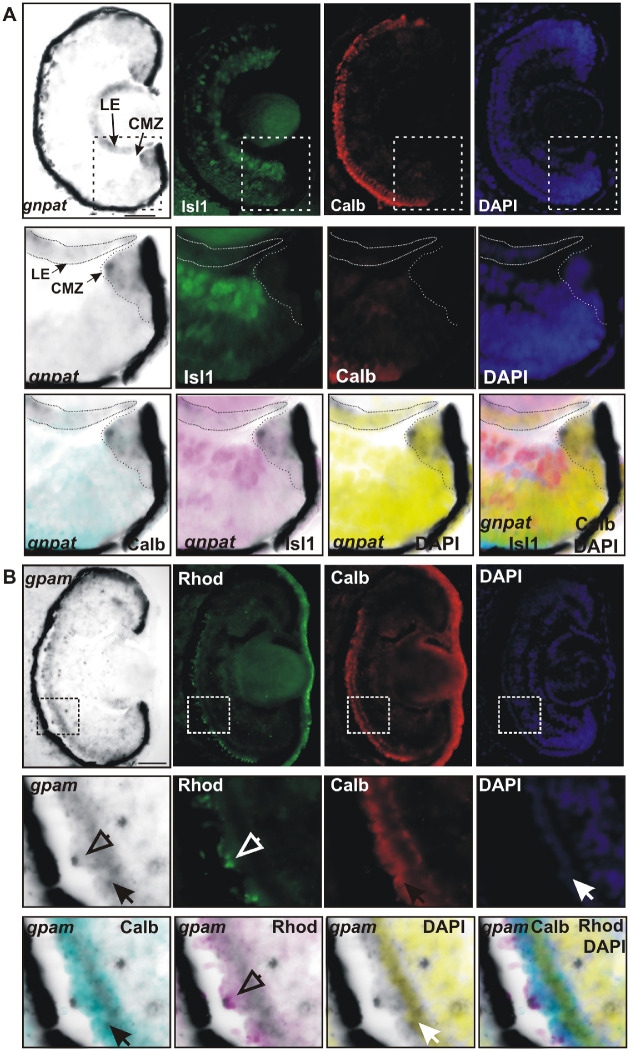
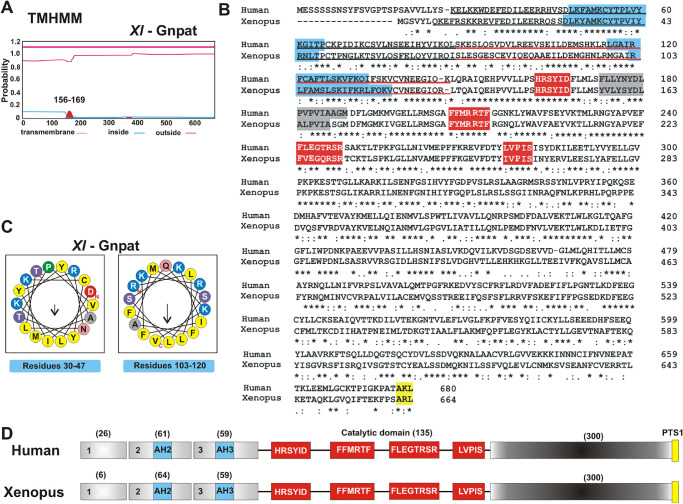
During development, gnpat is expressed in proliferative cells of the retina and lens, and post-embryogenesis in proliferative cells of the ciliary marginal zone and lens epithelium. In contrast, gpam expression is mainly restricted to photoreceptors. Xenopus Gnpat expressed in yeast is present in both soluble and membrane fractions, but only the membrane-bound enzyme displays activity. The amino terminal of Gnpat, conserved in humans, shows lipid binding capacity that is enhanced by phosphatidic acid.
Enzymes involved in the Plgs and glycerophospholipid biosynthetic pathways are differentially expressed during eye morphogenesis. The gnpat expression pattern and the molecular determinants regulating Gnpat activity advance our knowledge of this enzyme, contributing to our understanding of the retinal pathophysiology associated with GNPAT deficiency.
磷脂酰甘油(Plgs)是视网膜中含量非常丰富的脂质,其缺乏会导致眼睛发育过程中出现严重异常。Plgs 合成的第一步酰化反应由甘油磷酸 O-酰基转移酶(GNPAT)催化,该酶也被称为二羟丙酮磷酸酰基转移酶(EC 2.3.1.42)。GNPAT 缺乏会导致 Rhizomelic 软骨发育不良伴点状钙化 2 型,这是一种与眼部发育缺陷相关的遗传疾病。尽管视网膜 Plgs 具有重要意义,但我们对其合成的调控机制以及 GNPAT 在眼睛发育过程中的作用的了解有限。
我们使用非洲爪蟾(Xenopus laevis)模型生物,通过原位杂交技术对 gnpat 的表达模式进行了特征描述,并将其与甘油 3-磷酸酰基转移酶线粒体(gpam 或 gpat1)在眼睛神经发生、分层和形态发生过程中的表达模式进行了比较。我们在酵母的异源表达系统中对非洲爪蟾 Gnpat 进行了生化特性分析。
在发育过程中,gnpat 在视网膜和晶状体的增殖细胞中表达,在胚胎发生后,在睫状缘的增殖细胞和晶状体上皮中表达。相比之下,gpam 的表达主要局限于光感受器。在酵母中表达的非洲爪蟾 Gnpat 存在于可溶性和膜部分,但只有膜结合酶具有活性。在人类中保守的 Gnpat 的氨基末端具有脂质结合能力,并且被磷脂酸增强。
参与 Plgs 和甘油磷脂生物合成途径的酶在眼睛形态发生过程中具有不同的表达模式。Gnpat 的表达模式和调节 Gnpat 活性的分子决定因素增进了我们对该酶的了解,有助于我们理解与 GNPAT 缺乏相关的视网膜病理生理学。