Sun Bangyao, Ni Ming, Liu Haizhou, Liu Di
School of Medical Laboratory, Weifang Medical University, Baotong West Street, Weifang 261053, China.
CAS Key Laboratory of Special Pathogens and Biosafety, Wuhan Institute of Virology, Chinese Academy of Sciences, Xiaohongshan 44#, Wuhan 430000, China.
Virus Evol. 2023 Mar 28;9(1):veac103. doi: 10.1093/ve/veac103. eCollection 2023.
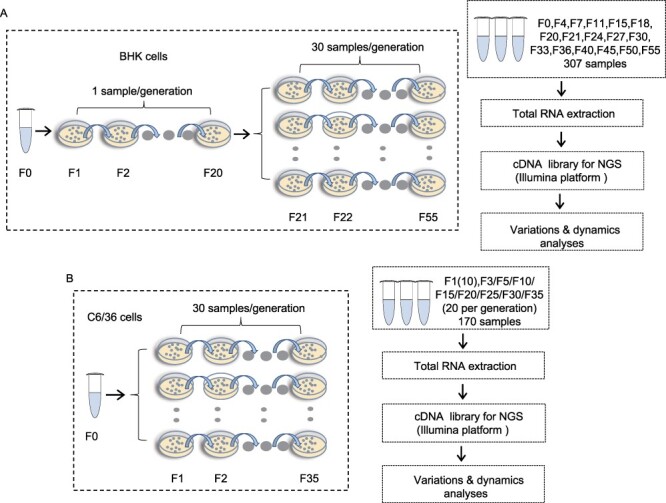
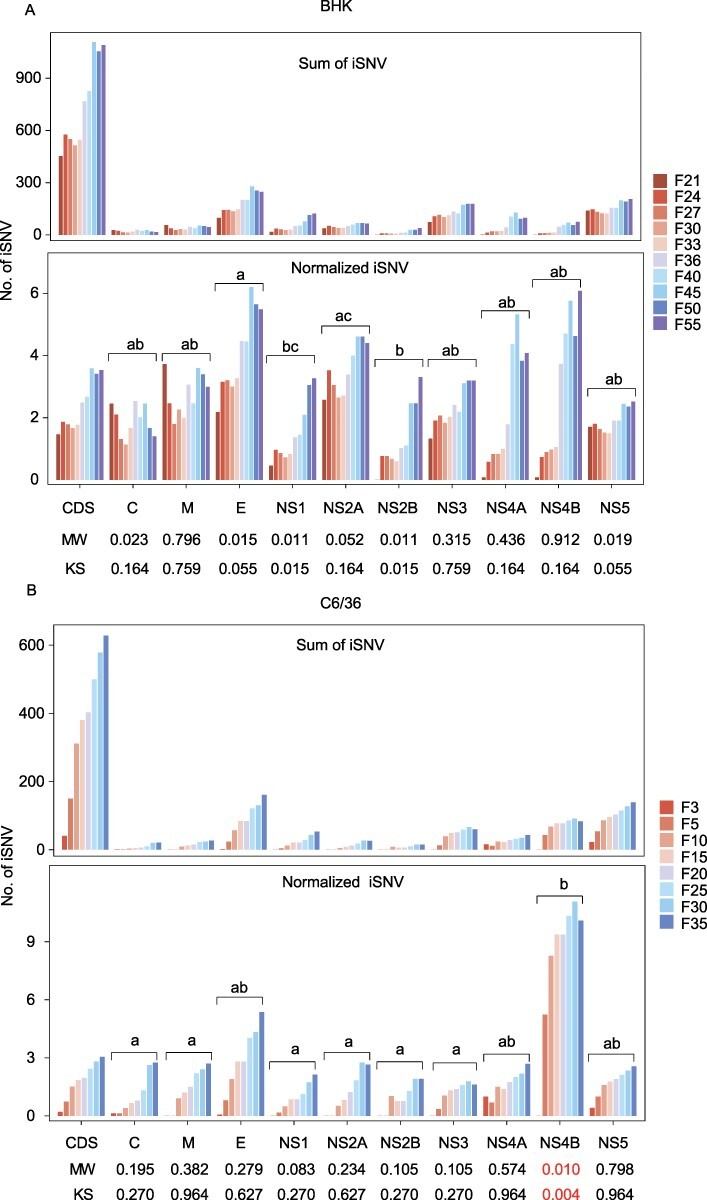
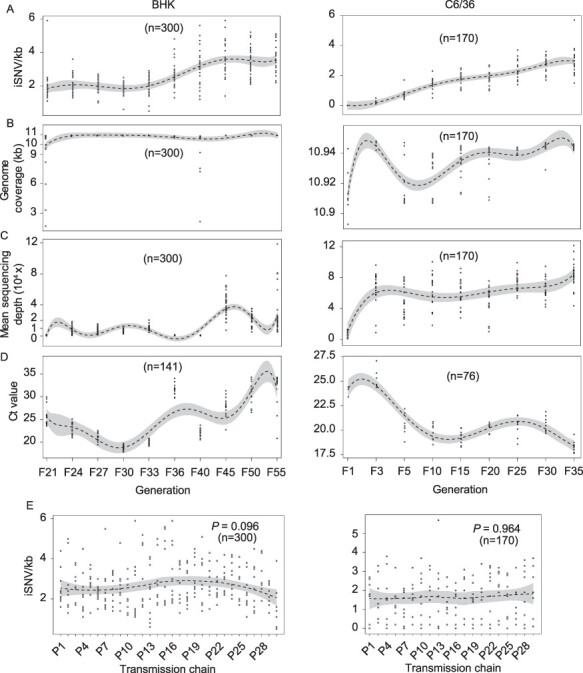
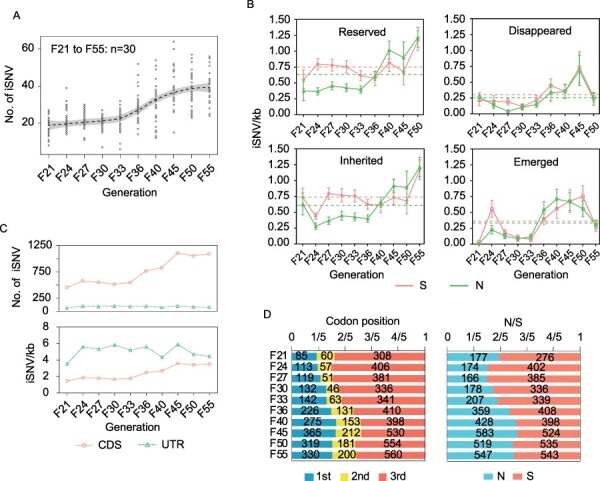
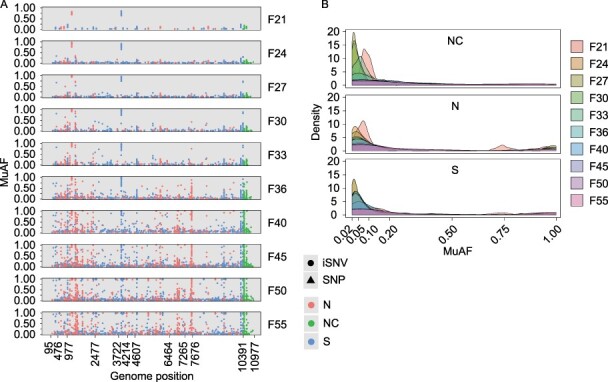
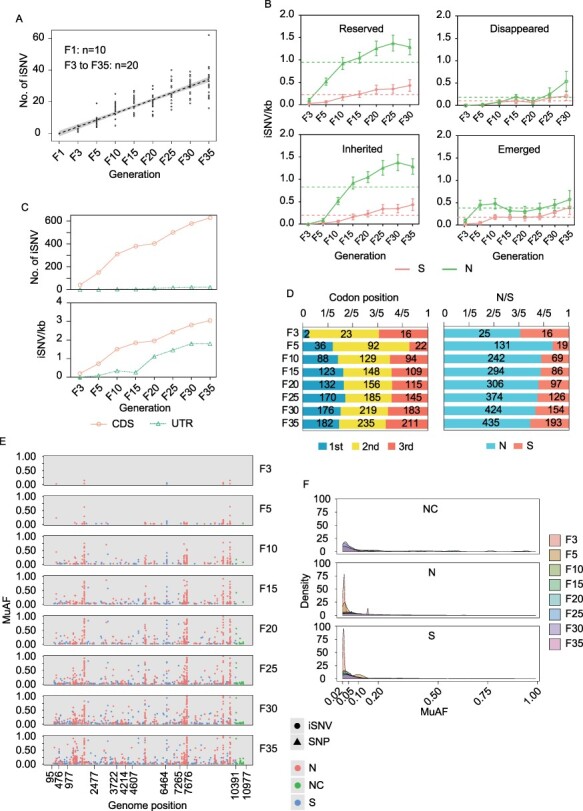
Analyses of viral inter- and intra-host mutations could better guide the prevention and control of infectious diseases. For a long time, studies on viral evolution have focused on viral inter-host variations. Next-generation sequencing has accelerated the investigations of viral intra-host diversity. However, the theoretical basis and dynamic characteristics of viral intra-host mutations remain unknown. Here, using serial passages of the SA14-14-2 vaccine strain of Japanese encephalitis virus (JEV) as the model, the distribution characteristics of 1,788 detected intra-host single-nucleotide variations (iSNVs) and their mutated frequencies from 477 deep-sequenced samples were analyzed. Our results revealed that in adaptive (baby hamster kidney (BHK)) cells, JEV is under a nearly neutral selection pressure, and both non-synonymous and synonymous mutations represent an S-shaped growth trend over time. A higher positive selection pressure was observed in the nonadaptive (C6/36) cells, and logarithmic growth in non-synonymous iSNVs and linear growth in synonymous iSNVs were observed over time. Moreover, the mutation rates of the NS4B protein and the untranslated region (UTR) of the JEV are significantly different between BHK and C6/36 cells, suggesting that viral selection pressure is regulated by different cellular environments. In addition, no significant difference was detected in the distribution of mutated frequencies of iSNVs between BHK and C6/36 cells.
对病毒宿主间和宿主体内突变的分析可以更好地指导传染病的预防和控制。长期以来,病毒进化研究主要集中在病毒宿主间的变异上。新一代测序技术加速了对病毒宿主体内多样性的研究。然而,病毒宿主体内突变的理论基础和动态特征仍然未知。在此,以日本脑炎病毒(JEV)SA14-14-2疫苗株的连续传代作为模型,分析了从477个深度测序样本中检测到的1788个宿主体内单核苷酸变异(iSNV)的分布特征及其突变频率。我们的结果显示,在适应性(幼仓鼠肾(BHK))细胞中,JEV处于近乎中性的选择压力下,非同义突变和同义突变随时间均呈现S形增长趋势。在非适应性(C6/36)细胞中观察到更高的正选择压力,随着时间的推移,非同义iSNV呈对数增长,同义iSNV呈线性增长。此外,JEV的NS4B蛋白和非编码区(UTR)在BHK和C6/36细胞中的突变率存在显著差异,表明病毒选择压力受不同细胞环境的调节。此外,BHK和C6/36细胞之间iSNV突变频率的分布未检测到显著差异。