Big Data Institute, Nuffield Department of Medicine, University of Oxford, Old Road Campus, Oxford OX3 7LF, UK.
Department of Zoology, University of Oxford, Oxford OX1 3SZ, UK.
Science. 2021 Apr 16;372(6539). doi: 10.1126/science.abg0821. Epub 2021 Mar 9.
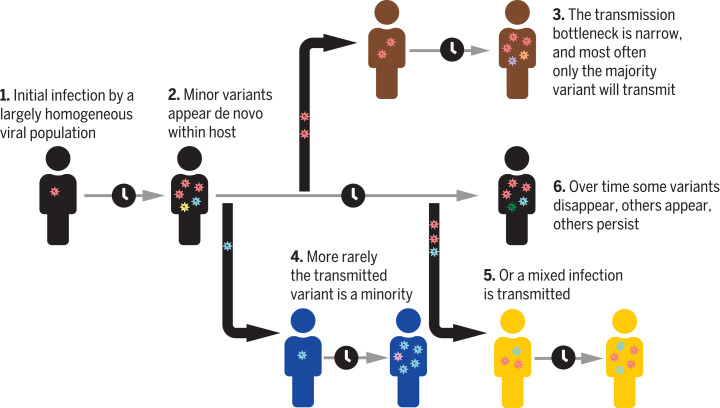
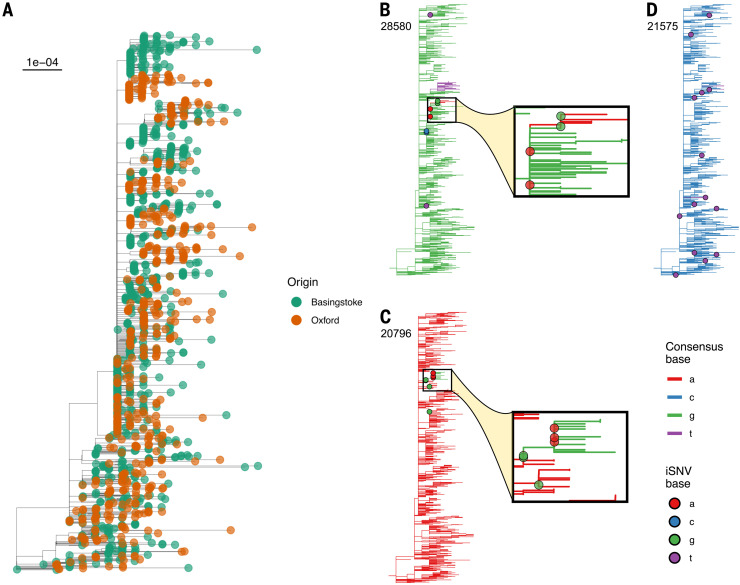
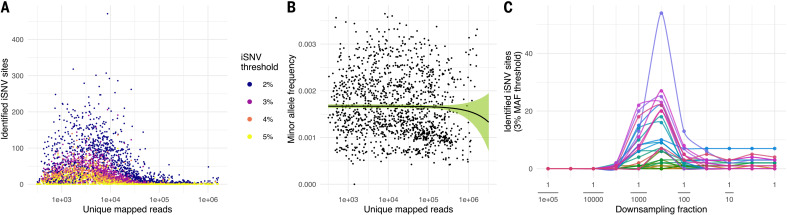
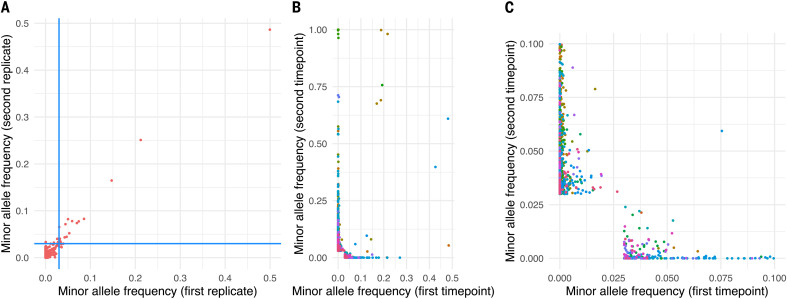
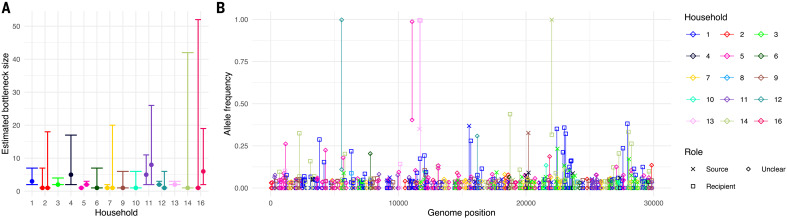
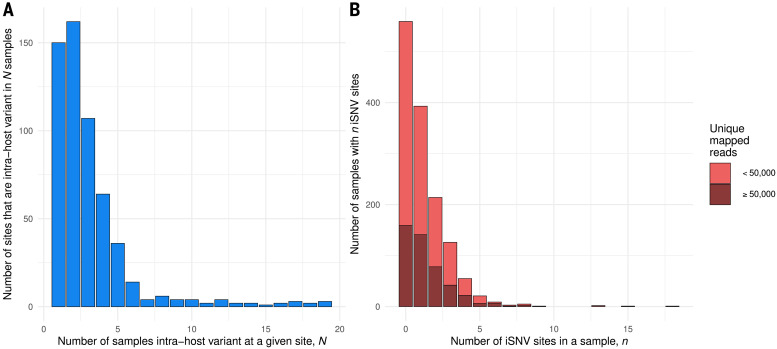
Extensive global sampling and sequencing of the pandemic virus severe acute respiratory syndrome coronavirus 2 (SARS-CoV-2) have enabled researchers to monitor its spread and to identify concerning new variants. Two important determinants of variant spread are how frequently they arise within individuals and how likely they are to be transmitted. To characterize within-host diversity and transmission, we deep-sequenced 1313 clinical samples from the United Kingdom. SARS-CoV-2 infections are characterized by low levels of within-host diversity when viral loads are high and by a narrow bottleneck at transmission. Most variants are either lost or occasionally fixed at the point of transmission, with minimal persistence of shared diversity, patterns that are readily observable on the phylogenetic tree. Our results suggest that transmission-enhancing and/or immune-escape SARS-CoV-2 variants are likely to arise infrequently but could spread rapidly if successfully transmitted.
对大流行病毒严重急性呼吸综合征冠状病毒 2(SARS-CoV-2)的广泛全球采样和测序使研究人员能够监测其传播并发现令人关注的新变体。变体传播的两个重要决定因素是它们在个体内部出现的频率以及它们传播的可能性。为了描述宿主内的多样性和传播,我们对来自英国的 1313 个临床样本进行了深度测序。当病毒载量较高时,SARS-CoV-2 感染的宿主内多样性水平较低,在传播时出现狭窄的瓶颈。大多数变体要么在传播点丢失,要么偶尔固定,共享多样性的持续时间极短,这些模式在系统发育树上很容易观察到。我们的结果表明,传播增强和/或免疫逃逸的 SARS-CoV-2 变体不太可能经常出现,但如果成功传播,可能会迅速传播。