Lopopolo Alessandro, van den Bosch Antal, Petersson Karl-Magnus, Willems Roel M
Department of Psychology, University of Potsdam, Germany.
Center for Language Studies, Radboud University, Nijmegen, Netherlands.
Neurobiol Lang (Camb). 2021 Feb 1;2(1):152-175. doi: 10.1162/nol_a_00029. eCollection 2021.
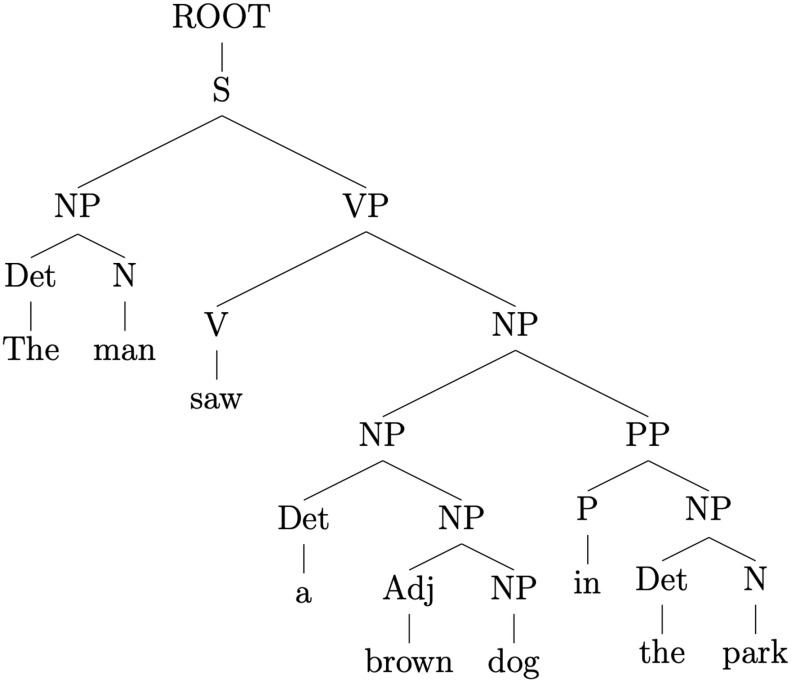
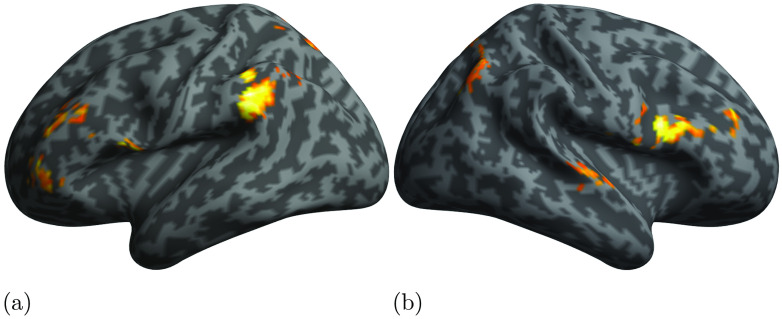
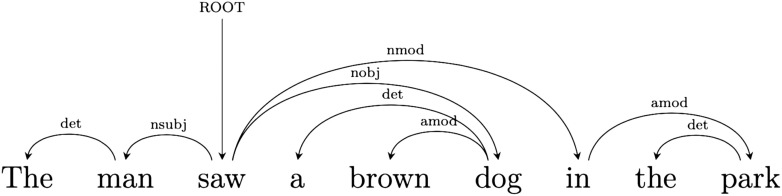
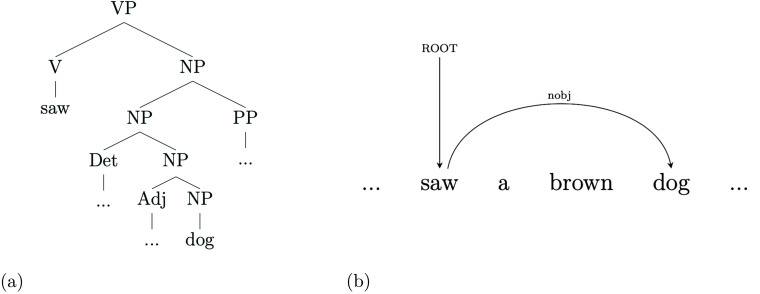
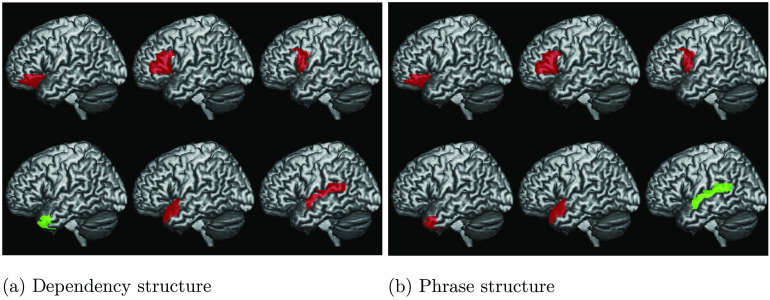
Finding the structure of a sentence-the way its words hold together to convey meaning-is a fundamental step in language comprehension. Several brain regions, including the left inferior frontal gyrus, the left posterior superior temporal gyrus, and the left anterior temporal pole, are supposed to support this operation. The exact role of these areas is nonetheless still debated. In this paper we investigate the hypothesis that different brain regions could be sensitive to different kinds of syntactic computations. We compare the fit of phrase-structure and dependency structure descriptors to activity in brain areas using fMRI. Our results show a division between areas with regard to the type of structure computed, with the left anterior temporal pole and left inferior frontal gyrus favouring dependency structures and left posterior superior temporal gyrus favouring phrase structures.
找出句子的结构——即其词语组合在一起以传达意义的方式——是语言理解的一个基本步骤。包括左下额回、左后颞上回和左前颞极在内的几个脑区被认为支持这一操作。然而,这些区域的确切作用仍存在争议。在本文中,我们研究了不同脑区可能对不同类型的句法计算敏感这一假设。我们使用功能磁共振成像(fMRI)比较了短语结构和依存结构描述符与脑区活动的拟合情况。我们的结果显示,不同脑区在计算的结构类型方面存在分工,左前颞极和左下额回更倾向于依存结构,而左后颞上回更倾向于短语结构。