Department of Linguistics, New York University, New York, NY 10003, USA.
Brain Lang. 2012 Feb;120(2):163-73. doi: 10.1016/j.bandl.2010.04.002. Epub 2010 May 15.
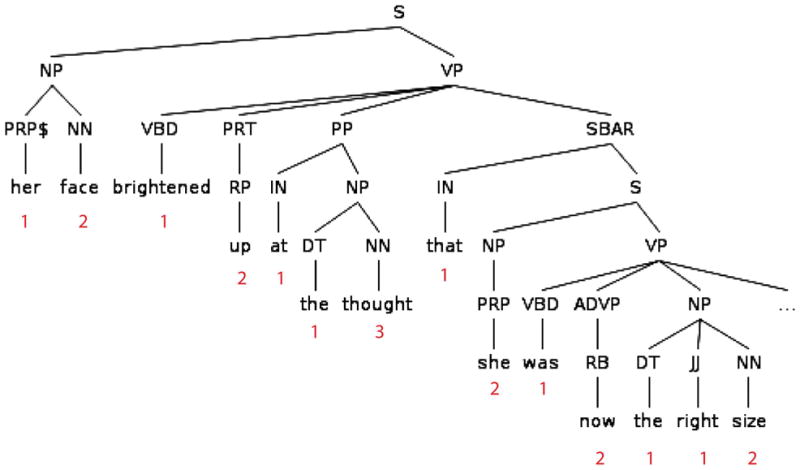
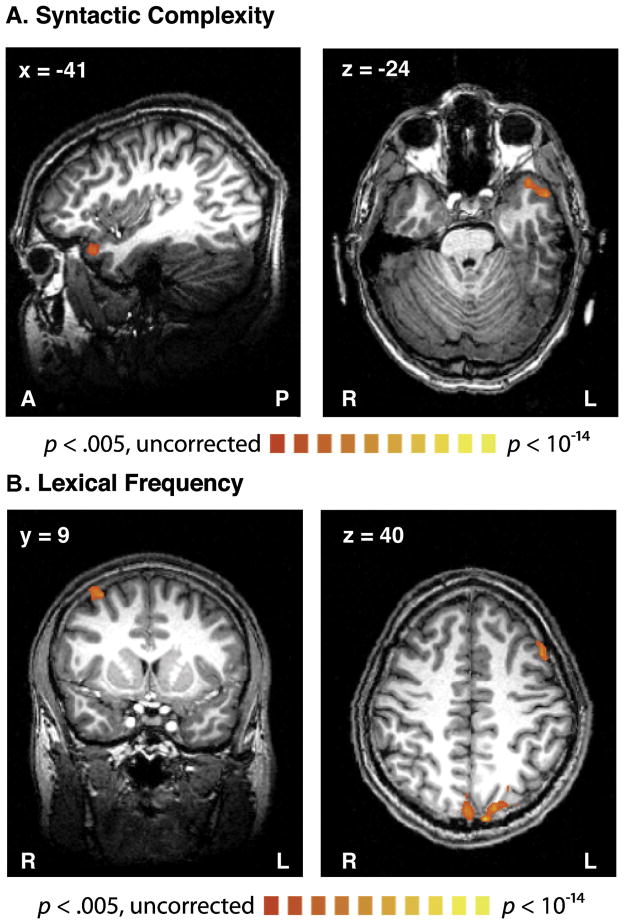
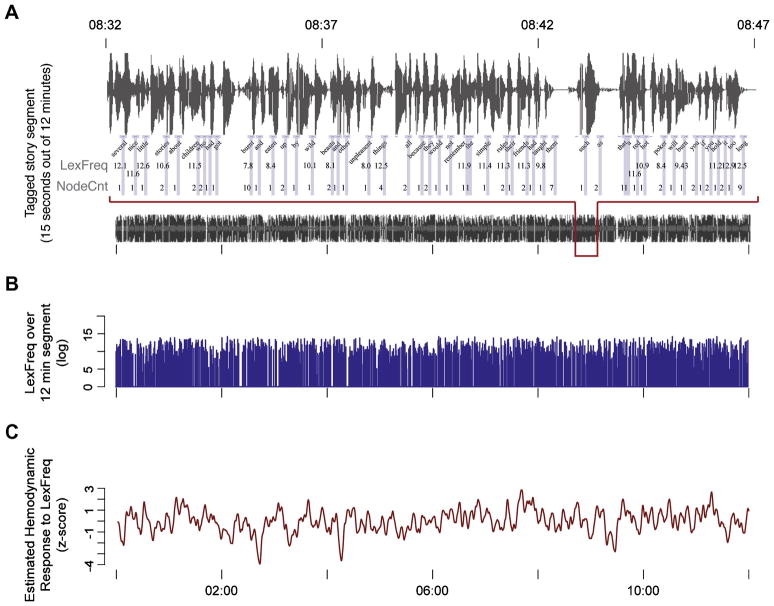
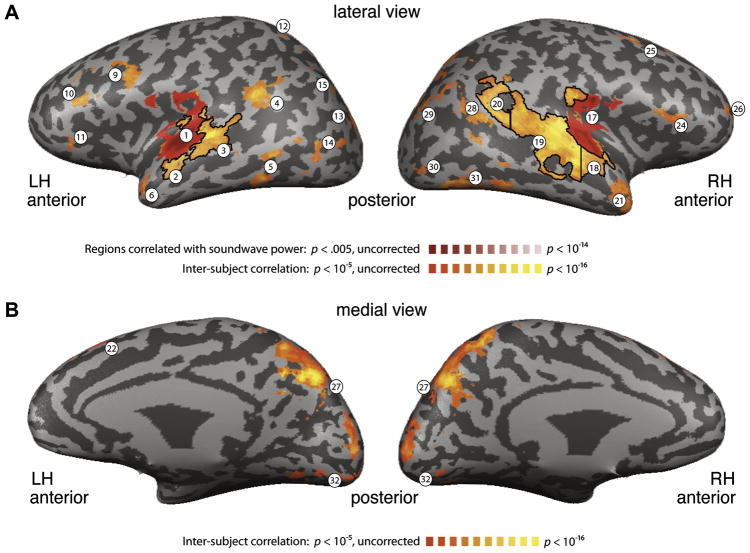
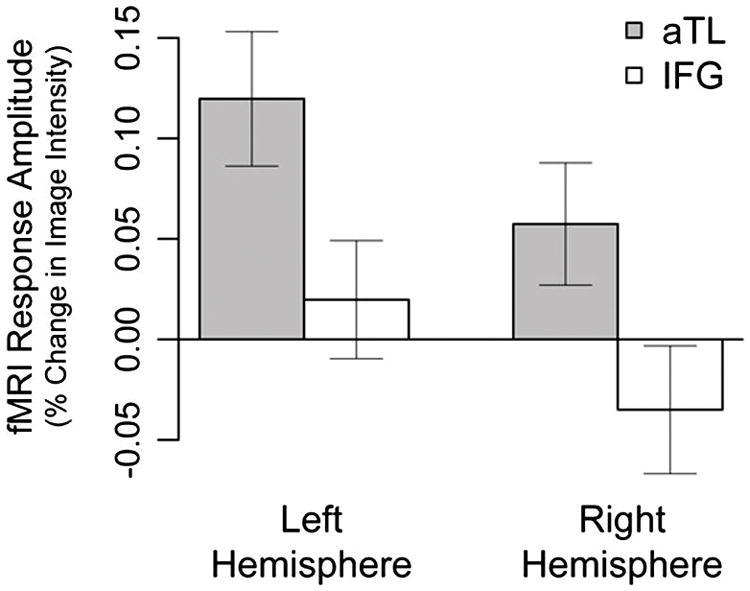
The neural basis of syntax is a matter of substantial debate. In particular, the inferior frontal gyrus (IFG), or Broca's area, has been prominently linked to syntactic processing, but the anterior temporal lobe has been reported to be activated instead of IFG when manipulating the presence of syntactic structure. These findings are difficult to reconcile because they rely on different laboratory tasks which tap into distinct computations, and may only indirectly relate to natural sentence processing. Here we assessed neural correlates of syntactic structure building in natural language comprehension, free from artificial task demands. Subjects passively listened to Alice in Wonderland during functional magnetic resonance imaging and we correlated brain activity with a word-by-word measure of the amount syntactic structure analyzed. Syntactic structure building correlated with activity in the left anterior temporal lobe, but there was no evidence for a correlation between syntactic structure building and activity in inferior frontal areas. Our results suggest that the anterior temporal lobe computes syntactic structure under natural conditions.
语法的神经基础是一个有争议的问题。特别是,下额叶(IFG)或布罗卡区与句法处理密切相关,但当操纵句法结构的存在时,已经报道了前颞叶而不是 IFG 被激活。这些发现很难调和,因为它们依赖于不同的实验室任务,这些任务涉及到不同的计算,并且可能只是间接地与自然句子处理有关。在这里,我们评估了自然语言理解中句法结构构建的神经相关性,而不受人为任务要求的影响。被试在功能磁共振成像期间被动地听《爱丽丝梦游仙境》,我们将大脑活动与句法结构分析量的逐字测量相关联。句法结构的构建与左前颞叶的活动相关,但没有证据表明句法结构的构建与下额叶区域的活动之间存在相关性。我们的结果表明,在前颞叶在自然条件下计算句法结构。