Vasanthi Suraj S, Rao Nikhil S, Samidurai Manikandan, Massey Nyzil, Meyer Christina, Gage Meghan, Kharate Mihir, Almanza Aida, Wachter Logan, Mafuta Candide, Trevino Lily, Carlo Adriana M, Bryant Elijah, Corson Brooke E, Wohlgemuth Morgan, Ostrander Morgan, Wang Chong, Thippeswamy Thimmasettappa
Iowa State University.
Res Sq. 2023 May 8:rs.3.rs-2883247. doi: 10.21203/rs.3.rs-2883247/v1.
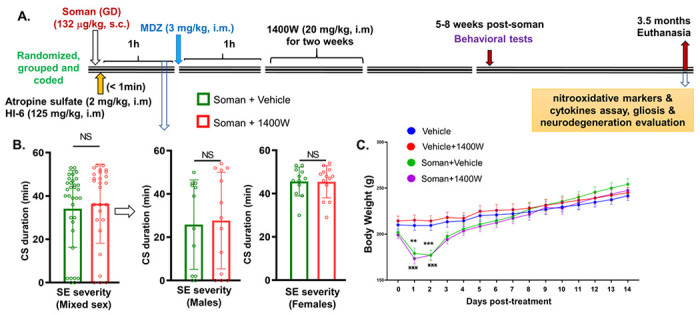
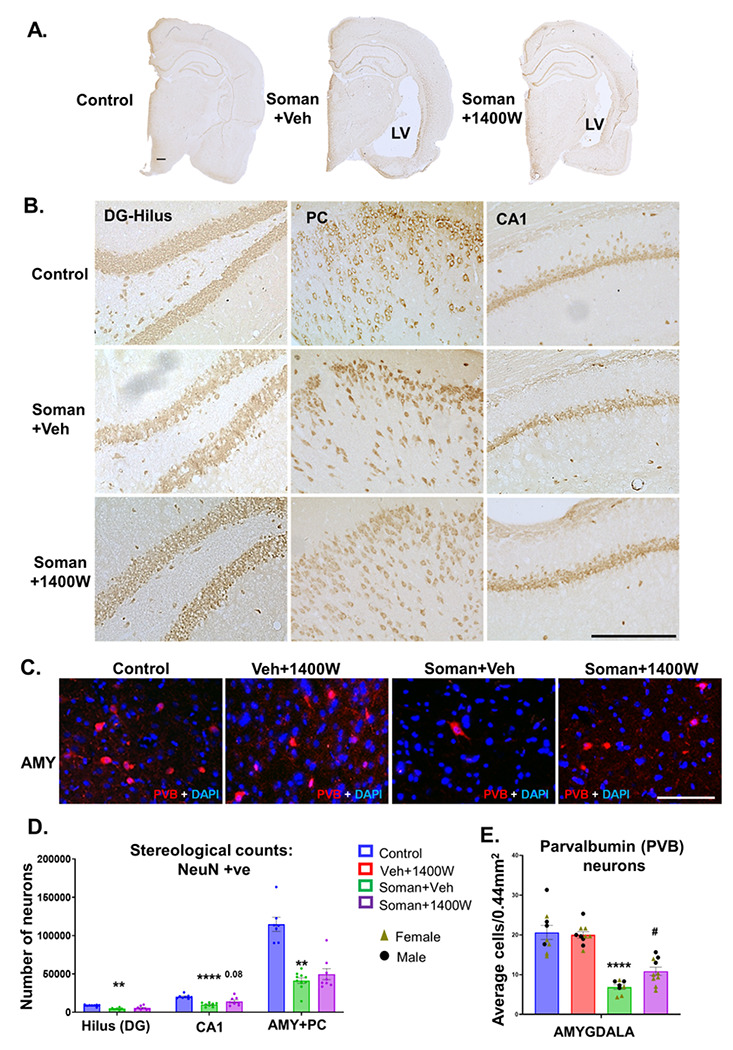
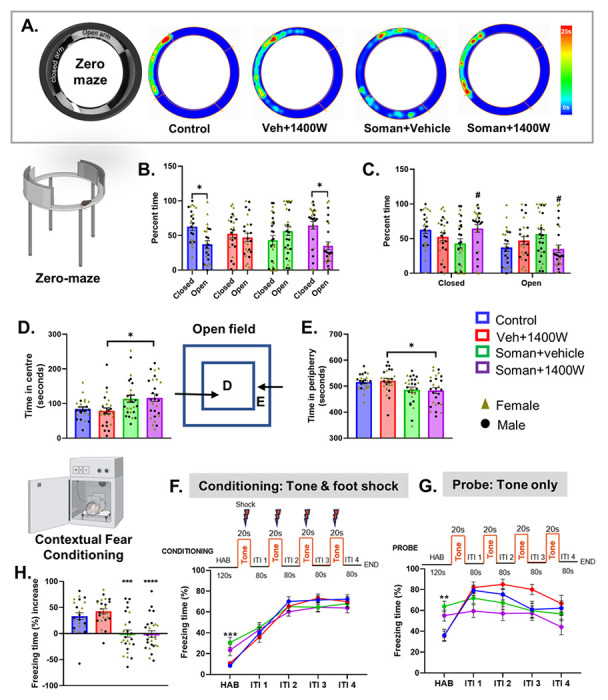
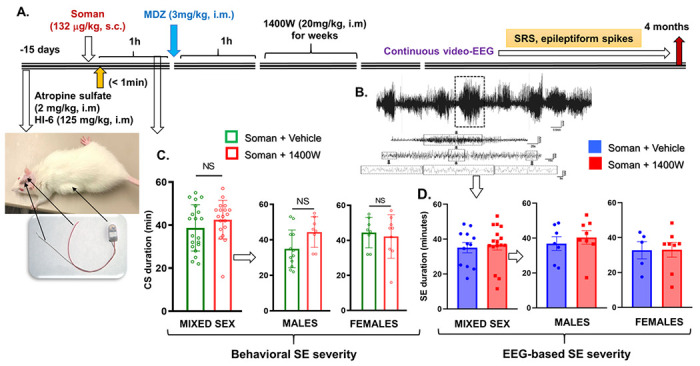
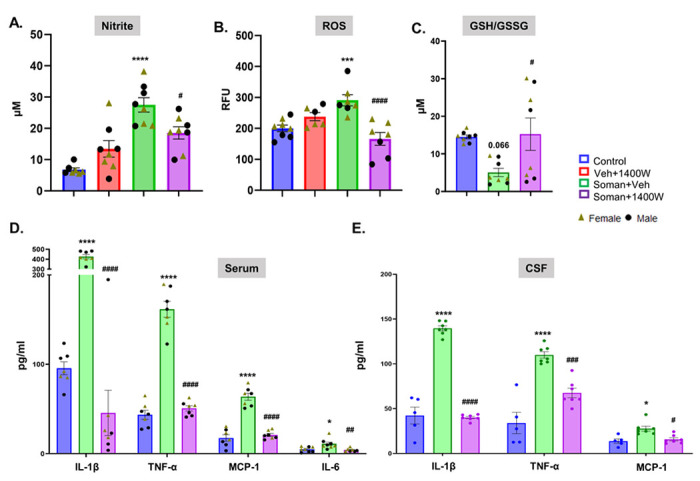
Acute exposure to seizurogenic organophosphate (OP) nerve agents (OPNA) such as diisopropylfluorophosphate (DFP) or soman (GD), at high concentrations, induce immediate (SE), reactive gliosis, neurodegeneration, and epileptogenesis as a consequence. Medical countermeasures (MCMs- atropine, oximes, benzodiazepines), if administered in < 20 minutes of OPNA exposure, can control acute symptoms and mortality. However, MCMs alone are inadequate to prevent OPNA-induced brain injury and behavioral dysfunction in survivors. We have previously shown that OPNA exposure-induced SE increases the production of inducible nitric oxide synthase (iNOS) in glial cells in both short- and long- terms. Treating with a water soluble and highly selective iNOS inhibitor, 1400W, for three days significantly reduced OPNA-induced brain changes in those animals that had mild-moderate SE in the rat DFP model. However, such mitigating effects and the mechanisms of 1400W are unknown in a highly volatile nerve agent GD exposure. Mixed-sex cohort of adult Sprague Dawley rats were exposed to GD (132µg/kg, s.c.) and immediately treated with atropine (2mg/kg, i.m) and HI-6 (125mg/kg, i.m.). Severity of seizures were quantified for an hour and treated with midazolam (3mg/kg, i.m.). An hour post-midazolam, 1400W (20mg/kg, i.m.) or vehicle was administered daily for two weeks. After behavioral testing and EEG acquisition, animals were euthanized at 3.5 months post-GD. Brains were processed for neuroinflammatory and neurodegeneration markers. Serum and CSF were used for nitrooxidative and proinflammatory cytokines assays. We demonstrate a significant long-term (3.5 months post-soman) disease-modifying effect of 1400W in animals that had severe SE for > 20min of continuous convulsive seizures. 1400W significantly reduced GD-induced motor and cognitive dysfunction; nitrooxidative stress (nitrite, ROS; increased GSH: GSSG); proinflammatory cytokines in the serum and some in the cerebrospinal fluid (CSF); epileptiform spikes and spontaneously recurring seizures (SRS) in males; reactive gliosis (GFAP + C3 and IBA1 + CD68 positive glia) as a measure of neuroinflammation, and neurodegeneration (including parvalbumin positive neurons) in some brain regions. These findings demonstrate the long-term disease-modifying effects of a glial-targeted iNOS inhibitor, 1400W, in a rat GD model by modulating reactive gliosis, neurodegeneration, and neuronal hyperexcitability.
急性高浓度接触致痫性有机磷酸酯(OP)神经毒剂(OPNA),如二异丙基氟磷酸酯(DFP)或梭曼(GD),会立即引发癫痫持续状态(SE)、反应性胶质增生、神经退行性变,并由此导致癫痫发生。如果在接触OPNA后20分钟内给予医学对抗措施(MCMs,即阿托品、肟类、苯二氮䓬类药物),可以控制急性症状和死亡率。然而,仅靠MCMs不足以预防OPNA对幸存者造成的脑损伤和行为功能障碍。我们之前已经表明,OPNA暴露诱导的SE会在短期和长期内增加神经胶质细胞中诱导型一氧化氮合酶(iNOS)的产生。在大鼠DFP模型中,用一种水溶性且高度选择性的iNOS抑制剂1400W治疗三天,可显著减轻OPNA诱导的轻度至中度SE动物的脑部变化。然而,在高度挥发性神经毒剂GD暴露中,1400W的这种缓解作用及其机制尚不清楚。将成年Sprague Dawley大鼠的混合性别队列暴露于GD(132μg/kg,皮下注射),并立即用阿托品(2mg/kg,肌肉注射)和HI-6(125mg/kg,肌肉注射)进行治疗。对癫痫发作的严重程度进行一小时的量化,并用地西泮(3mg/kg,肌肉注射)进行治疗。地西泮注射一小时后,每天给予1400W(20mg/kg,肌肉注射)或溶剂,持续两周。在进行行为测试和脑电图采集后,在GD暴露后3.5个月对动物实施安乐死。对大脑进行神经炎症和神经退行性变标志物的检测。血清和脑脊液用于检测硝基氧化应激和促炎细胞因子。我们证明,在持续惊厥性癫痫发作超过20分钟的严重SE动物中,1400W在长期(梭曼暴露后3.5个月)具有显著的疾病改善作用。1400W显著减轻了GD诱导的运动和认知功能障碍;硝基氧化应激(亚硝酸盐、活性氧;谷胱甘肽与氧化型谷胱甘肽比值升高);血清和部分脑脊液中的促炎细胞因子;雄性动物中的癫痫样棘波和自发复发性癫痫发作(SRS);作为神经炎症指标的反应性胶质增生(胶质纤维酸性蛋白阳性+C3和离子钙结合衔接分子1阳性+CD68阳性胶质细胞),以及某些脑区的神经退行性变(包括小白蛋白阳性神经元)。这些发现表明,一种针对神经胶质细胞的iNOS抑制剂1400W,通过调节反应性胶质增生、神经退行性变和神经元过度兴奋,在大鼠GD模型中具有长期的疾病改善作用。