Mitchell Center for Neurodegenerative Diseases, Department of Neurology, University of Texas Medical Branch (UTMB), Galveston, Texas, USA.
Department of Pathology, Oregon Health and Science University, Portland, Oregon, USA.
Brain Pathol. 2023 Jan;33(1):e13108. doi: 10.1111/bpa.13108. Epub 2022 Jul 11.
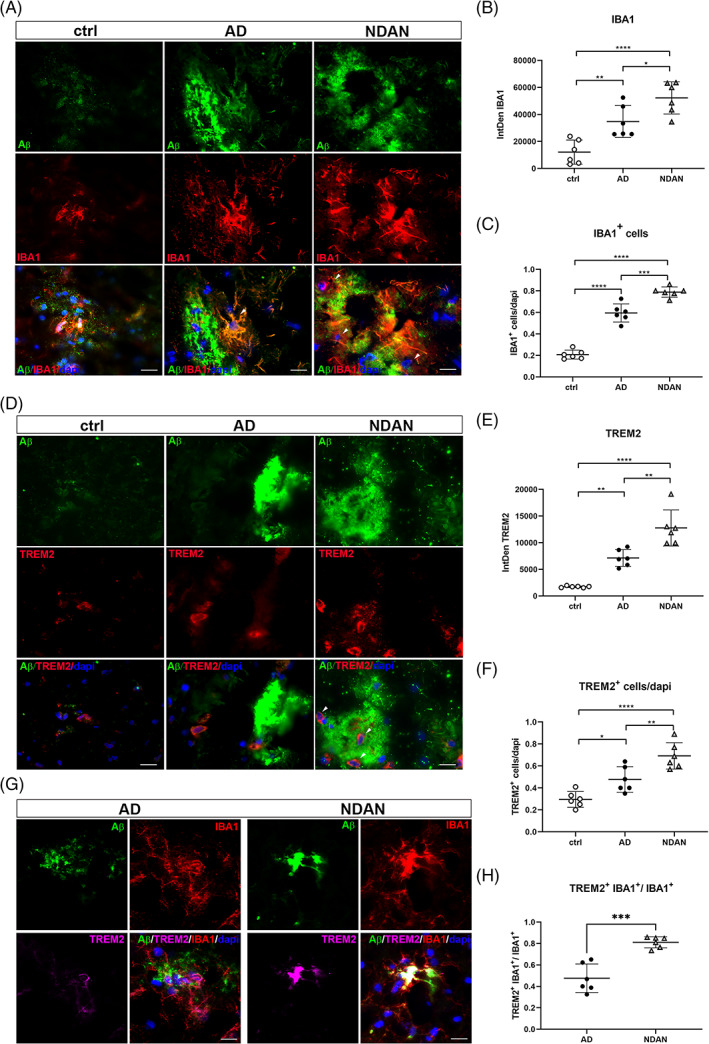
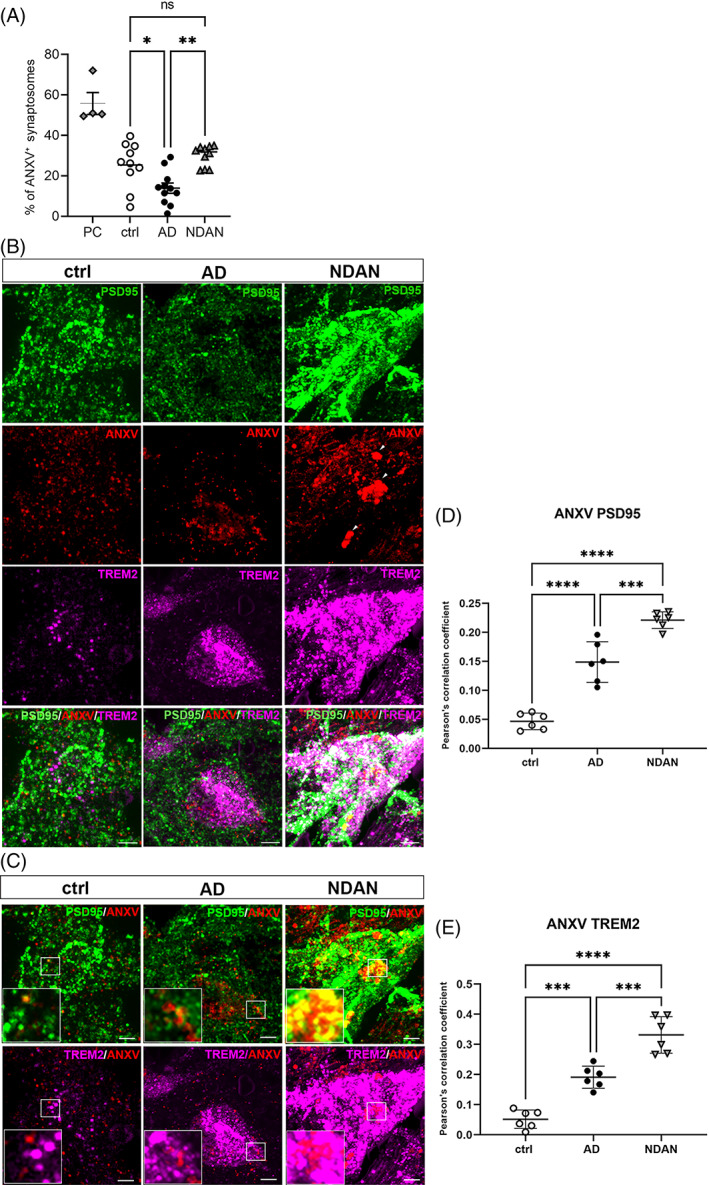
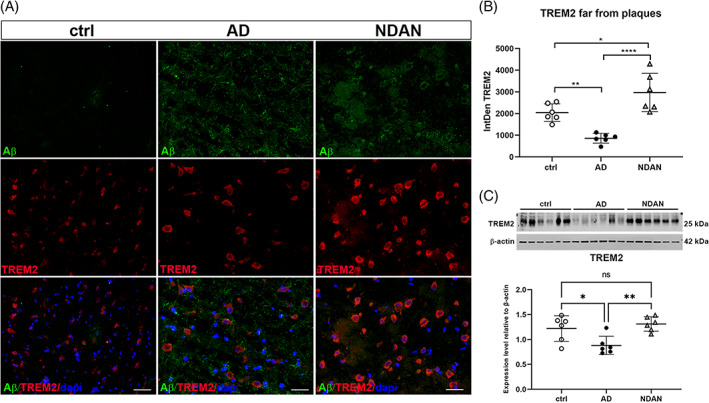
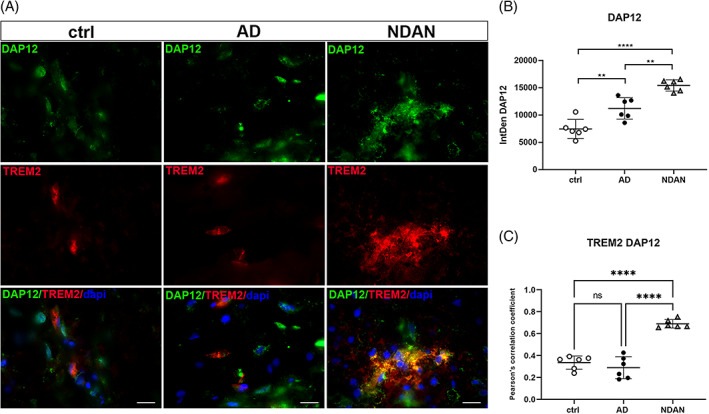
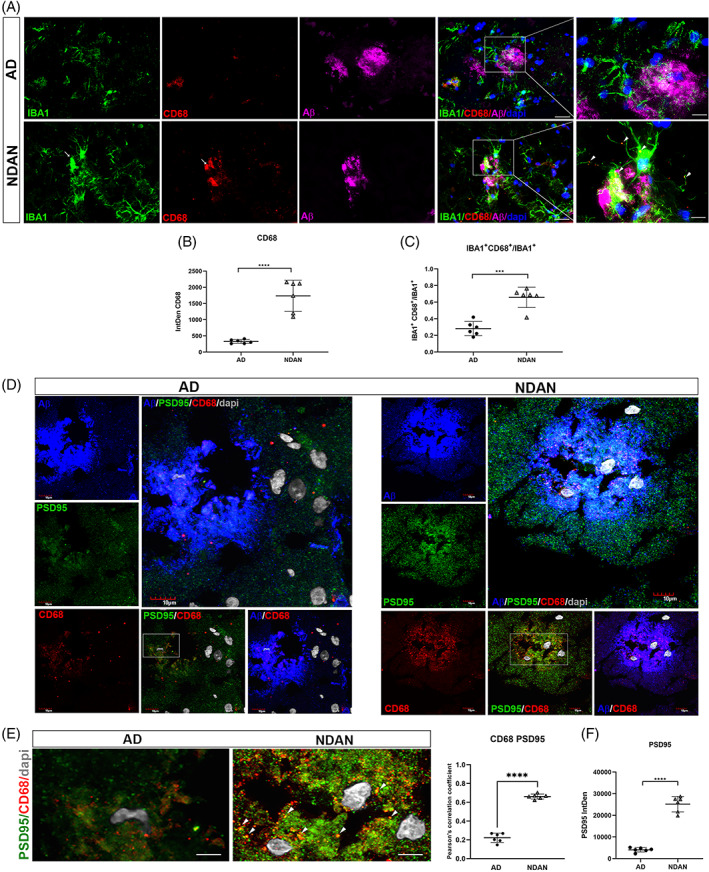
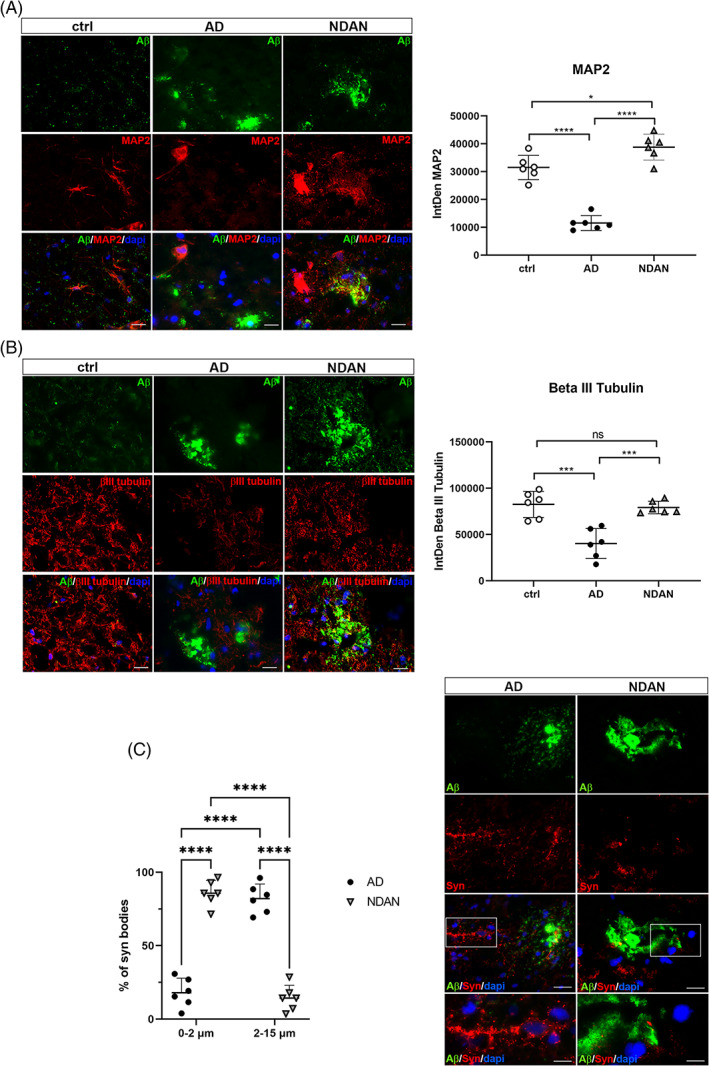
The existence of individuals who remain cognitively intact despite presenting histopathological signs of Alzheimer's disease (AD), here referred to as "Nondemented with AD neuropathology" (NDAN), suggests that some mechanisms are triggered to resist cognitive impairment. Exposed phosphatidylserine (ePS) represents a neuronal "eat-me" signal involved in microglial-mediated phagocytosis of damaged synapses. A possible mediator of this process is TREM2, a microglial surface receptor activated by ligands including PS. Based on TREM2 role in the scavenging function of microglia, we hypothesize that an efficient microglial phagocytosis of damaged synapses underlies synaptic resilience in NDAN, thus protecting from memory deficits. Using immunofluorescence microscopy, we performed a comparative study of human post-mortem frontal cortices of aged-matched, AD and NDAN individuals. We studied the distribution of activated microglia (IBA1, IBA1 /CD68 cells) and phagocytic microglia-related proteins (TREM2, DAP12), demonstrating higher microglial activation and TREM2 expression in NDAN versus AD. A study of the preservation of synapses around plaques, assessed using MAP2 and βIII tubulin as dendritic and axonal markers, respectively, and PSD95 as a postsynaptic marker, revealed preserved axonal/dendritic structure around plaques in NDAN versus AD. Moreover, high levels of PSD95 around NDAN plaques and the colocalization of PSD95 with CD68 indicated a prompt removal of damaged synapses by phagocytic microglia. Furthermore, Annexin V assay on aged-matched, AD and NDAN individuals synaptosomes revealed increased levels of ePS in NDAN, confirming damaged synapses engulfment. Our results suggest a higher efficiency of TREM2-induced phagocytic microglia in removing damaged synapses, underlying synaptic resilience in NDAN individuals.
尽管存在阿尔茨海默病(AD)的组织病理学迹象,但个体仍保持认知完整,我们将这些个体称为“具有 AD 神经病理学但无痴呆”(NDAN),这表明存在一些机制可以触发以抵抗认知障碍。暴露的磷脂酰丝氨酸(ePS)是一种涉及受损突触的小胶质细胞吞噬作用的神经元“吃我”信号。该过程的一个可能介导物是 TREM2,一种被包括 PS 在内的配体激活的小胶质细胞表面受体。基于 TREM2 在小胶质细胞吞噬作用中的作用,我们假设受损突触的有效小胶质细胞吞噬作用是 NDAN 中突触弹性的基础,从而防止记忆缺陷。使用免疫荧光显微镜,我们对年龄匹配的 AD 和 NDAN 个体的人类死后额皮质进行了比较研究。我们研究了激活的小胶质细胞(IBA1、IBA1/CD68 细胞)和吞噬小胶质细胞相关蛋白(TREM2、DAP12)的分布,结果表明 NDAN 中的小胶质细胞激活和 TREM2 表达高于 AD。使用 MAP2 和 βIII 微管蛋白分别作为树突和轴突标记物以及 PSD95 作为突触后标记物评估斑块周围突触的保存情况,结果显示 NDAN 中斑块周围的轴突/树突结构得到了保存。此外,NDAN 斑块周围 PSD95 的高水平以及 PSD95 与 CD68 的共定位表明吞噬性小胶质细胞迅速清除受损的突触。此外,对年龄匹配的 AD 和 NDAN 个体的突触体进行 Annexin V 测定显示,NDAN 中 ePS 的水平升高,证实了受损突触的吞噬作用。我们的结果表明,TREM2 诱导的吞噬性小胶质细胞清除受损突触的效率更高,这是 NDAN 个体中突触弹性的基础。