Cell Therapy Center, Beijing Institute of Geriatrics, Xuanwu Hospital Capital Medical University, National Clinical Research Center for Geriatric Diseases, and Key Laboratory of Neurodegenerative Diseases, Ministry of Education, Beijing 100053, China.
Center of Neural Injury and Repair, Beijing Institute for Brain Disorders, Beijing, 100069, China.
Theranostics. 2023 Apr 29;13(8):2673-2692. doi: 10.7150/thno.80271. eCollection 2023.
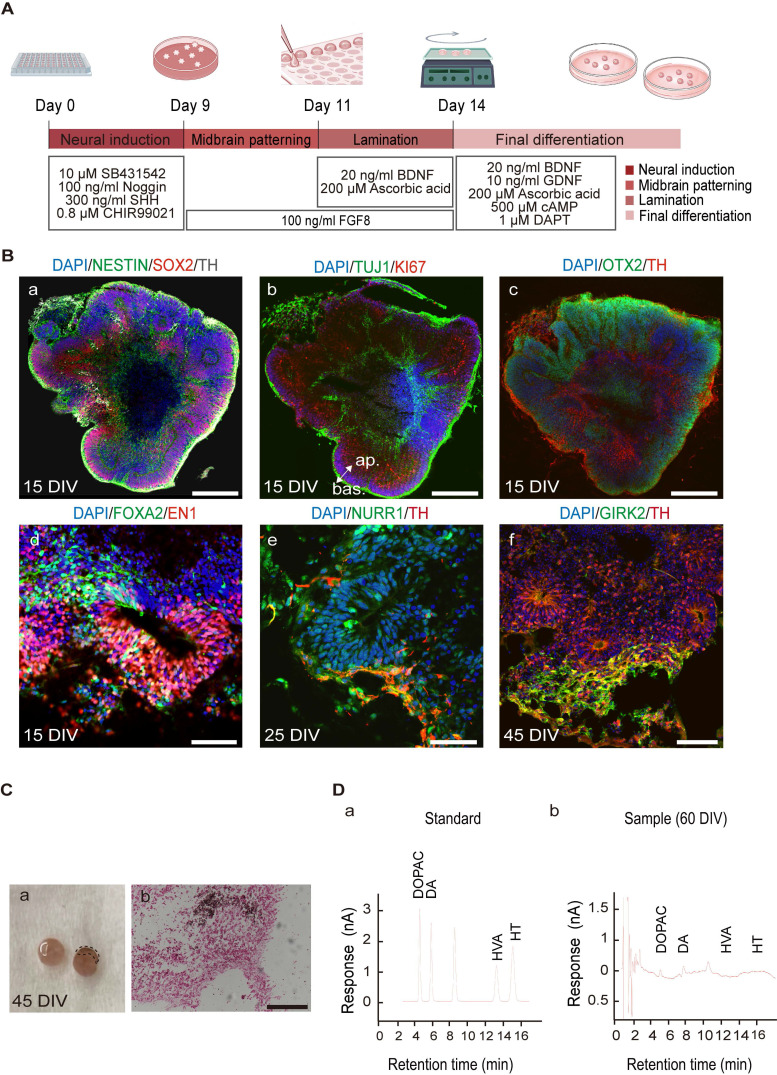
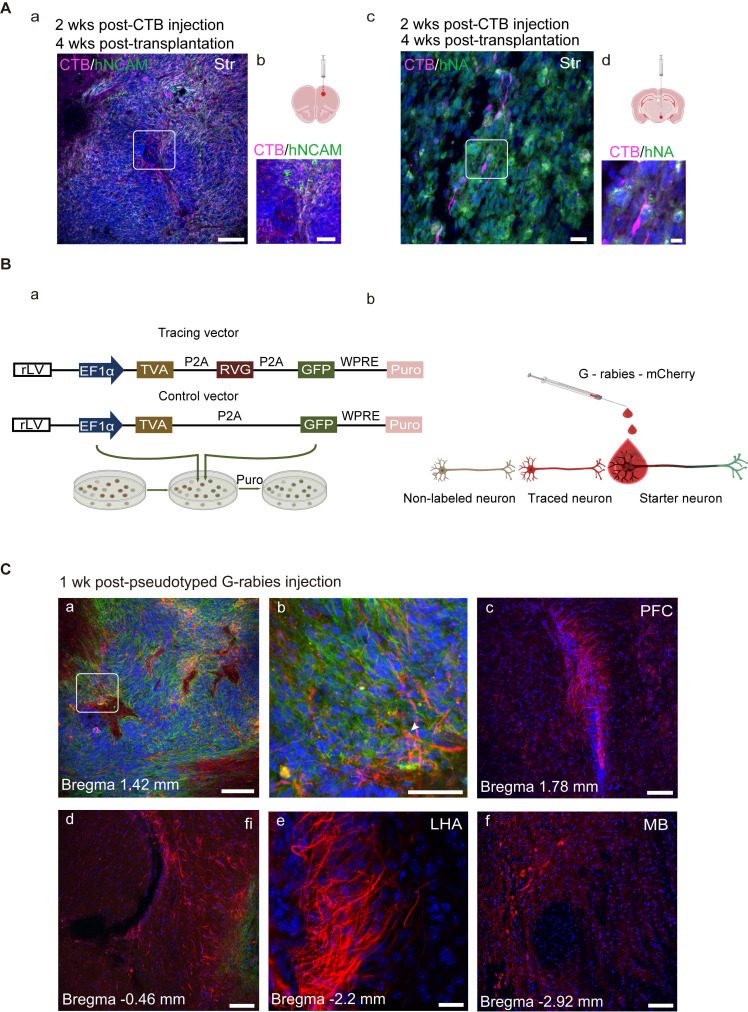
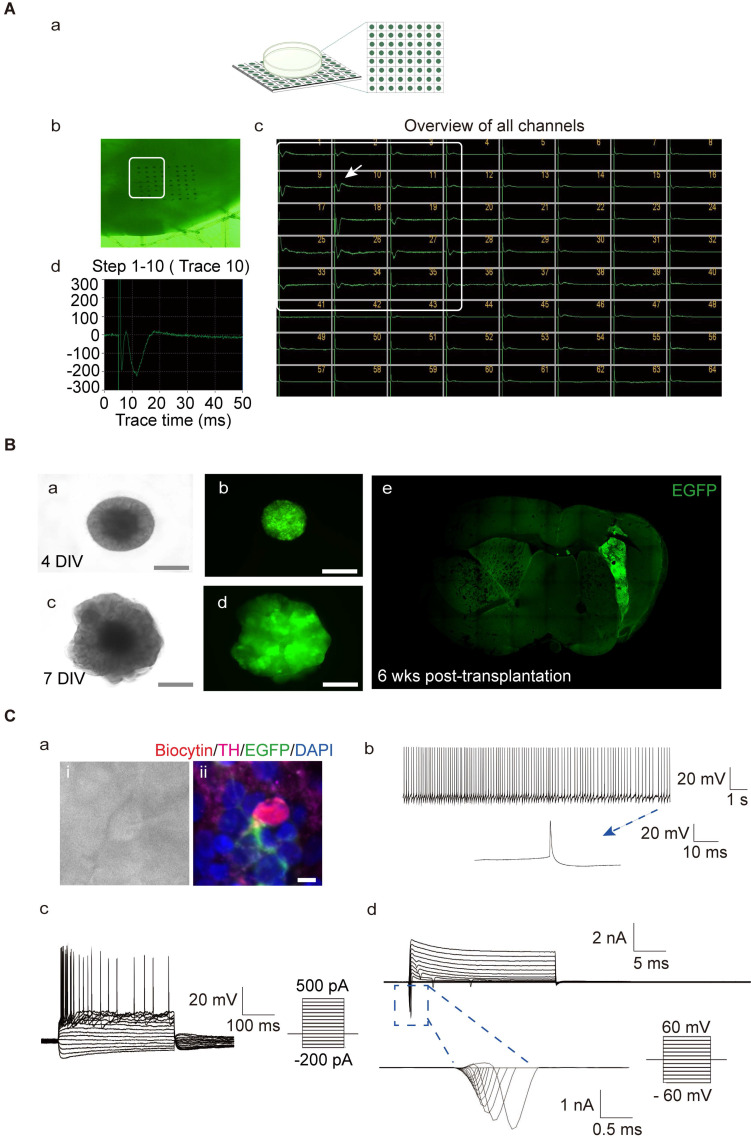
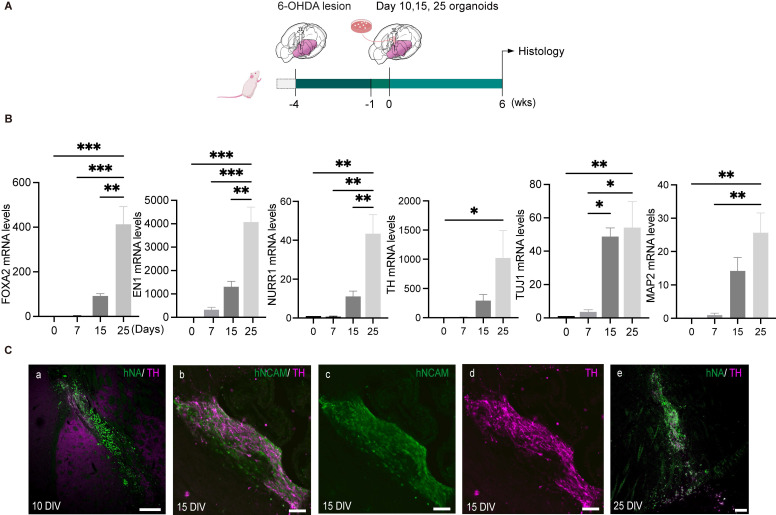
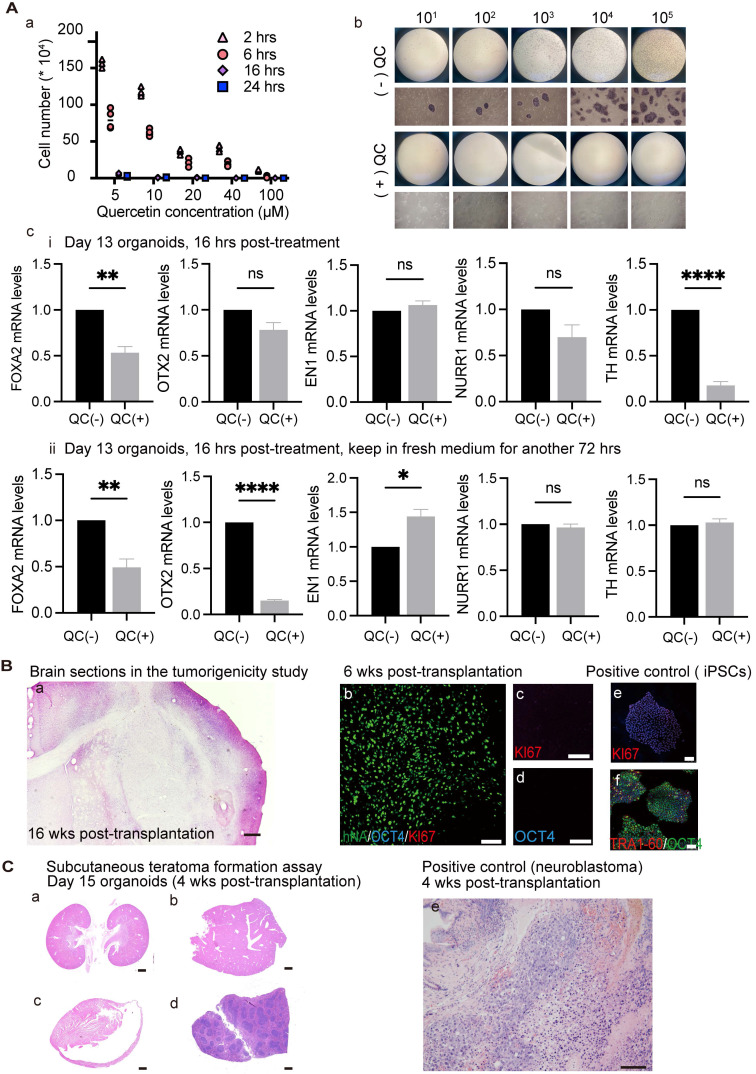
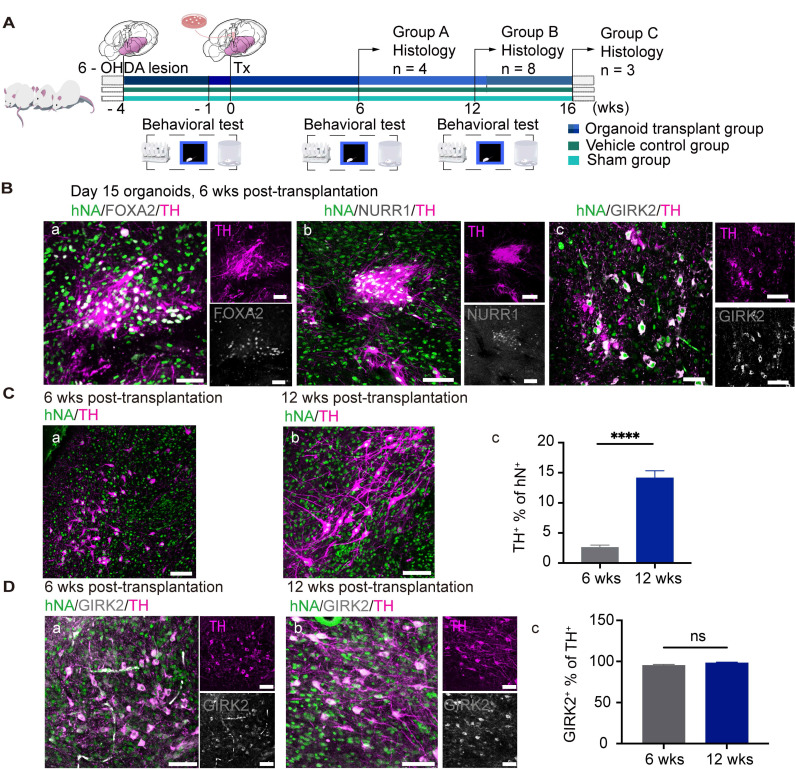
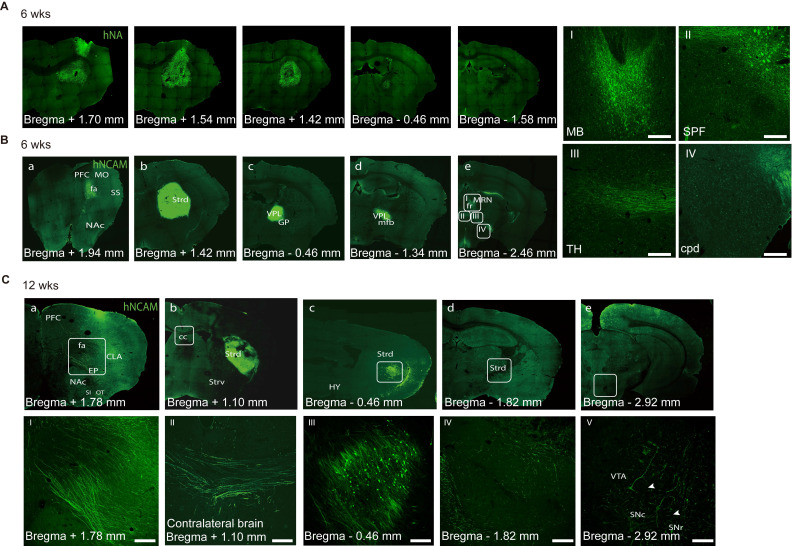
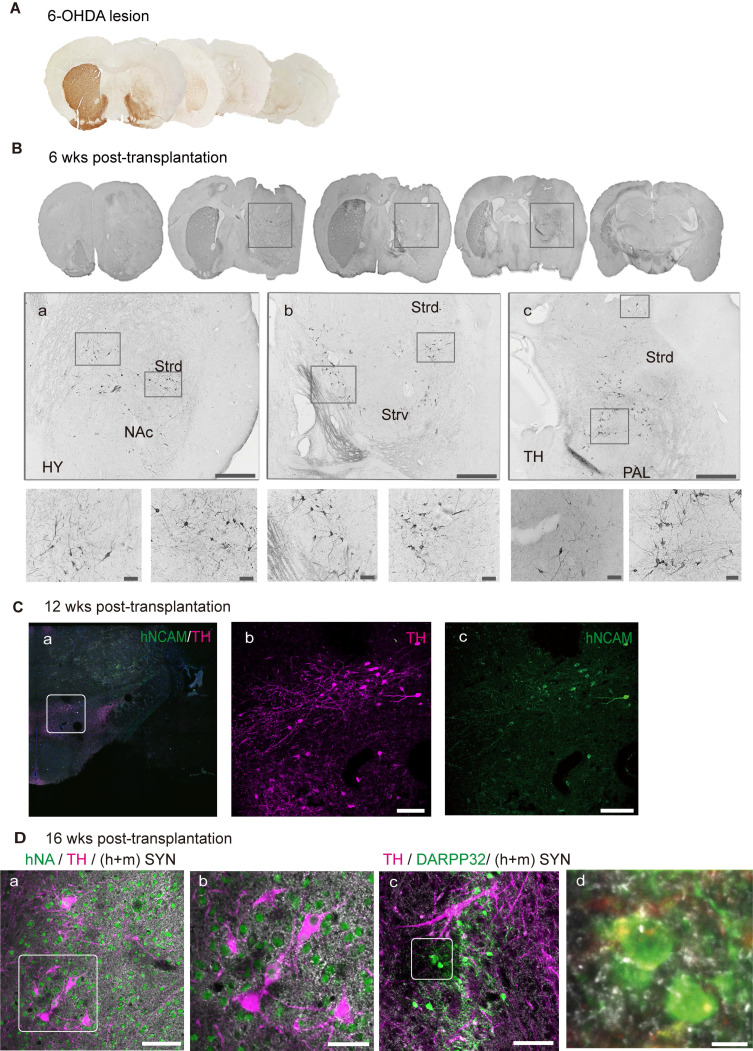
Parkinson's disease (PD) is a prevalent neurodegenerative disorder that is characterized by degeneration of dopaminergic neurons (DA) at the substantia nigra pas compacta (SNpc). Cell therapy has been proposed as a potential treatment option for PD, with the aim of replenishing the lost DA neurons and restoring motor function. Fetal ventral mesencephalon tissues (fVM) and stem cell-derived DA precursors cultured in 2-dimentional (2-D) culture conditions have shown promising therapeutic outcomes in animal models and clinical trials. Recently, human induced pluripotent stem cells (hiPSC)-derived human midbrain organoids (hMOs) cultured in 3-dimentional (3-D) culture conditions have emerged as a novel source of graft that combines the strengths of fVM tissues and 2-D DA cells. 3-D hMOs were induced from three distinct hiPSC lines. hMOs at various stages of differentiation were transplanted as tissue pieces into the striatum of naïve immunodeficient mouse brains, with the aim of identifying the most suitable stage of hMOs for cellular therapy. The hMOs at Day 15 were determined to be the most appropriate stage and were transplanted into a PD mouse model to assess cell survival, differentiation, and axonal innervation . Behavioral tests were conducted to evaluate functional restoration following hMO treatment and to compare the therapeutic effects between 2-D and 3-D cultures. Rabies virus were introduced to identify the host presynaptic input onto the transplanted cells. hMOs showed a relatively homogeneous cell composition, mostly consisting of dopaminergic cells of midbrain lineage. Analysis conducted 12 weeks post-transplantation of day 15 hMOs revealed that 14.11% of the engrafted cells expressed TH+ and over 90% of these cells were co-labeled with GIRK2+, indicating the survival and maturation of A9 mDA neurons in the striatum of PD mice. Transplantation of hMOs led to a reversal of motor function and establishment of bidirectional connections with natural brain target regions, without any incidence of tumor formation or graft overgrowth. The findings of this study highlight the potential of hMOs as safe and efficacious donor graft sources for cell therapy to treat PD.
帕金森病(PD)是一种常见的神经退行性疾病,其特征是黑质致密部(SNpc)中的多巴胺能神经元(DA)退化。细胞治疗已被提议作为 PD 的一种潜在治疗选择,旨在补充丢失的 DA 神经元并恢复运动功能。胎鼠腹侧中脑组织(fVM)和在二维(2-D)培养条件下培养的干细胞衍生的 DA 前体细胞在动物模型和临床试验中显示出有希望的治疗效果。最近,在三维(3-D)培养条件下培养的人诱导多能干细胞(hiPSC)衍生的人类中脑类器官(hMO)作为一种新型移植物来源出现,结合了 fVM 组织和 2-D DA 细胞的优势。从三个不同的 hiPSC 系诱导出 3-D hMO。将处于不同分化阶段的 hMO 作为组织片移植到幼稚免疫缺陷小鼠的纹状体中,目的是确定最适合细胞治疗的 hMO 阶段。第 15 天的 hMO 被确定为最合适的阶段,并被移植到 PD 小鼠模型中,以评估细胞存活、分化和轴突神经支配。进行行为测试以评估 hMO 治疗后的功能恢复,并比较 2-D 和 3-D 培养的治疗效果。引入狂犬病病毒来鉴定移植细胞的宿主突触前输入。hMO 显示出相对均匀的细胞组成,主要由中脑谱系的多巴胺能细胞组成。移植后 12 周对第 15 天 hMO 进行分析显示,14.11%的植入细胞表达 TH+,其中超过 90%的细胞与 GIRK2+共标记,表明 A9 mDA 神经元在 PD 小鼠纹状体中的存活和成熟。hMO 的移植导致运动功能的逆转,并与天然脑靶区建立双向连接,没有肿瘤形成或移植物过度生长的发生。这项研究的结果强调了 hMO 作为安全有效的细胞治疗供体移植物来源治疗 PD 的潜力。