Fadzeyeva Evgenia, Locatelli Cassandra A A, Trzaskalski Natasha A, Nguyen My-Anh, Capozzi Megan E, Vulesevic Branka, Morrow Nadya M, Ghorbani Peyman, Hanson Antonio A, Lorenzen-Schmidt Ilka, Doyle Mary-Anne, Seymour Richard, Varin Elodie M, Fullerton Morgan D, Campbell Jonathan E, Mulvihill Erin E
The University of Ottawa, Faculty of Medicine, Department of Biochemistry, Microbiology and Immunology, Ottawa, ON K1H 8M5, Canada.
The University of Ottawa Heart Institute, 40 Ruskin Street, Ottawa, ON K1Y4W7, Canada.
iScience. 2023 Apr 26;26(5):106748. doi: 10.1016/j.isci.2023.106748. eCollection 2023 May 19.
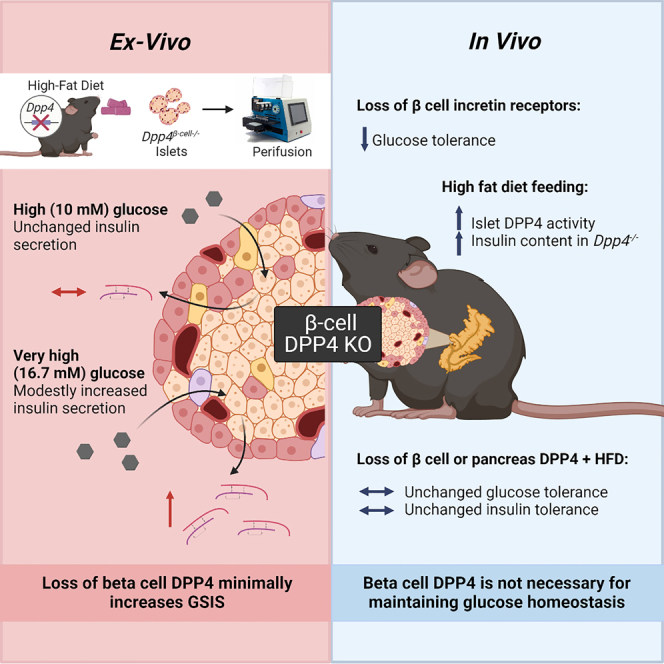
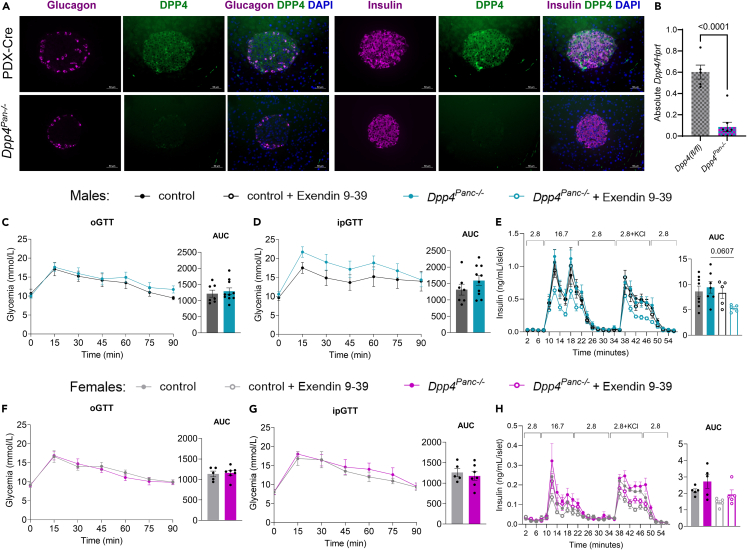
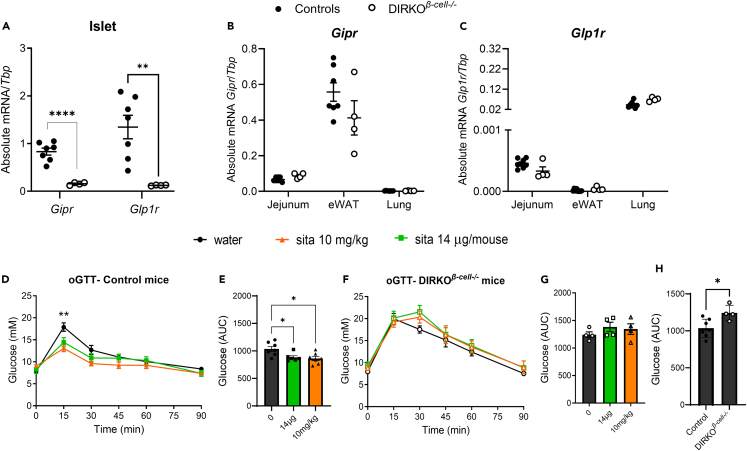
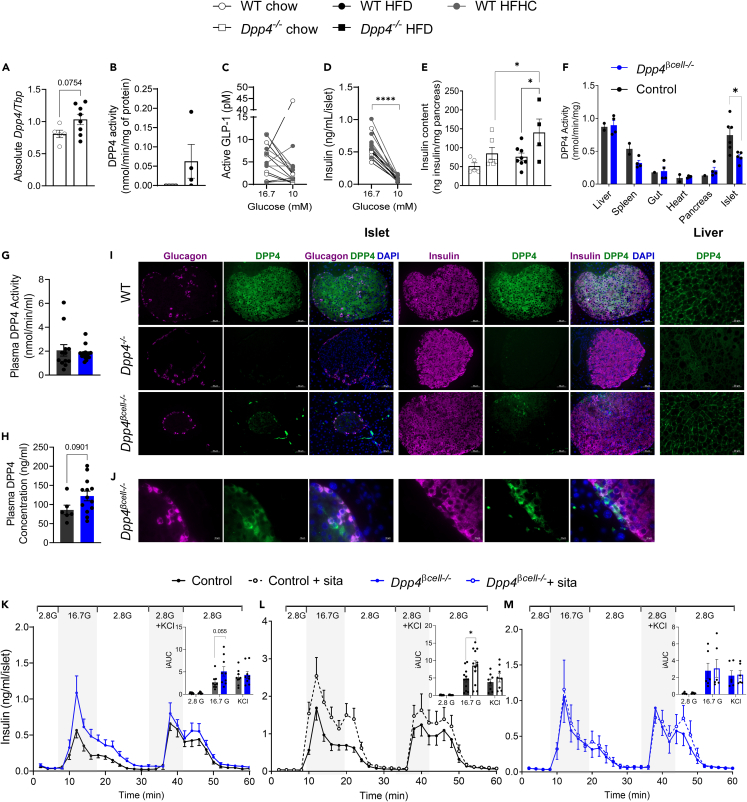
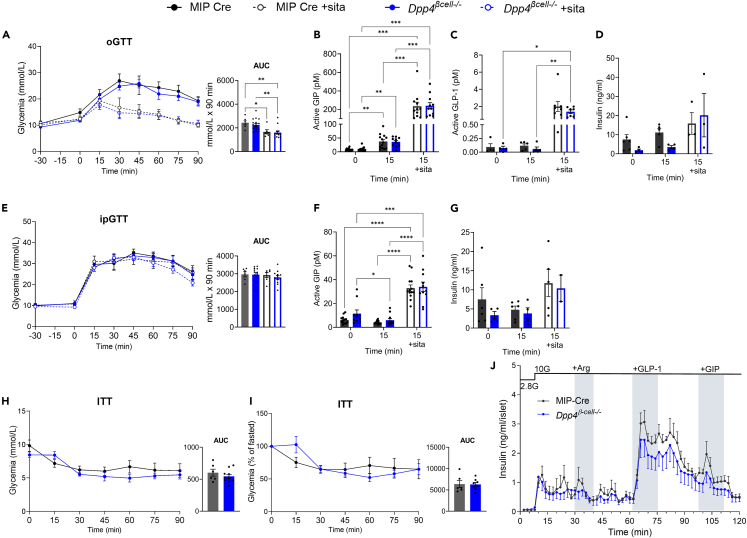
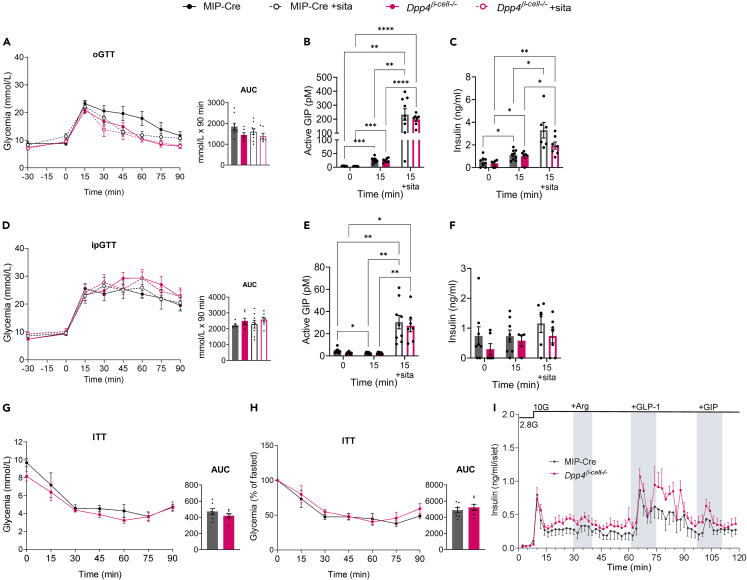
Mice systemically lacking dipeptidyl peptidase-4 (DPP4) have improved islet health, glucoregulation, and reduced obesity with high-fat diet (HFD) feeding compared to wild-type mice. Some, but not all, of this improvement can be linked to the loss of DPP4 in endothelial cells (ECs), pointing to the contribution of non-EC types. The importance of intra-islet signaling mediated by α to β cell communication is becoming increasingly clear; thus, our objective was to determine if β cell DPP4 regulates insulin secretion and glucose tolerance in HFD-fed mice by regulating the local concentrations of insulinotropic peptides. Using β cell double incretin receptor knockout mice, β cell- and pancreas-specific mice, we reveal that β cell incretin receptors are necessary for DPP4 inhibitor effects. However, although β cell DPP4 modestly contributes to high glucose (16.7 mM)-stimulated insulin secretion in isolated islets, it does not regulate whole-body glucose homeostasis.
与野生型小鼠相比,全身性缺乏二肽基肽酶4(DPP4)的小鼠在高脂饮食(HFD)喂养下胰岛健康状况改善、血糖调节能力增强且肥胖程度减轻。这种改善部分(而非全部)可归因于内皮细胞(ECs)中DPP4的缺失,这表明非EC细胞类型也有作用。胰岛内由α细胞向β细胞通讯介导的信号传导的重要性日益明确;因此,我们的目标是确定β细胞DPP4是否通过调节促胰岛素肽的局部浓度来调节HFD喂养小鼠的胰岛素分泌和葡萄糖耐量。利用β细胞双肠促胰岛素受体敲除小鼠、β细胞特异性和胰腺特异性小鼠,我们发现β细胞肠促胰岛素受体是DPP4抑制剂发挥作用所必需的。然而,尽管β细胞DPP4对分离胰岛中高葡萄糖(16.7 mM)刺激的胰岛素分泌有一定作用,但它并不调节全身葡萄糖稳态。