Divisions of Nephrology and Pulmonary, Critical Care, and Sleep Medicine, University of New Mexico School of Medicine, Albuquerque, New Mexico, USA
Center for Adult Critical Care, University of New Mexico Health Sciences Center, Albuquerque, New Mexico, USA.
BMJ Open. 2023 May 22;13(5):e072448. doi: 10.1136/bmjopen-2023-072448.
Acute kidney injury requiring renal replacement therapy (AKI-RRT) is common in the intensive care unit (ICU) and is associated with significant morbidity and mortality. Continuous RRT (CRRT) non-selectively removes large amounts of amino acids from plasma, lowering serum amino acid concentrations and potentially depleting total-body amino acid stores. Therefore, the morbidity and mortality associated with AKI-RRT may be partly mediated through accelerated skeletal muscle atrophy and resulting muscle weakness. However, the impact of AKI-RRT on skeletal muscle mass and function during and following critical illness remains unknown. We hypothesise that patients with AKI-RRT have higher degrees of acute muscle loss than patients without AKI-RRT and that AKI-RRT survivors are less likely to recover muscle mass and function when compared with other ICU survivors.
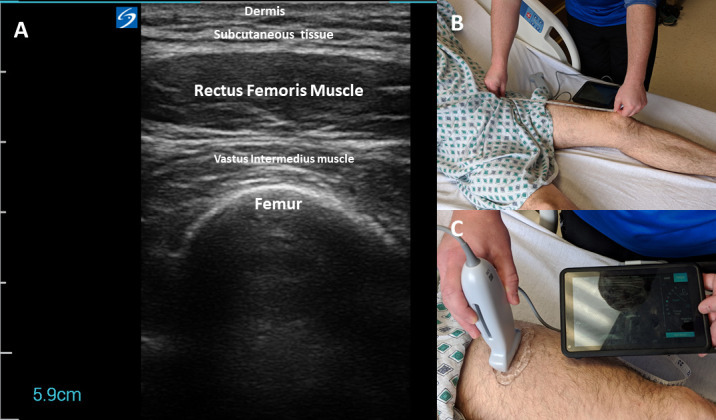
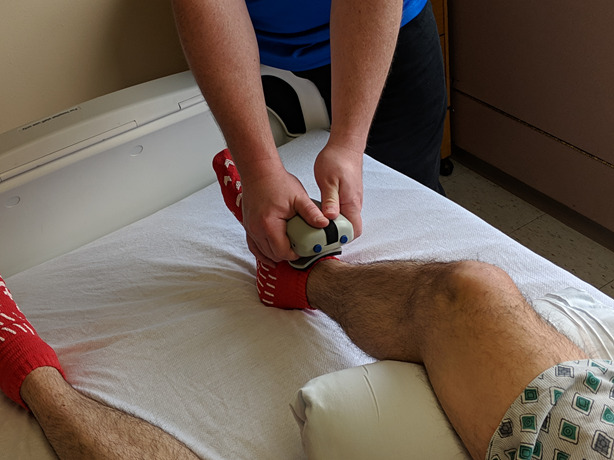
This protocol describes a prospective, multicentre, observational trial assessing skeletal muscle size, quality and function in ICU patients with AKI-RRT. We will perform musculoskeletal ultrasound to longitudinally evaluate rectus femoris size and quality at baseline (within 48 hours of CRRT initiation), day 3, day 7 or at ICU discharge, at hospital discharge, and 1-3 months postdischarge. Additional skeletal muscle and physical function tests will be performed at hospital discharge and postdischarge follow-up. We will analyse the effect of AKI-RRT by comparing the findings in enrolled subjects to historical controls of critically ill patients without AKI-RRT using multivariable modelling.
We anticipate our study will reveal that AKI-RRT is associated with greater degrees of muscle loss and dysfunction along with impaired postdischarge recovery of physical function. These findings could impact the in-hospital and postdischarge treatment plan for these patients to include focused attention on muscle strength and function. We intend to disseminate findings to participants, healthcare professionals, the public and other relevant groups via conference presentation and publication without any publication restrictions.
NCT05287204.
急性肾损伤需要肾脏替代治疗(AKI-RRT)在重症监护病房(ICU)中很常见,与显著的发病率和死亡率相关。连续肾脏替代治疗(CRRT)非选择性地从血浆中去除大量氨基酸,降低血清氨基酸浓度并可能耗尽全身氨基酸储存。因此,AKI-RRT 相关的发病率和死亡率可能部分通过加速骨骼肌萎缩和导致肌肉无力来介导。然而,AKI-RRT 对危重疾病期间和之后的骨骼肌质量和功能的影响仍然未知。我们假设,与没有 AKI-RRT 的患者相比,接受 AKI-RRT 的患者急性肌肉丧失程度更高,与其他 ICU 幸存者相比,AKI-RRT 幸存者恢复肌肉质量和功能的可能性更小。
本方案描述了一项前瞻性、多中心、观察性试验,评估了 AKI-RRT 的 ICU 患者的骨骼肌大小、质量和功能。我们将使用肌肉骨骼超声纵向评估股直肌大小和质量,基线(CRRT 开始后 48 小时内)、第 3 天、第 7 天或 ICU 出院时、出院时和出院后 1-3 个月。在出院和出院后随访时还将进行其他骨骼肌和身体功能测试。我们将通过将纳入研究对象的结果与没有 AKI-RRT 的危重患者的历史对照进行多变量建模分析,来比较 AKI-RRT 的影响。
我们预计我们的研究将表明 AKI-RRT 与更大程度的肌肉丧失和功能障碍以及物理功能的出院后恢复受损相关。这些发现可能会影响这些患者的住院和出院后治疗计划,包括对肌肉力量和功能的集中关注。我们打算通过会议报告和发表文章,在没有任何发表限制的情况下,向参与者、医疗保健专业人员、公众和其他相关群体传播研究结果。
NCT05287204。