National Reference Center for Sanitary Dermatology and Leprosy, Clinics' Hospital, Federal University of Uberlândia (UFU/EBSERH), Uberlândia, MG, Brazil.
Radiology Division, Clinics' Hospital, Federal University of Uberlândia (UFU/EBSERH), Uberlândia, MG, Brazil.
PLoS One. 2023 May 23;18(5):e0285450. doi: 10.1371/journal.pone.0285450. eCollection 2023.
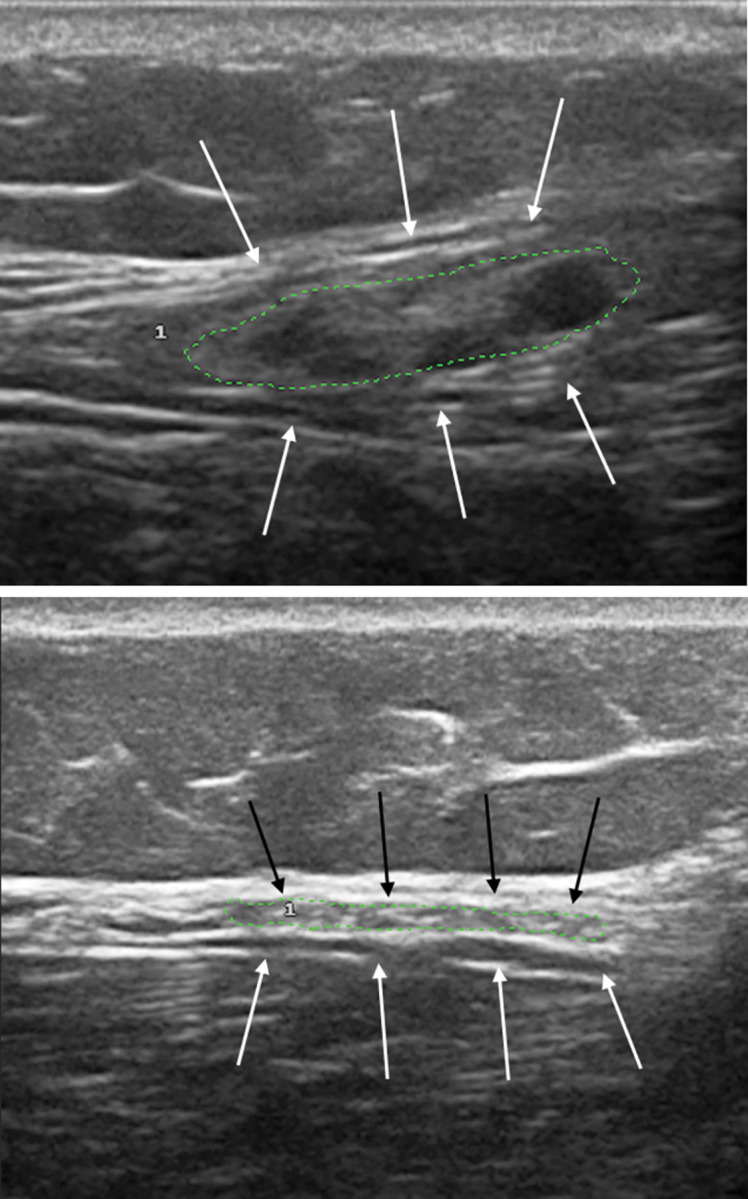
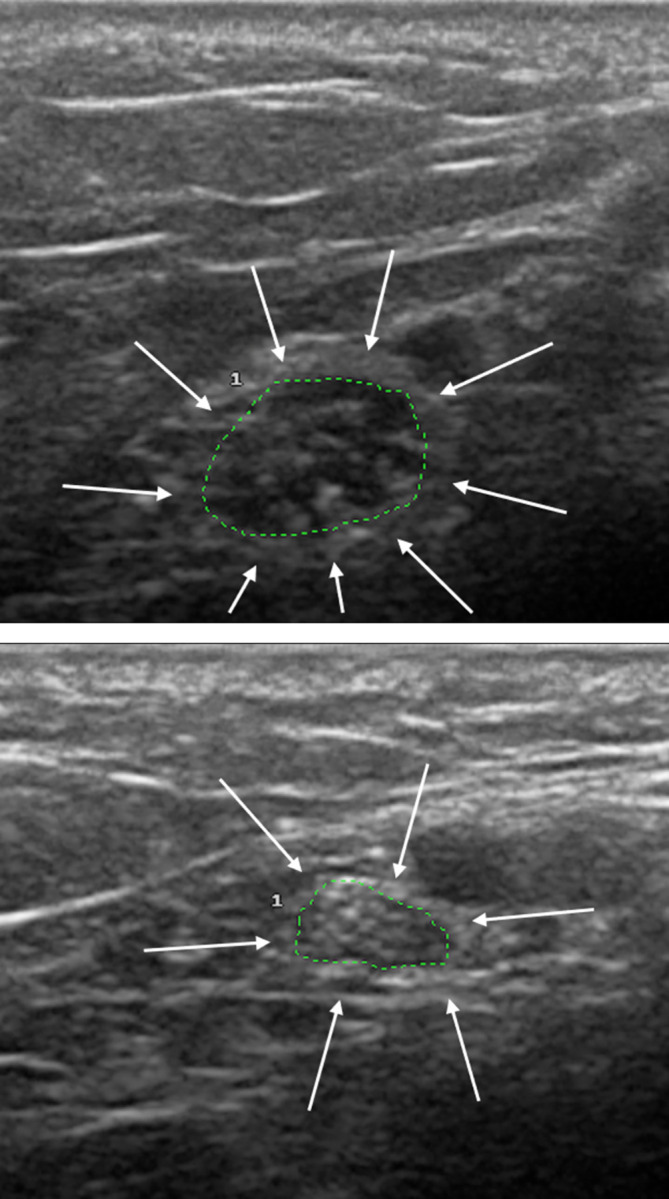
Leprosy household contacts (HC) represent a high-risk group for the development of the disease. Anti-PGL-I IgM seropositivity also increases the risk of illness. Despite significant advances in leprosy control, it remains a public health problem; and early diagnosis of this peripheral neuropathy represents one of the main goals of leprosy programs. The present study was performed to identify neural impairment in leprosy HC by analyzing differences in high-resolution ultrasonographic (US) measurements of peripheral nerves between leprosy HC and healthy volunteers (HV). Seventy-nine seropositive household contacts (SPHC) and 30 seronegative household contacts (SNHC) underwent dermato-neurological examination and molecular analysis, followed by high-resolution US evaluation of cross-sectional areas (CSAs) of the median, ulnar, common fibular and tibial nerves. In addition, 53 HV underwent similar US measurements. The US evaluation detected neural thickening in 26.5% (13/49) of the SPHC and only in 3.3% (1/30) among the SNHC (p = 0.0038). The CSA values of the common fibular and tibial nerves were significantly higher in SPHC. This group also had significantly greater asymmetry in the common fibular and tibial nerves (proximal to the tunnel). SPHC presented a 10.5-fold higher chance of neural impairment (p = 0.0311). On the contrary, the presence of at least one scar from the BCG vaccine conferred 5.2-fold greater protection against neural involvement detected by US (p = 0.0184). Our findings demonstrated a higher prevalence of neural thickening in SPHC and support the role of high-resolution US in the early diagnosis of leprosy neuropathy. The combination of positive anti-PGL-I serology and absence of a BCG scar can identify individuals with greater chances of developing leprosy neuropathy, who should be referred for US examination, reinforcing the importance of including serological and imaging methods in the epidemiological surveillance of leprosy HC.
麻风病家庭接触者(HC)是发病的高风险群体。抗 PGL-I IgM 血清阳性也会增加患病风险。尽管麻风病控制取得了重大进展,但它仍然是一个公共卫生问题;早期诊断这种周围神经病变是麻风病计划的主要目标之一。本研究旨在通过分析麻风病 HC 与健康志愿者(HV)之间外周神经高分辨率超声(US)测量值的差异,确定麻风病 HC 的神经损伤。79 名血清阳性家庭接触者(SPHC)和 30 名血清阴性家庭接触者(SNHC)接受了皮肤神经学检查和分子分析,随后对正中神经、尺神经、腓总神经和胫神经的横截面积(CSA)进行了高分辨率 US 评估。此外,53 名 HV 接受了类似的 US 测量。US 评估发现,26.5%(13/49)的 SPHC 存在神经增厚,而 SNHC 中只有 3.3%(1/30)(p = 0.0038)。SPHC 的腓总神经和胫神经 CSA 值明显更高。该组腓总神经和胫神经的不对称性也明显更大(在隧道近端)。SPHC 发生神经损伤的几率高出 10.5 倍(p = 0.0311)。相反,至少有一个卡介苗(BCG)疫苗疤痕的存在对 US 检测到的神经受累提供了 5.2 倍的更大保护(p = 0.0184)。我们的研究结果表明 SPHC 中神经增厚的发生率更高,支持高分辨率 US 在早期诊断麻风病周围神经病变中的作用。抗 PGL-I 血清学阳性和缺乏 BCG 疤痕的组合可以识别出发生麻风病周围神经病变风险更高的个体,这些个体应接受 US 检查,这加强了将血清学和影像学方法纳入麻风病 HC 流行病学监测的重要性。