
一项旨在提高本科生研究导师文化多样性意识的干预措施的随机对照试验。
A randomized controlled trial of an intervention to increase cultural diversity awareness of research mentors of undergraduate students.
机构信息
Center for Women's Health Research, Department of Medicine, University of Wisconsin-Madison, Madison, WI 53715, USA.
Division of Medical Education and Office of the Provost, Duke University, Durham, NC 27708, USA.
出版信息
Sci Adv. 2023 May 24;9(21):eadf9705. doi: 10.1126/sciadv.adf9705.
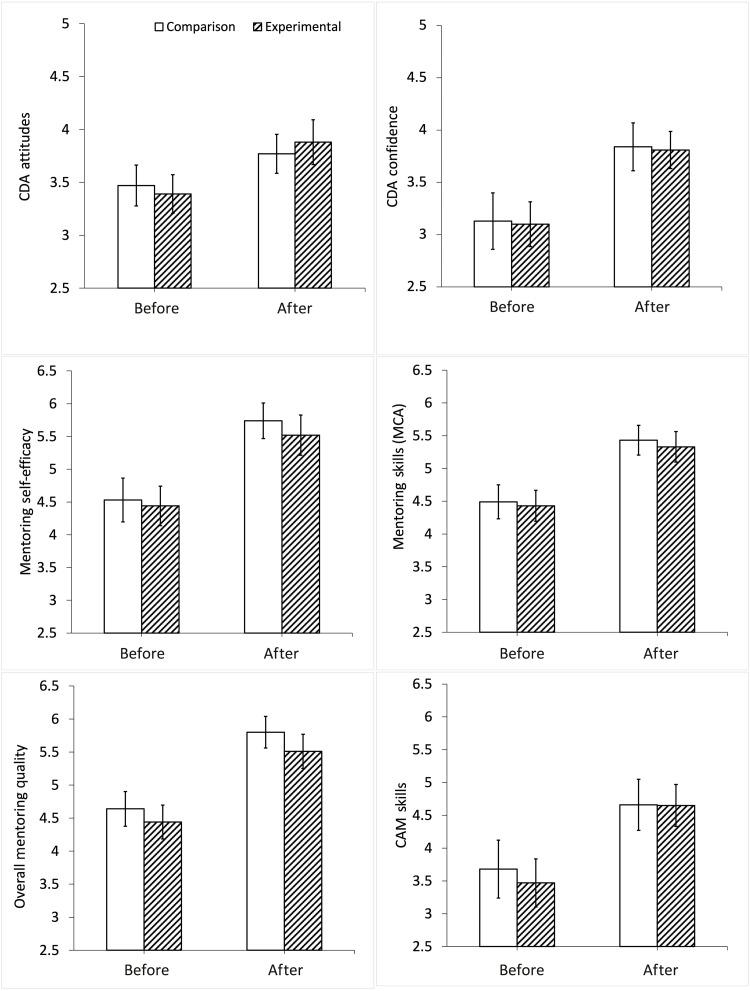
Cultural diversity variables like race and/or ethnicity influence research mentoring relationships, but mentors may not know how to address such variables with their mentees. Using a randomized controlled trial design, we tested a mentor training intervention to increase mentors' awareness and skill in addressing cultural diversity in research mentoring relationships, documenting its impact on mentors and their undergraduate mentees' ratings of mentor effectiveness. Participants were a national sample of 216 mentors and 117 mentees from 32 undergraduate research training programs in the United States. Mentors in the experimental condition reported greater gains than those in the comparison condition regarding the relevance of their racial/ethnic identity to mentoring and their confidence to mentor students across diverse cultural identities. Paired mentees of mentors in the experimental group rated their mentors higher at respectfully broaching and creating opportunities to address race/ethnicity matters than those with mentors in the comparison group. Our results support the efficacy of culturally focused mentorship education.
文化多样性变量,如种族和/或族裔,会影响研究指导关系,但导师可能不知道如何与他们的学生讨论这些变量。我们采用随机对照试验设计,测试了一种导师培训干预措施,以提高导师在研究指导关系中处理文化多样性的意识和技能,并记录其对导师及其本科学生对导师效能的评价的影响。参与者是来自美国 32 个本科研究培训项目的 216 名导师和 117 名学生的全国性样本。实验组的导师报告说,与比较组相比,他们的种族/族裔身份与指导的相关性以及指导不同文化身份学生的信心方面有了更大的提高。实验组导师的配对学生对导师更尊重地提出和创造机会解决种族/族裔问题的评价高于对照组导师。我们的结果支持文化聚焦指导教育的功效。



 Zotero 插件