Pfizer, San Diego, California 92121, USA.
Pfizer, Groton, Connecticut 06340, USA.
Toxicol Sci. 2023 Jun 28;194(1):53-69. doi: 10.1093/toxsci/kfad049.
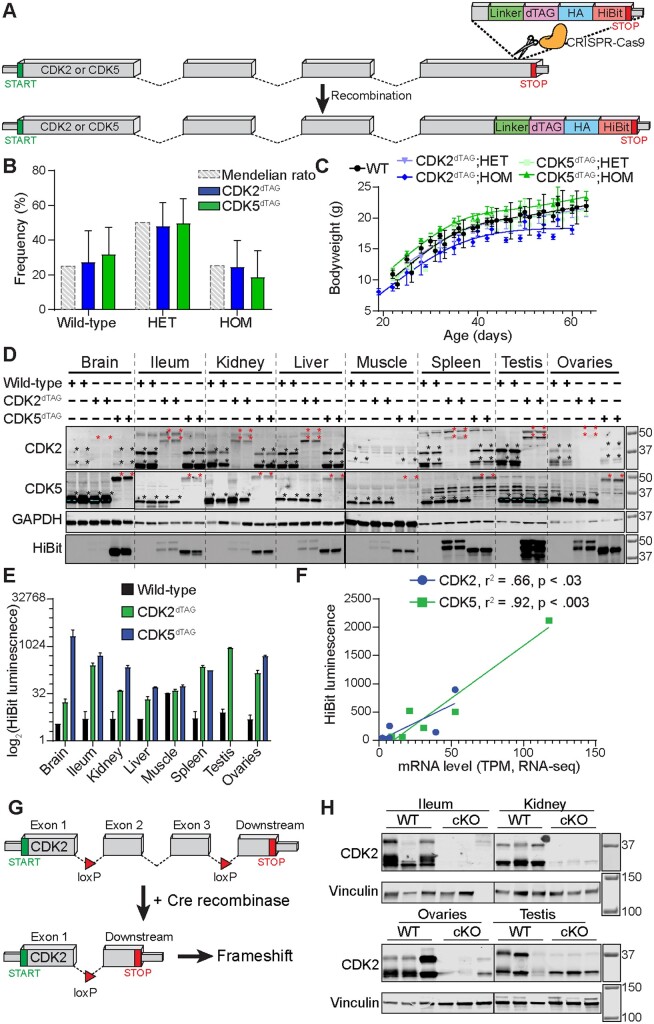
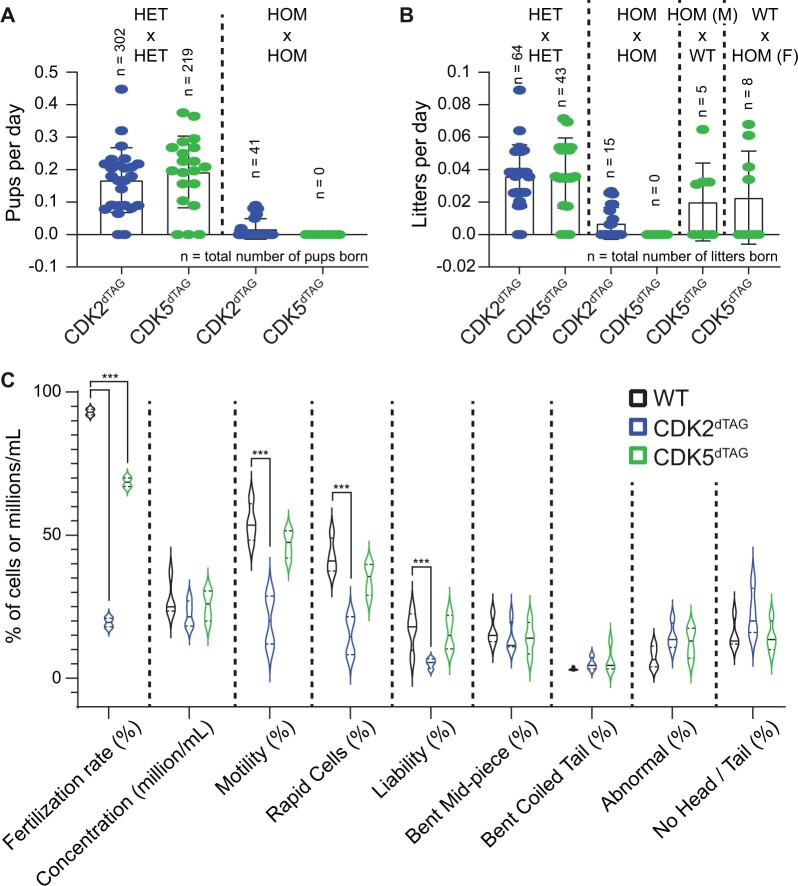
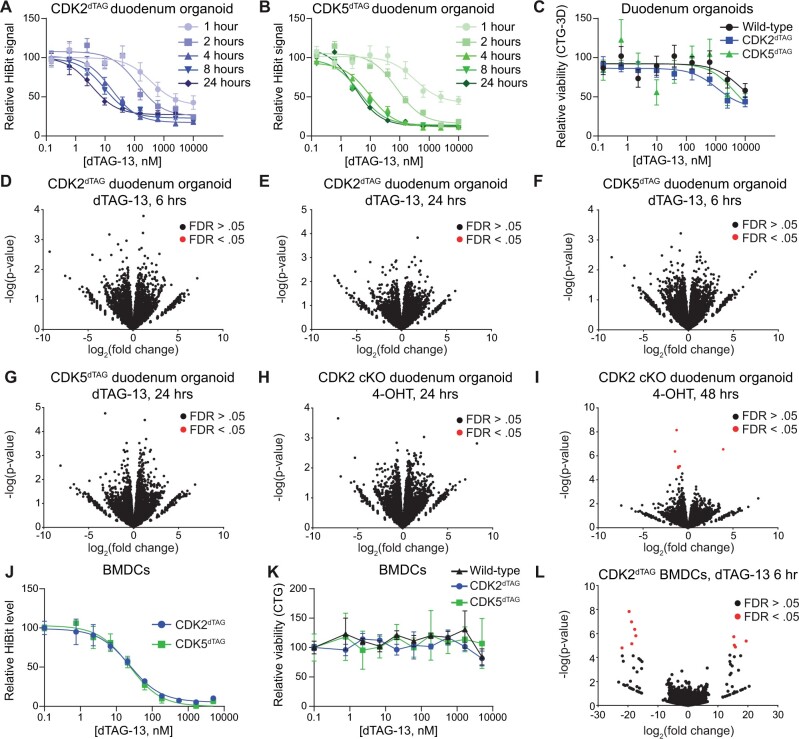
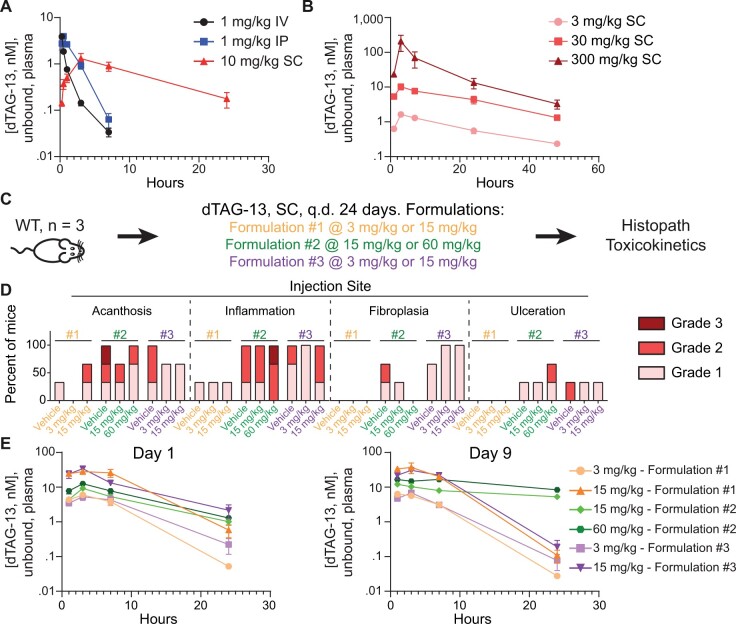
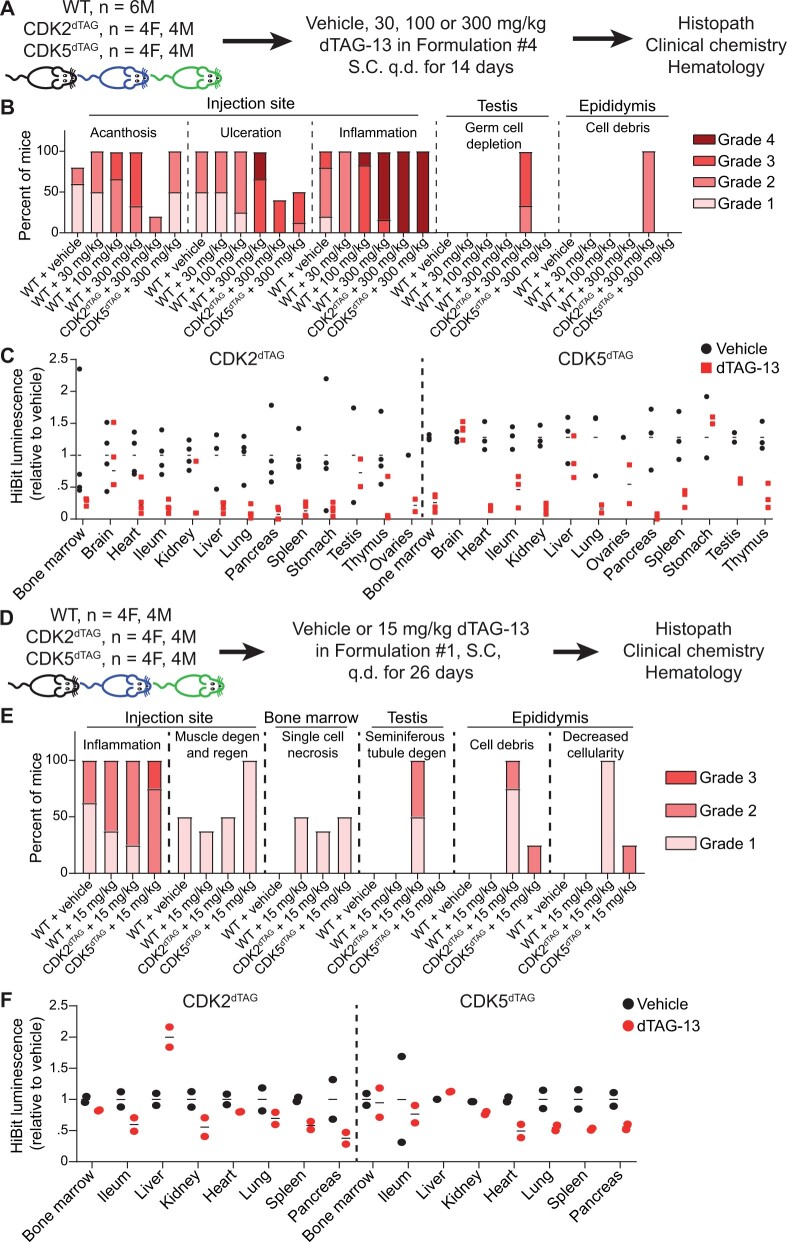
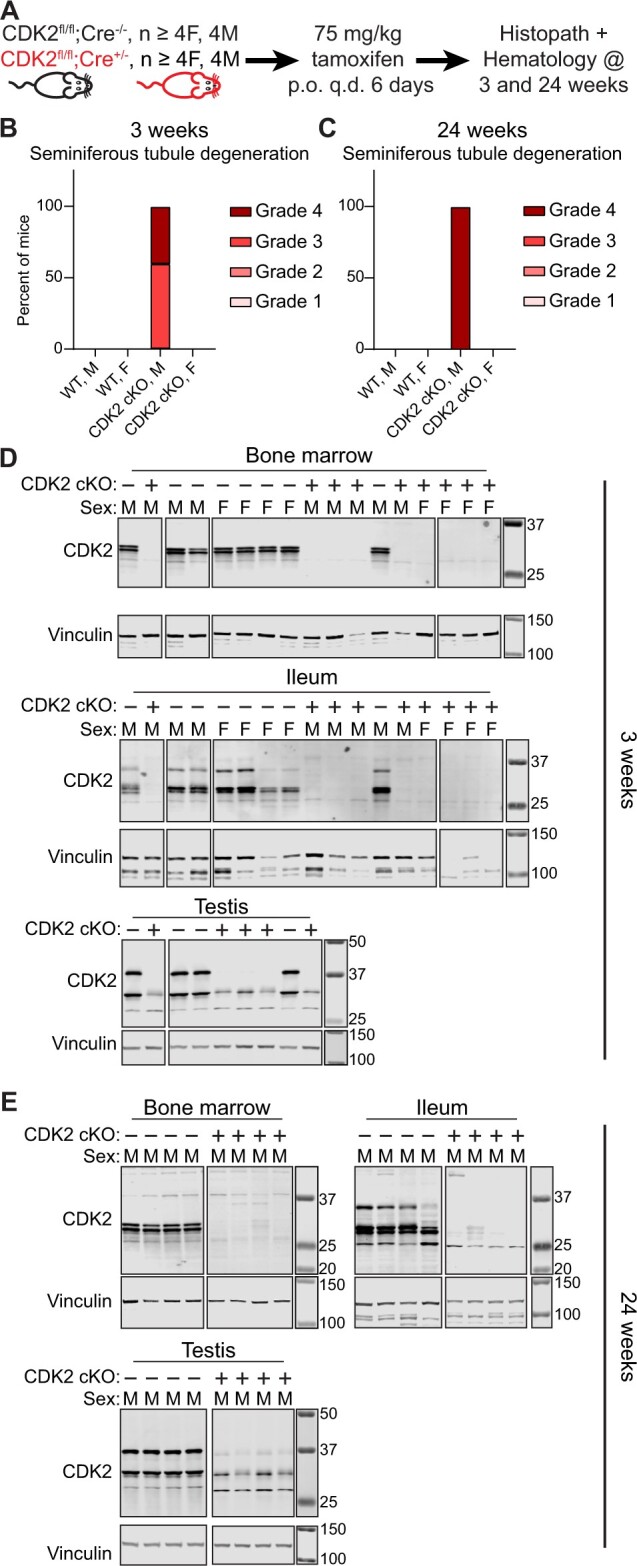
The degradation tag (dTAG) system for target protein degradation can remove proteins from biological systems without the drawbacks of some genetic methods, such as slow kinetics, lack of reversibility, low specificity, and the inability to titrate dosage. These drawbacks can make it difficult to compare toxicity resulting from genetic and pharmacological interventions, especially in vivo. Because the dTAG system has not been studied extensively in vivo, we explored the use of this system to study the physiological sequalae resulting from CDK2 or CDK5 degradation in adult mice. Mice with homozygous knock-in of the dTAG sequence onto CDK2 and CDK5 were born at Mendelian ratios despite decreased CDK2 or CDK5 protein levels in comparison with wild-type mice. In bone marrow cells and duodenum organoids derived from these mice, treatment with the dTAG degrader dTAG-13 resulted in rapid and robust protein degradation but caused no appreciable change in viability or the transcriptome. Repeated delivery of dTAG-13 in vivo for toxicity studies proved challenging; we explored multiple formulations in an effort to maximize degradation while minimizing formulation-related toxicity. Degradation of CDK2 or CDK5 in all organs except the brain, where dTAG-13 likely did not cross the blood brain barrier, only caused microscopic changes in the testis of CDK2dTAG mice. These findings were corroborated with conditional CDK2 knockout in adult mice. Our results suggest that the dTAG system can provide robust protein degradation in vivo and that loss of CDK2 or CDK5 in adult mice causes no previously unknown phenotypes.
降解标签 (dTAG) 系统可用于靶蛋白降解,可去除生物系统中的蛋白质,避免某些遗传方法的缺点,如动力学缓慢、不可逆转、特异性低和无法滴定剂量。这些缺点使得比较遗传和药理学干预引起的毒性变得困难,尤其是在体内。由于 dTAG 系统在体内尚未得到广泛研究,我们探讨了使用该系统来研究 CDK2 或 CDK5 降解在成年小鼠中产生的生理后果。尽管与野生型小鼠相比,CDK2 或 CDK5 的蛋白水平降低,但带有 dTAG 序列的同源敲入的 CDK2 和 CDK5 的杂合子小鼠以孟德尔比例出生。在用 dTAG 降解剂 dTAG-13 处理这些小鼠的骨髓细胞和十二指肠类器官中,快速且强烈的蛋白降解,但对活力或转录组没有明显影响。体内重复给予 dTAG-13 进行毒性研究证明具有挑战性;我们探索了多种配方,以最大程度地降解,同时最小化配方相关毒性。除大脑外,所有器官中的 CDK2 或 CDK5 降解(在大脑中,dTAG-13 可能无法穿过血脑屏障)仅导致 CDK2dTAG 小鼠睾丸的显微镜下变化。这些发现得到了成年小鼠中条件性 CDK2 敲除的证实。我们的结果表明,dTAG 系统可在体内提供强大的蛋白降解,并且成年小鼠中 CDK2 或 CDK5 的缺失不会引起以前未知的表型。