Almeida-Silva Fernando, Almeida Marcos de Abreu, Rabello Vanessa Brito de Souza, Zancopé-Oliveira Rosely Maria, Baeza Lilian Cristiane, Lamas Cristiane da Cruz, Lima Marco Antonio, de Macedo Priscila Marques, Gutierrez-Galhardo Maria Clara, Almeida-Paes Rodrigo, Freitas Dayvison Francis Saraiva
Laboratório de Micologia, Instituto Nacional de Infectologia Evandro Chagas, Fiocruz, Rio de Janeiro 21040-360, RJ, Brazil.
Centro de Ciências Médicas e Farmacêuticas, Universidade Estadual do Oeste do Paraná, Cascavel 85819-110, PR, Brazil.
J Fungi (Basel). 2023 Apr 30;9(5):535. doi: 10.3390/jof9050535.
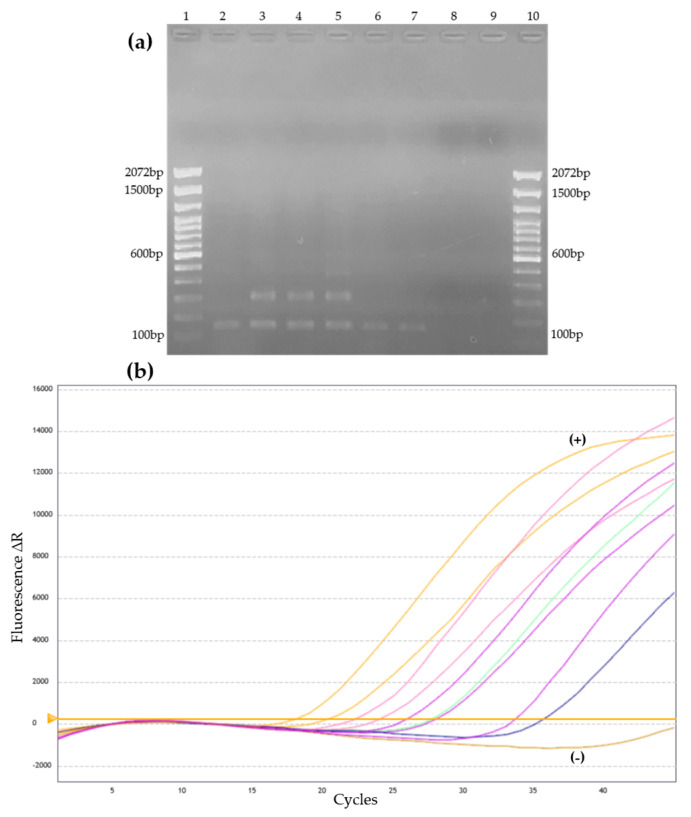
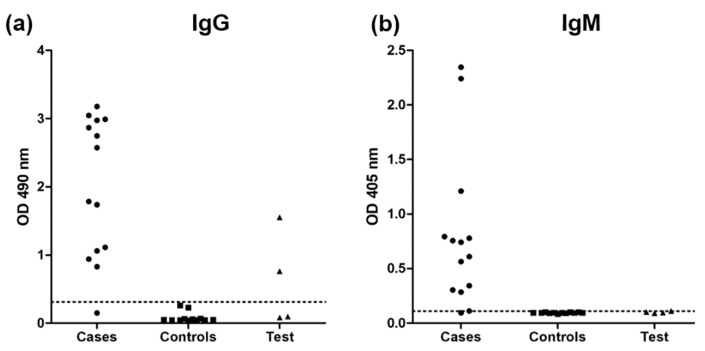
Sporotrichosis is the main subcutaneous mycosis worldwide. Several complications, including meningeal forms, can be observed in immunocompromised individuals. The sporotrichosis diagnosis is time-consuming due to the culture's limitations. The low fungal burden in cerebrospinal fluid (CSF) samples is another important drawback in the diagnosis of meningeal sporotrichosis. Molecular and immunological tests can improve the detection of spp. in clinical specimens. Therefore, the following five non-culture-based methods were evaluated for the detection of spp. in 30 CSF samples: (i) species-specific polymerase chain reaction (PCR); (ii) nested PCR; (iii) quantitative PCR; (iv) enzyme-linked immunosorbent assay (ELISA) for IgG detection; and (v) ELISA for IgM detection. The species-specific PCR was unsuccessful in the diagnosis of the meningeal sporotrichosis. The other four methods presented substantial levels of sensitivity (78.6% to 92.9%) and specificity (75% to 100%) for the indirect detection of spp. Both DNA-based methods presented similar accuracy (84.6%). Both ELISA methods were concomitantly positive only for patients with sporotrichosis and clinical signs of meningitis. We suggest that these methods should be implemented in clinical practice to detect spp. in CSF early, which may optimize treatment, augment the chances of a cure, and improve the prognosis of affected individuals.
孢子丝菌病是全球主要的皮下真菌病。在免疫功能低下的个体中可观察到几种并发症,包括脑膜型。由于培养的局限性,孢子丝菌病的诊断耗时较长。脑脊液(CSF)样本中真菌载量低是脑膜孢子丝菌病诊断的另一个重要缺陷。分子和免疫检测可提高临床标本中申克孢子丝菌的检测率。因此,对以下五种非培养方法进行了评估,以检测30份脑脊液样本中的申克孢子丝菌:(i)种特异性聚合酶链反应(PCR);(ii)巢式PCR;(iii)定量PCR;(iv)检测IgG的酶联免疫吸附测定(ELISA);以及(v)检测IgM的ELISA。种特异性PCR在脑膜孢子丝菌病的诊断中未成功。其他四种方法对申克孢子丝菌的间接检测显示出较高的敏感性(78.6%至92.9%)和特异性(75%至100%)。两种基于DNA的方法具有相似的准确性(84.6%)。两种ELISA方法仅在患有孢子丝菌病和脑膜炎临床症状的患者中同时呈阳性。我们建议在临床实践中应用这些方法来早期检测脑脊液中的申克孢子丝菌,这可能会优化治疗、增加治愈机会并改善受影响个体的预后。