Raman Deepika, Chêne Charlotte, Nicco Carole, Jeljeli Mohamed, Eu Jie Qing, Clément Marie-Véronique, Batteux Frédéric, Pervaiz Shazib
Department of Physiology, Yong Loo Lin School of Medicine, National University of Singapore, Singapore 117597, Singapore.
Département 3I, Infection, Immunité et Inflammation, Institut Cochin, INSERM U1016, Université de Paris, 75014 Paris, France.
Biology (Basel). 2023 Apr 25;12(5):647. doi: 10.3390/biology12050647.
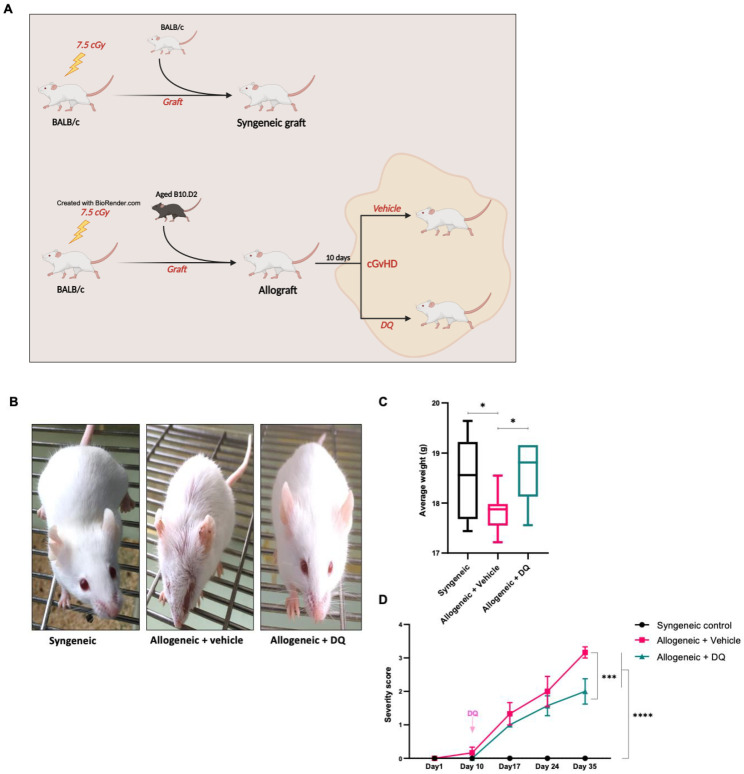
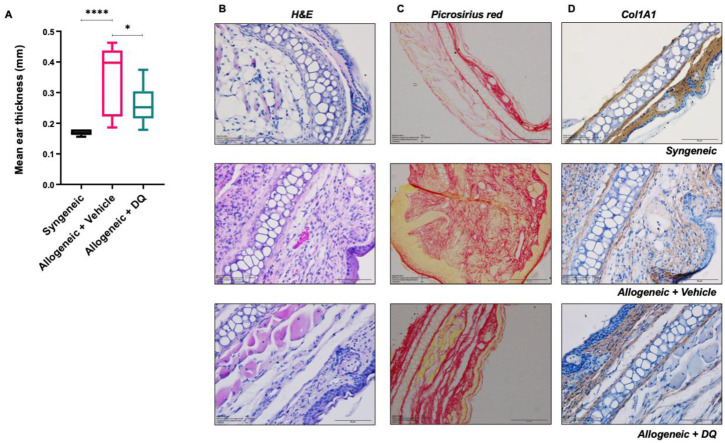
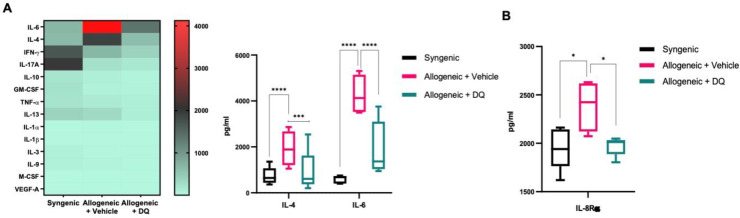
Graft-versus-host disease (GVHD) is a life-threatening systemic complication of allogeneic hematopoietic stem cell transplantation (HSCT) characterized by dysregulation of T and B cell activation and function, scleroderma-like features, and multi-organ pathology. The treatment of cGVHD is limited to the management of symptoms and long-term use of immunosuppressive therapy, which underscores the need for developing novel treatment approaches. Notably, there is a striking similarity between cytokines/chemokines responsible for multi-organ damage in cGVHD and pro-inflammatory factors, immune modulators, and growth factors secreted by senescent cells upon the acquisition of senescence-associated secretory phenotype (SASP). In this pilot study, we questioned the involvement of senescent cell-derived factors in the pathogenesis of cGVHD triggered upon allogeneic transplantation in an irradiated host. Using a murine model that recapitulates sclerodermatous cGVHD, we investigated the therapeutic efficacy of a senolytic combination of dasatinib and quercetin (DQ) administered after 10 days of allogeneic transplantation and given every 7 days for 35 days. Treatment with DQ resulted in a significant improvement in several physical and tissue-specific features, such as alopecia and earlobe thickness, associated with cGVHD pathogenesis in allograft recipients. DQ also mitigated cGVHD-associated changes in the peripheral T cell pool and serum levels of SASP-like cytokines, such as IL-4, IL-6 and IL-8Rα. Our results support the involvement of senescent cells in the pathogenesis of cGVHD and provide a rationale for the use of DQ, a clinically approved senolytic approach, as a potential therapeutic strategy.
移植物抗宿主病(GVHD)是同种异体造血干细胞移植(HSCT)的一种危及生命的全身并发症,其特征为T细胞和B细胞激活及功能失调、硬皮病样特征和多器官病变。慢性移植物抗宿主病(cGVHD)的治疗仅限于症状管理和长期使用免疫抑制疗法,这凸显了开发新治疗方法的必要性。值得注意的是,在cGVHD中导致多器官损伤的细胞因子/趋化因子与衰老细胞在获得衰老相关分泌表型(SASP)后分泌的促炎因子、免疫调节剂和生长因子之间存在显著相似性。在这项初步研究中,我们质疑衰老细胞衍生因子是否参与了受辐照宿主同种异体移植后引发的cGVHD的发病机制。使用一种模拟硬皮病样cGVHD的小鼠模型,我们研究了在同种异体移植10天后给予达沙替尼和槲皮素(DQ)的衰老细胞溶解组合并每7天给药一次,持续35天的治疗效果。DQ治疗使同种异体移植受体中与cGVHD发病机制相关的几种身体和组织特异性特征(如脱发和耳垂厚度)得到了显著改善。DQ还减轻了cGVHD相关的外周T细胞池变化以及SASP样细胞因子(如IL-4、IL-6和IL-8Rα)的血清水平变化。我们的结果支持衰老细胞参与cGVHD发病机制,并为使用临床批准的衰老细胞溶解方法DQ作为一种潜在治疗策略提供了理论依据。