Carmo Anália, Rocha Marilia, Pereirinha Patricia, Tomé Rui, Costa Eulália
Advanced Unit for Pharmacokinetics and Personalized Therapeutics, Clinical Pathology Department, Centro Hospitalar e Universitário de Coimbra, 3004-561 Coimbra, Portugal.
Advanced Unit for Pharmacokinetics and Personalized Therapeutics, Pharmacy Department, Centro Hospitalar e Universitário de Coimbra, 3004-561 Coimbra, Portugal.
Antibiotics (Basel). 2023 May 9;12(5):884. doi: 10.3390/antibiotics12050884.
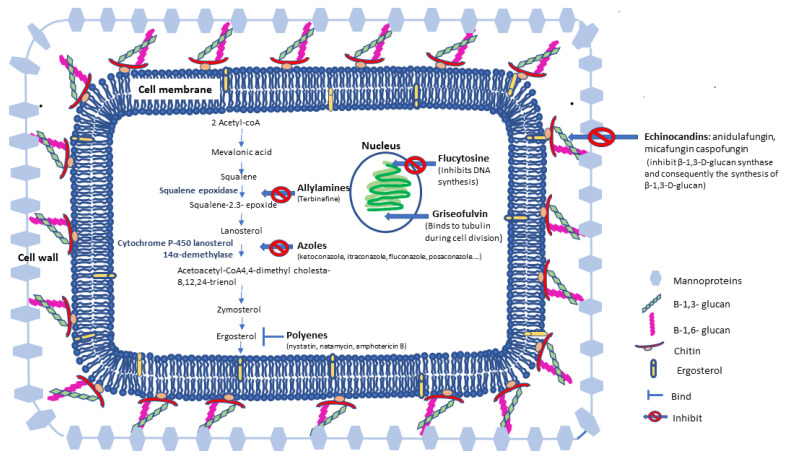
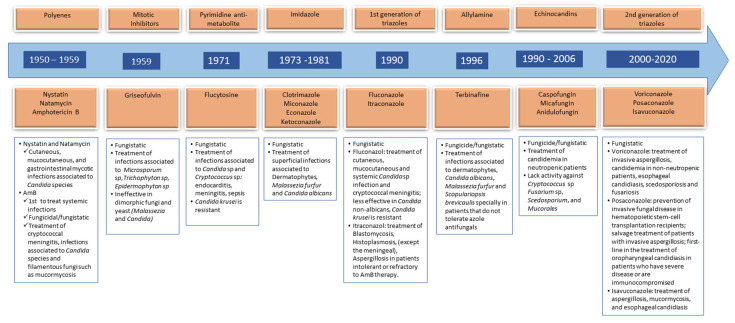
The use of antifungal drugs started in the 1950s with polyenes nystatin, natamycin and amphotericin B-deoxycholate (AmB). Until the present day, AmB has been considered to be a hallmark in the treatment of invasive systemic fungal infections. Nevertheless, the success and the use of AmB were associated with severe adverse effects which stimulated the development of new antifungal drugs such as azoles, pyrimidine antimetabolite, mitotic inhibitors, allylamines and echinochandins. However, all of these drugs presented one or more limitations associated with adverse reactions, administration route and more recently the development of resistance. To worsen this scenario, there has been an increase in fungal infections, especially in invasive systemic fungal infections that are particularly difficult to diagnose and treat. In 2022, the World Health Organization (WHO) published the first fungal priority pathogens list, alerting people to the increased incidence of invasive systemic fungal infections and to the associated risk of mortality/morbidity. The report also emphasized the need to rationally use existing drugs and develop new drugs. In this review, we performed an overview of the history of antifungals and their classification, mechanism of action, pharmacokinetic/pharmacodynamic (PK/PD) characteristics and clinical applications. In parallel, we also addressed the contribution of fungi biology and genetics to the development of resistance to antifungal drugs. Considering that drug effectiveness also depends on the mammalian host, we provide an overview on the roles of therapeutic drug monitoring and pharmacogenomics as means to improve the outcome, prevent/reduce antifungal toxicity and prevent the emergence of antifungal resistance. Finally, we present the new antifungals and their main characteristics.
抗真菌药物的使用始于20世纪50年代,当时使用的多烯类药物有制霉菌素、游霉素和两性霉素B-脱氧胆酸盐(AmB)。直到如今,AmB一直被认为是治疗侵袭性系统性真菌感染的标志性药物。然而,AmB的成功应用却伴随着严重的不良反应,这促使了新型抗真菌药物的研发,如唑类、嘧啶抗代谢物、有丝分裂抑制剂、烯丙胺类和棘白菌素类。然而,所有这些药物都存在一个或多个局限性,包括不良反应、给药途径以及最近出现的耐药性问题。更糟糕的是,真菌感染有所增加,尤其是侵袭性系统性真菌感染,这类感染特别难以诊断和治疗。2022年,世界卫生组织(WHO)发布了首份真菌重点病原体清单,提醒人们注意侵袭性系统性真菌感染发病率的上升以及相关的死亡/发病风险。该报告还强调了合理使用现有药物和研发新药的必要性。在本综述中,我们概述了抗真菌药物的历史及其分类、作用机制、药代动力学/药效学(PK/PD)特征和临床应用。同时,我们还探讨了真菌生物学和遗传学对抗真菌药物耐药性发展的影响。鉴于药物疗效还取决于哺乳动物宿主,我们概述了治疗药物监测和药物基因组学在改善治疗效果、预防/减少抗真菌毒性以及防止抗真菌耐药性出现方面的作用。最后,我们介绍了新型抗真菌药物及其主要特点。