Zhu Yingdan, Luan Yueting, Zhao Yingnan, Liu Jiali, Duan Zhangqun, Ruan Roger
Institute of Cereal & Oil Science and Technology, Academy of National Food and Strategic Reserves Administration, Beijing 100037, China.
College of Food Science, Heilongjiang Bayi Agricultural University, Daqing 163319, China.
Foods. 2023 May 11;12(10):1949. doi: 10.3390/foods12101949.
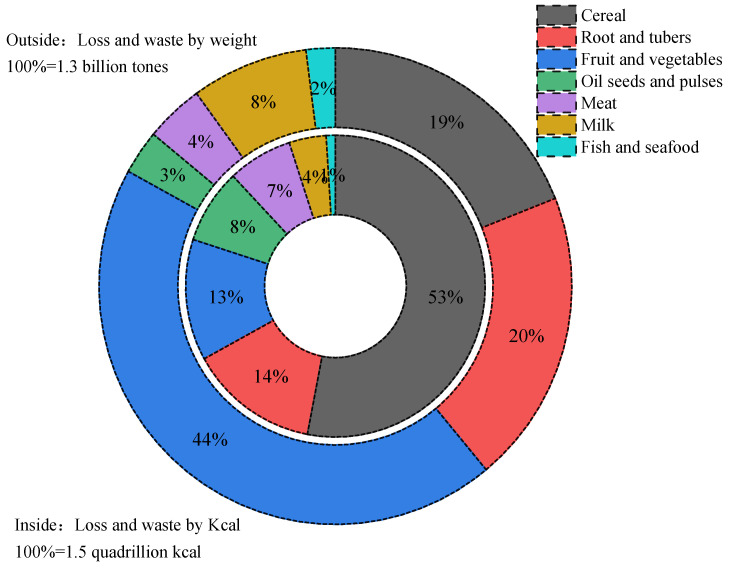
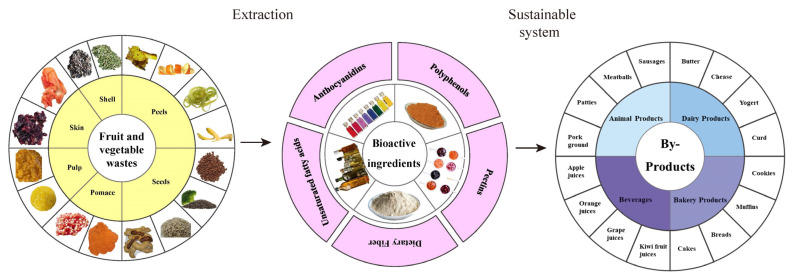
The fruit and vegetable industry produces millions of tons of residues, which can cause large economic losses. Fruit and vegetable wastes and by-products contain a large number of bioactive substances with functional ingredients that have antioxidant, antibacterial, and other properties. Current technologies can utilize fruit and vegetable waste and by-products as ingredients, food bioactive compounds, and biofuels. Traditional and commercial utilization in the food industry includes such technologies as microwave-assisted extraction (MAE), supercritical fluid extraction (SFE), ultrasonic-assisted extraction (UAE), and high hydrostatic pressure technique (HHP). Biorefinery methods for converting fruit and vegetable wastes into biofuels, such as anaerobic digestion (AD), fermentation, incineration, pyrolysis and gasification, and hydrothermal carbonization, are described. This study provides strategies for the processing of fruit and vegetable wastes using eco-friendly technologies and lays a foundation for the utilization of fruit and vegetable loss/waste and by-products in a sustainable system.
果蔬产业产生数百万吨残渣,这可能会造成巨大的经济损失。果蔬废弃物和副产品含有大量具有抗氧化、抗菌等特性的生物活性物质及功能成分。当前技术可将果蔬废弃物和副产品用作配料、食品生物活性化合物及生物燃料。食品工业中的传统和商业利用技术包括微波辅助萃取(MAE)、超临界流体萃取(SFE)、超声辅助萃取(UAE)和高静水压技术(HHP)等。本文描述了将果蔬废弃物转化为生物燃料的生物精炼方法,如厌氧消化(AD)、发酵、焚烧、热解与气化以及水热碳化。本研究提供了利用环保技术处理果蔬废弃物的策略,并为在可持续系统中利用果蔬损失/废弃物及副产品奠定了基础。