Laboratoire de Biologie Moléculaire et Cellulaire, Département de Biologie, Université des Sciences et Techniques de Masuku (USTM), Franceville BP 941, Gabon.
Unité de Recherche en Écologie de la Santé, Centre Interdisciplinaire de Recherches Médicales de Franceville (CIRMF), Franceville BP 769, Gabon.
Int J Environ Res Public Health. 2023 May 10;20(10):5774. doi: 10.3390/ijerph20105774.
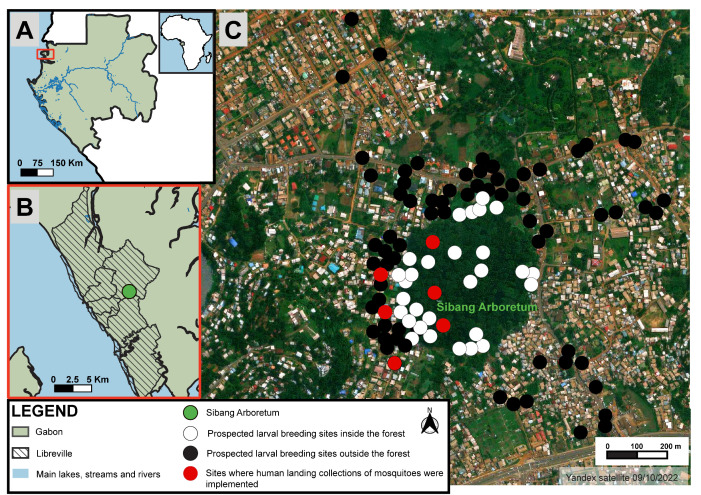
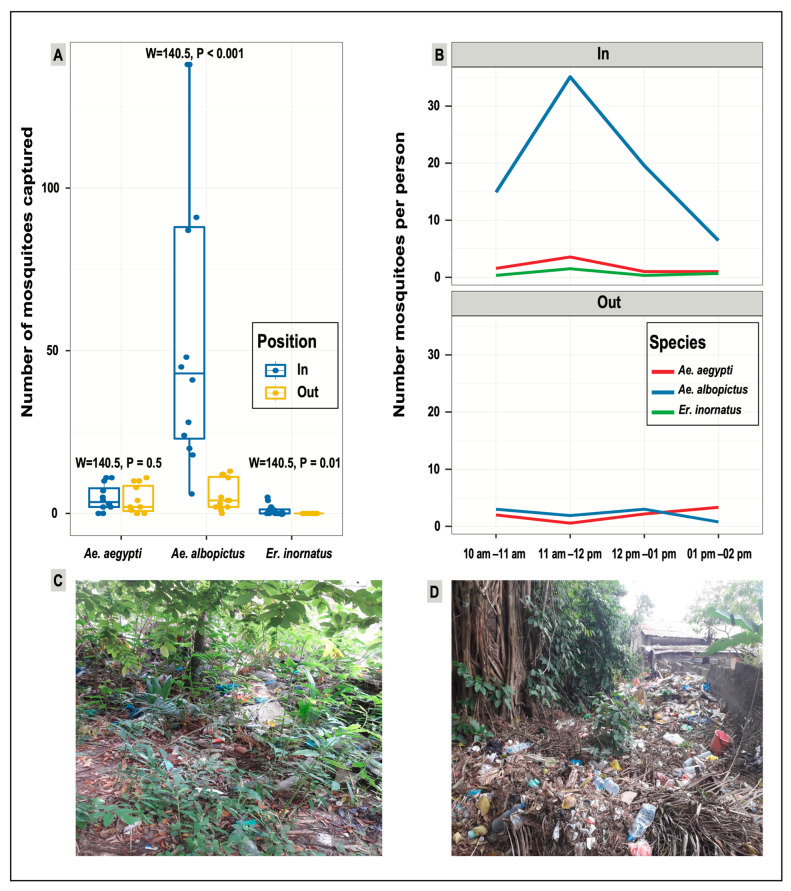
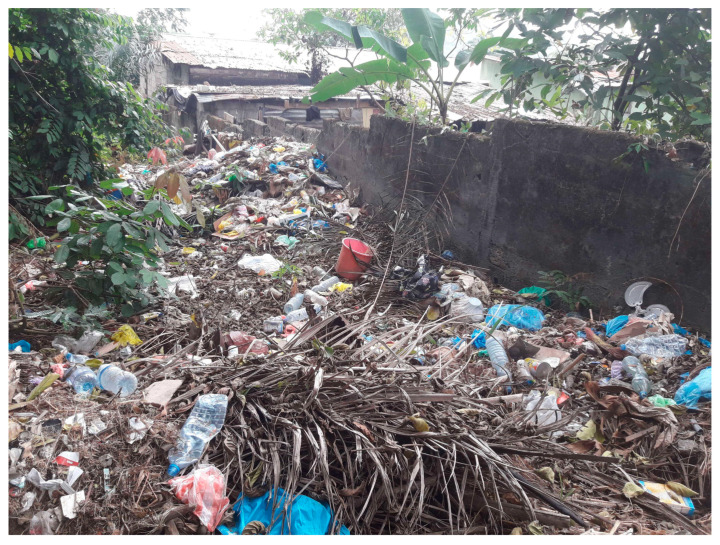
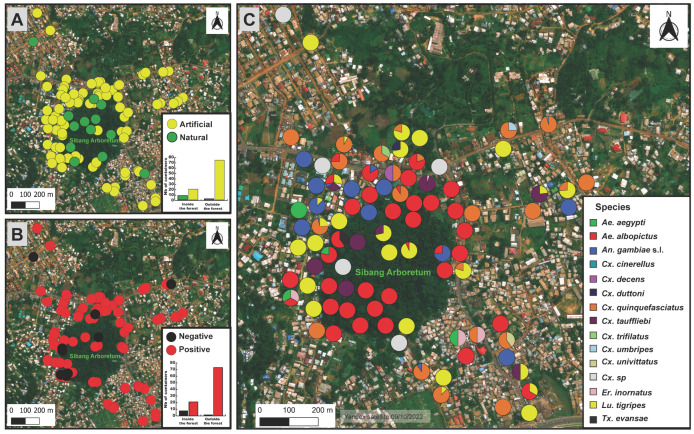
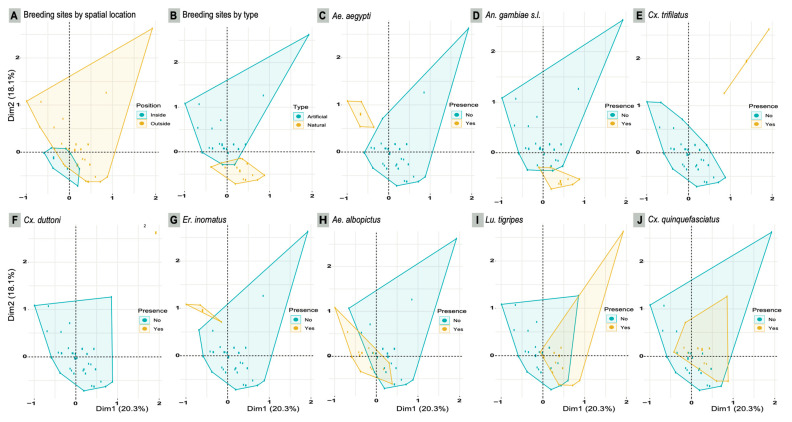
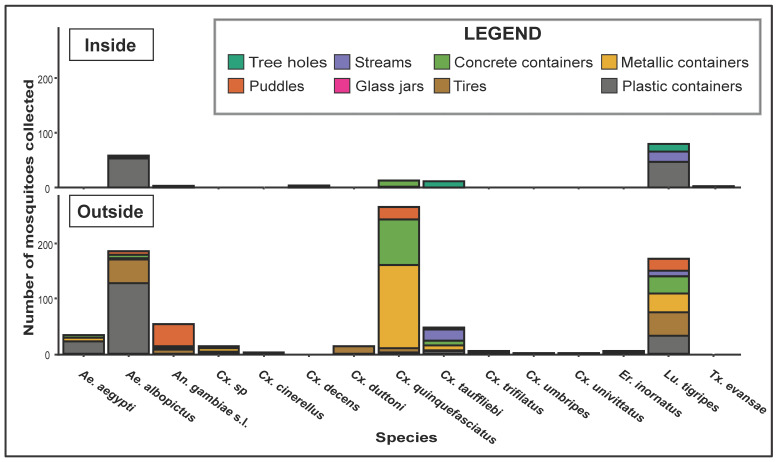
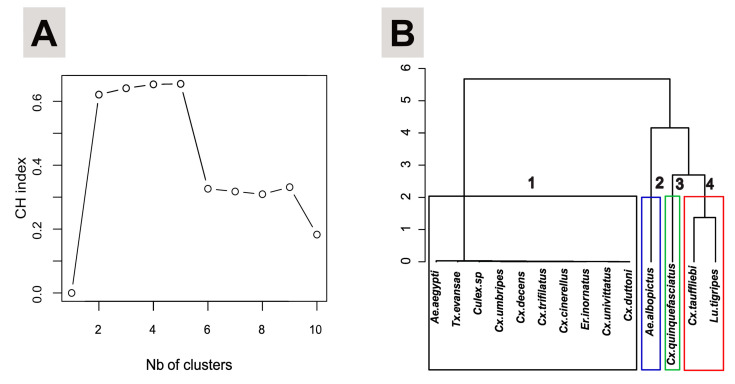
In Africa, vector-borne diseases are a major public health issue, especially in cities. Urban greening is increasingly considered to promote inhabitants' well-being. However, the impact of urban green spaces on vector risk remains poorly investigated, particularly urban forests in poor hygienic conditions. Therefore, using larval sampling and human landing catches, this study investigated the mosquito diversity and the vector risk in a forest patch and its inhabited surroundings in Libreville, Gabon, central Africa. Among the 104 water containers explored, 94 (90.4%) were artificial (gutters, used tires, plastic bottles) and 10 (9.6%) were natural (puddles, streams, tree holes). In total, 770 mosquitoes belonging to 14 species were collected from such water containers (73.1% outside the forested area). The mosquito community was dominated by (33.5%), (30.4%), and (16.5%). Although mosquito diversity was almost double outside compared to inside the forest (Shannon diversity index: 1.3 vs. 0.7, respectively), the species relative abundance (Morisita-Horn index = 0.7) was similar. (86.1%) was the most aggressive species, putting people at risk of -borne viruses. This study highlights the importance of waste pollution in urban forested ecosystems as a potential driver of mosquito-borne diseases.
在非洲,病媒传播疾病是一个主要的公共卫生问题,特别是在城市中。城市绿化越来越被认为可以促进居民的福祉。然而,城市绿地对病媒风险的影响仍未得到充分研究,特别是在卫生条件较差的城市森林中。因此,本研究使用幼虫抽样和人体诱捕法,调查了中非加蓬利伯维尔的一个森林斑块及其周围居民区的蚊子多样性和病媒风险。在探索的 104 个水容器中,94 个(90.4%)是人工的(排水沟、使用过的轮胎、塑料瓶),10 个(9.6%)是天然的(水坑、溪流、树洞)。总共从这些水容器中收集到属于 14 种的 770 只蚊子(73.1%在森林区外)。蚊子群落主要由 (33.5%)、 (30.4%)和 (16.5%)组成。尽管森林外的蚊子多样性几乎是森林内的两倍(香农多样性指数:1.3 对 0.7),但物种相对丰度(Morisita-Horn 指数=0.7)相似。 (86.1%)是最具攻击性的物种,使人们面临 - 传播病毒的风险。本研究强调了城市森林生态系统中废物污染作为病媒传播疾病潜在驱动因素的重要性。