Halpern Aaron, Bartsch Lilly R, Ibrahim Kaan, Harrison Stuart A, Ahn Minkoo, Christodoulou John, Lane Nick
UCL Centre for Life's Origins and Evolution (CLOE), Department of Genetics, Evolution and Environment, University College London, London WC1E 6BT, UK.
Department of Structural and Molecular Biology, Institute of Structural and Molecular Biology (ISMB), University College London, London WC1E 6BT, UK.
Life (Basel). 2023 May 4;13(5):1129. doi: 10.3390/life13051129.
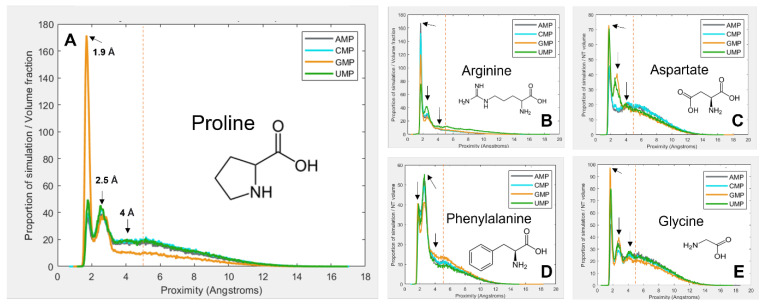
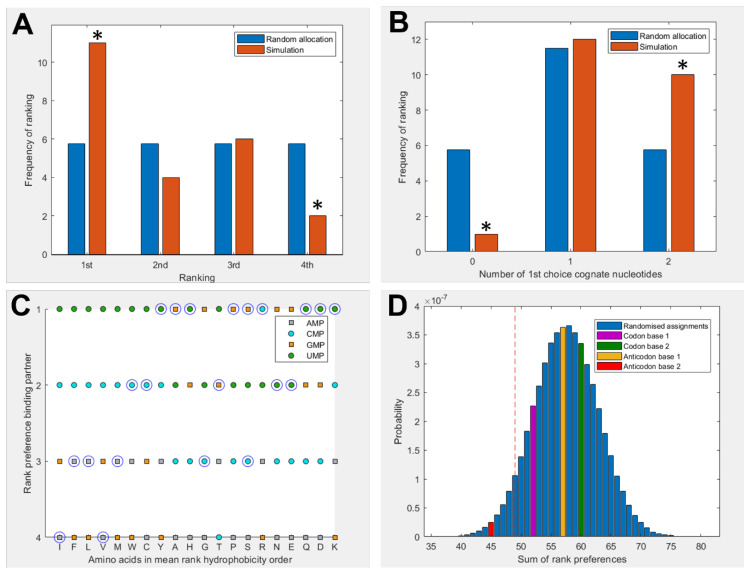
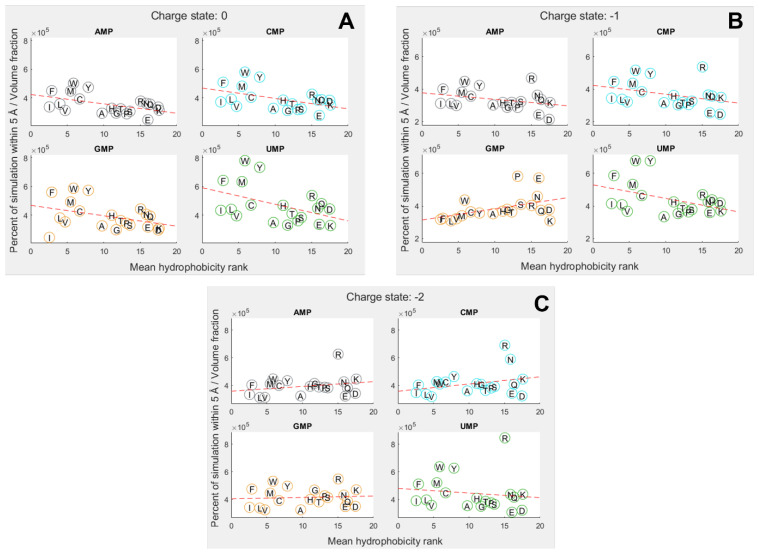
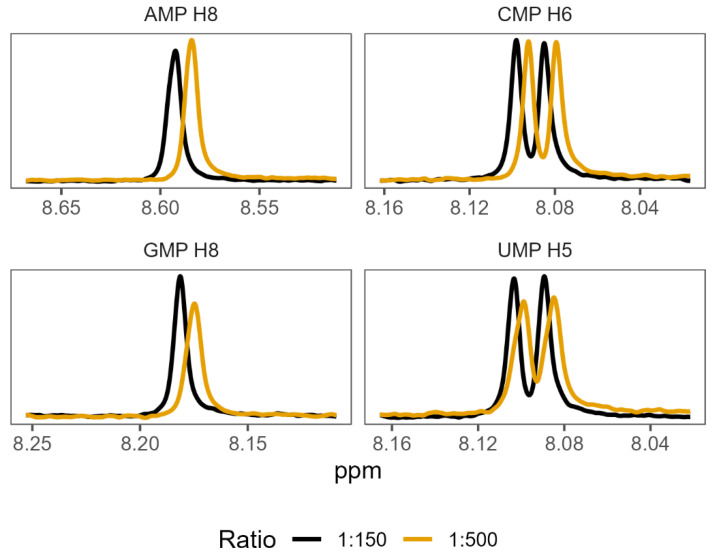
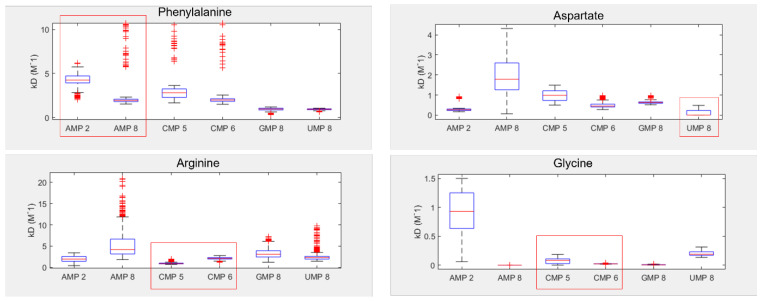
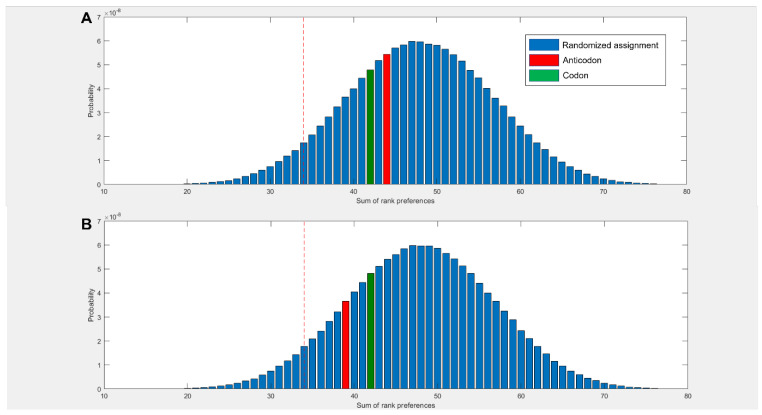
The genetic code conceals a 'code within the codons', which hints at biophysical interactions between amino acids and their cognate nucleotides. Yet, research over decades has failed to corroborate systematic biophysical interactions across the code. Using molecular dynamics simulations and NMR, we have analysed interactions between the 20 standard proteinogenic amino acids and 4 RNA mononucleotides in 3 charge states. Our simulations show that 50% of amino acids bind best with their anticodonic middle base in the -1 charge state common to the backbone of RNA, while 95% of amino acids interact most strongly with at least 1 of their codonic or anticodonic bases. Preference for the cognate anticodonic middle base was greater than 99% of randomised assignments. We verify a selection of our results using NMR, and highlight challenges with both techniques for interrogating large numbers of weak interactions. Finally, we extend our simulations to a range of amino acids and dinucleotides, and corroborate similar preferences for cognate nucleotides. Despite some discrepancies between the predicted patterns and those observed in biology, the existence of weak stereochemical interactions means that random RNA sequences could template non-random peptides. This offers a compelling explanation for the emergence of genetic information in biology.
遗传密码隐藏着“密码子内的密码”,这暗示了氨基酸与其同源核苷酸之间的生物物理相互作用。然而,几十年来的研究未能证实整个密码中存在系统性的生物物理相互作用。我们使用分子动力学模拟和核磁共振技术,分析了20种标准蛋白质氨基酸与3种电荷状态下的4种RNA单核苷酸之间的相互作用。我们的模拟表明,50%的氨基酸在RNA主链常见的-1电荷状态下与其反密码子中间碱基结合最佳,而95%的氨基酸与它们的密码子或反密码子碱基中的至少一个相互作用最强。对同源反密码子中间碱基的偏好超过了99%的随机分配。我们使用核磁共振技术验证了我们的部分结果,并强调了两种技术在研究大量弱相互作用时面临的挑战。最后,我们将模拟扩展到一系列氨基酸和二核苷酸,并证实了对同源核苷酸的类似偏好。尽管预测模式与生物学中观察到的模式之间存在一些差异,但弱立体化学相互作用的存在意味着随机RNA序列可以作为非随机肽的模板。这为生物学中遗传信息的出现提供了一个令人信服的解释。