Nakhal Mohammed Moutaz, Jayaprakash Petrilla, Aburuz Salahdein, Sadek Bassem, Akour Amal
Department of Biochemistry and Molecular Biology Sciences, College of Medicine and Health Sciences, United Arab Emirates University, Al Ain P.O. Box 15551, United Arab Emirates.
Department of Pharmacology & Therapeutics, College of Medicine and Health Sciences, United Arab Emirates University, Al Ain P.O. Box 15551, United Arab Emirates.
Pharmaceuticals (Basel). 2023 May 19;16(5):769. doi: 10.3390/ph16050769.
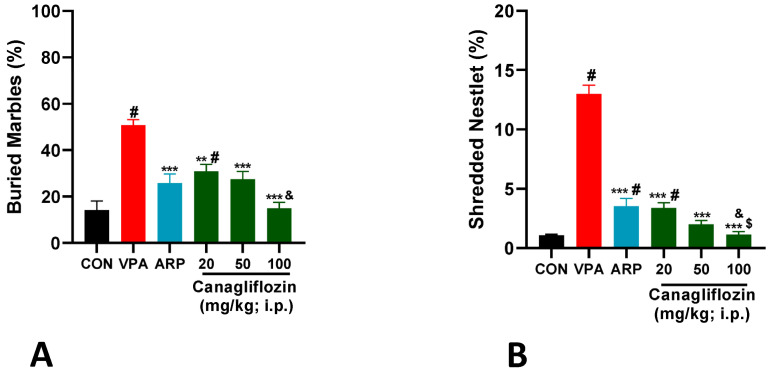
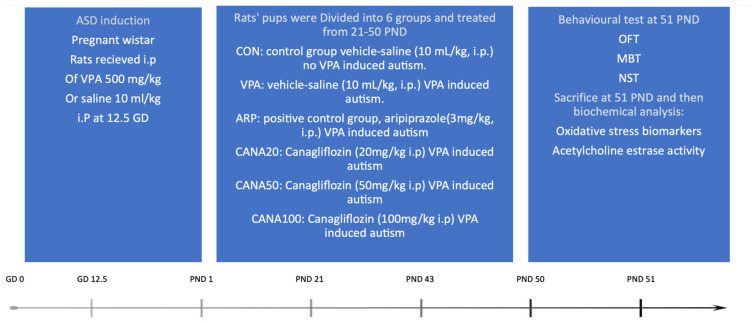
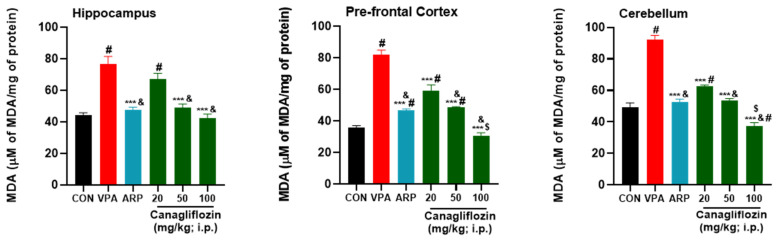
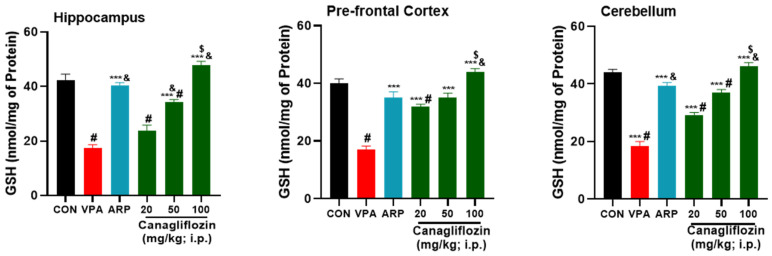
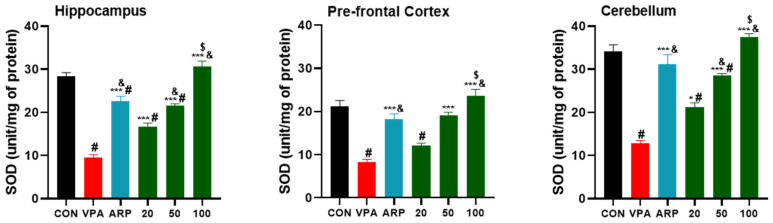
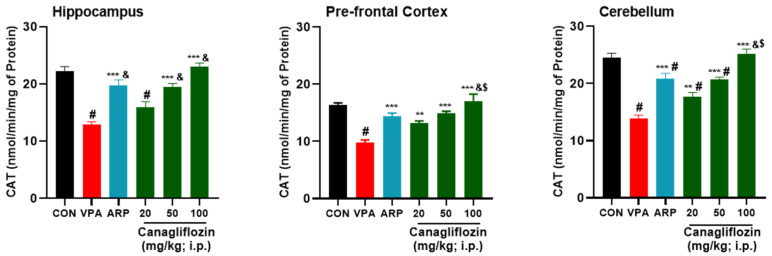
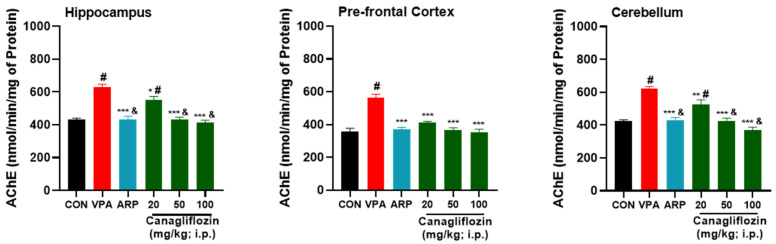
Based on their proven anti-inflammatory and antioxidant effects, recent studies have examined the therapeutic potential of the sodium-glucose cotransporter 2 (SGLT2) inhibitors in neurodevelopmental disorders such as autism spectrum disorder (ASD). Therefore, the aim of this study is to assess the effects of subchronic systemic treatment with intraperitoneal (i.p.) canagliflozin (20, 50, and 100 mg/kg) compared to aripiprazole (ARP) (3 mg/g, i.p.) in a valproic acid (VPA)-induced rat model of autism. The behavioral characteristics of ASD, oxidative stress, and acetylcholinesterase (AChE) activity in rats with ASD-like behaviors, which were induced by prenatal exposure to VPA, were evaluated. The behavioral assessment methods used for this study were the open field test (OFT), the marble-burying test (MBT), and the nestlet-shredding test (NST) to examine their exploratory, anxiety, and compulsiveness-like actions, while the biochemical assessment used for this study was an ELISA colorimetric assay to measure ASD biomarker activity in the hippocampus, prefrontal cortex, and cerebellum. Rats that were pretreated with 100 mg/kg of canagliflozin displayed a significantly lower percentage of shredding (1.12 ± 0.6%, < 0.01) compared to the ARP group (3.52 ± 1.6%). Pretreatment with (20 mg/kg, 50 mg/kg, and 100 mg/kg) canagliflozin reversed anxiety levels and hyperactivity and reduced hyper-locomotor activity significantly (161 ± 34.9 s, < 0.05; 154 ± 44.7 s, < 0.05; 147 ± 33.6 s, < 0.05) when compared with the VPA group (303 ± 140 s). Moreover, canagliflozin and ARP mitigated oxidative stress status by restoring levels of glutathione (GSH) and catalase (CAT) and increasing the levels of malondialdehyde (MDA) in all tested brain regions. The observed results propose repurposing of canagliflozin in the therapeutic management of ASD. However, further investigations are still required to verify the clinical relevance of canagliflozin in ASD.
基于其已证实的抗炎和抗氧化作用,最近的研究探讨了钠-葡萄糖协同转运蛋白2(SGLT2)抑制剂在自闭症谱系障碍(ASD)等神经发育障碍中的治疗潜力。因此,本研究的目的是评估腹腔注射(i.p.)卡格列净(20、50和100mg/kg)与阿立哌唑(ARP)(3mg/g,i.p.)进行亚慢性全身治疗对丙戊酸(VPA)诱导的自闭症大鼠模型的影响。评估了产前暴露于VPA诱导的具有ASD样行为的大鼠的ASD行为特征、氧化应激和乙酰胆碱酯酶(AChE)活性。本研究使用的行为评估方法是旷场试验(OFT)、埋珠试验(MBT)和碎窝试验(NST),以检查其探索性、焦虑性和强迫性样行为,而本研究使用的生化评估是ELISA比色法,用于测量海马、前额叶皮质和小脑中的ASD生物标志物活性。与ARP组(3.52±1.6%)相比,用100mg/kg卡格列净预处理的大鼠的碎窝百分比显著降低(1.12±0.6%,<0.01)。与VPA组(303±140s)相比,用(20mg/kg、50mg/kg和100mg/kg)卡格列净预处理可逆转焦虑水平和多动,并显著降低过度运动活性(161±34.9s,<0.05;154±44.7s,<0.05;147±33.6s,<0.05)。此外,卡格列净和ARP通过恢复谷胱甘肽(GSH)和过氧化氢酶(CAT)水平并增加所有测试脑区的丙二醛(MDA)水平来减轻氧化应激状态。观察结果表明卡格列净可重新用于ASD的治疗管理。然而,仍需要进一步研究以验证卡格列净在ASD中的临床相关性。