Department of Biochemistry and Molecular Biotechnology, University of Massachusetts Chan Medical School, Worcester, MA, 01605, United States.
Department of Biochemistry and Biophysics, And the UNC Center for AIDS Research, University of North Carolina at Chapel Hill, Chapel Hill, NC, 27599, United States.
Eur J Med Chem. 2023 Sep 5;257:115501. doi: 10.1016/j.ejmech.2023.115501. Epub 2023 May 18.
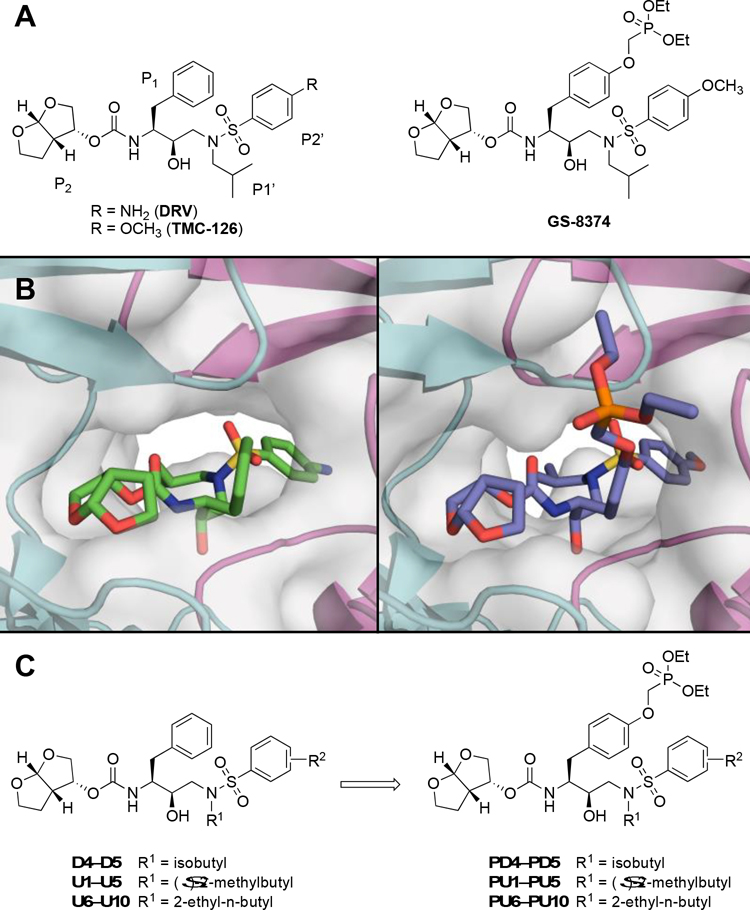
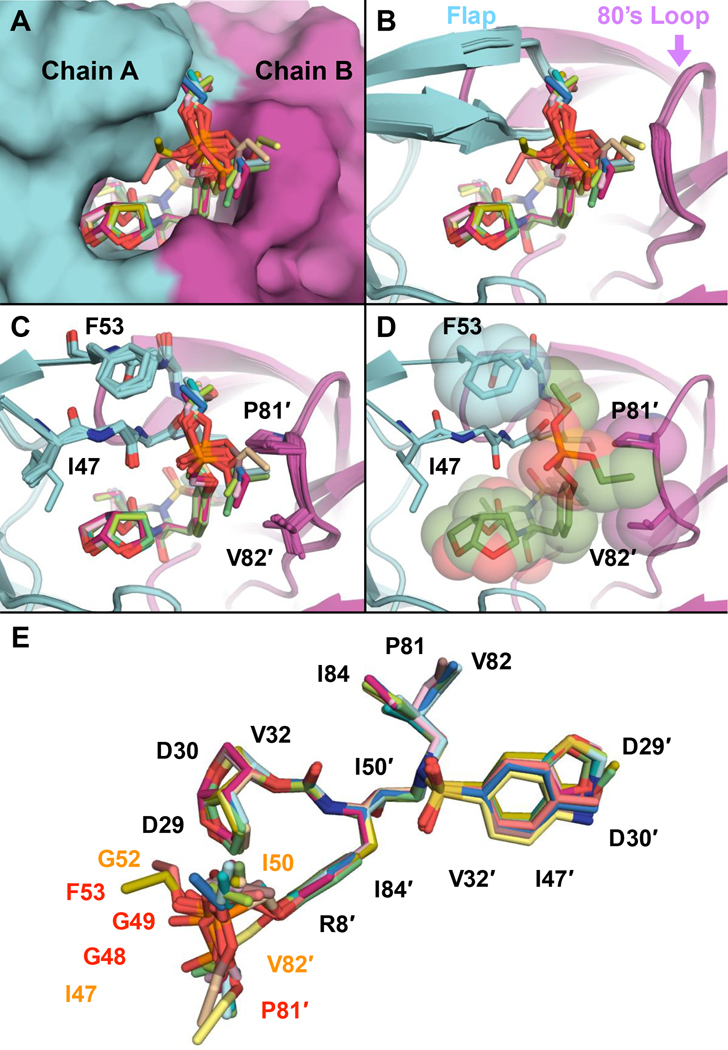
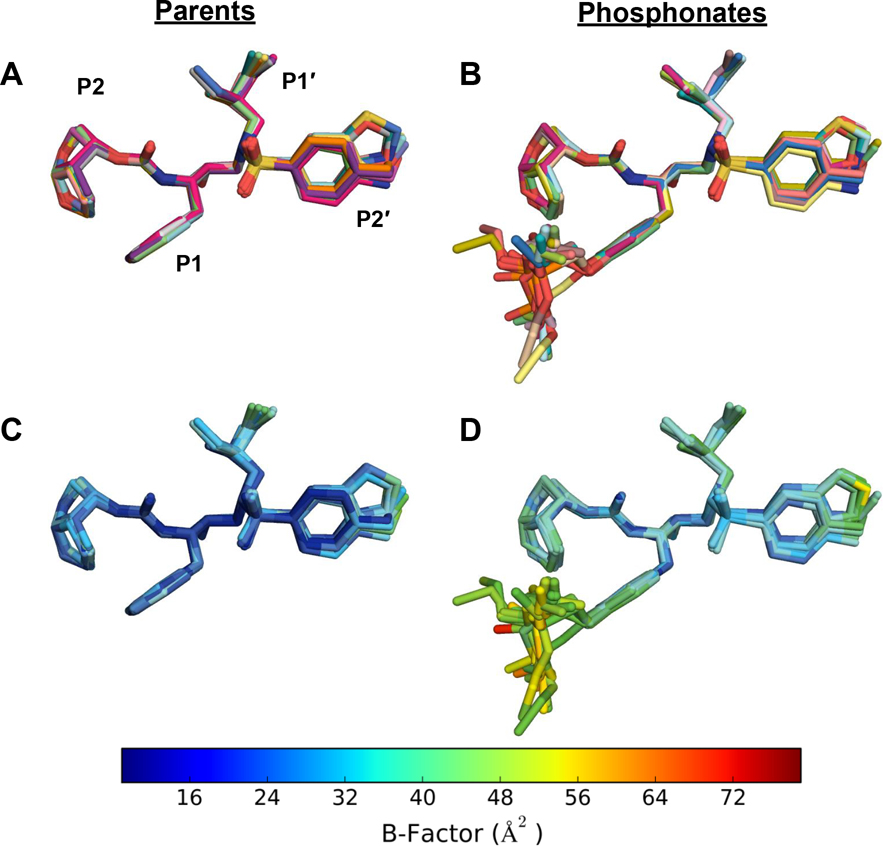
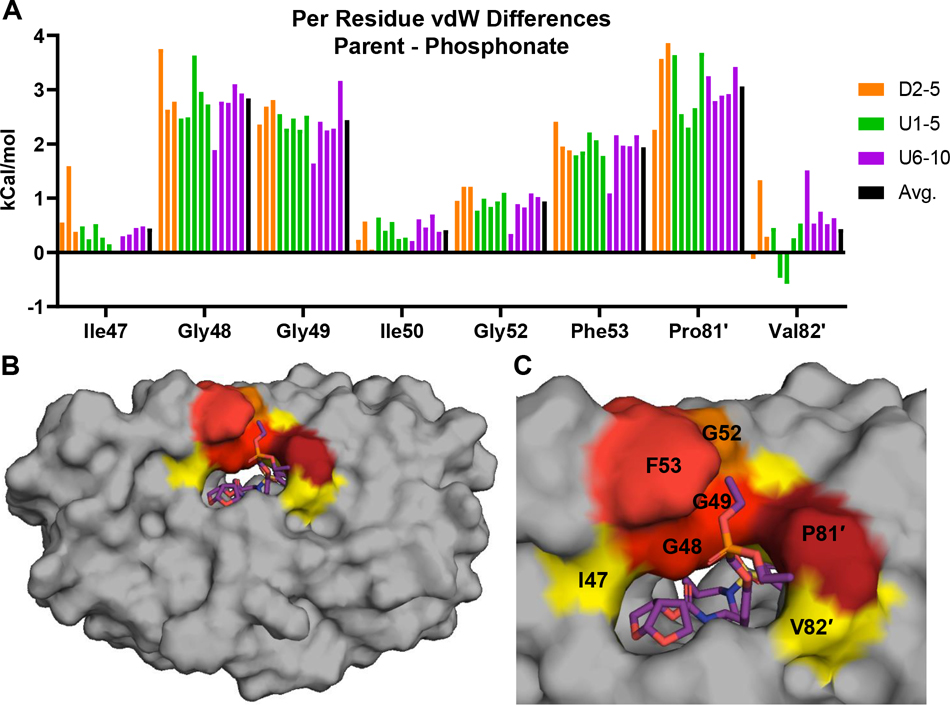
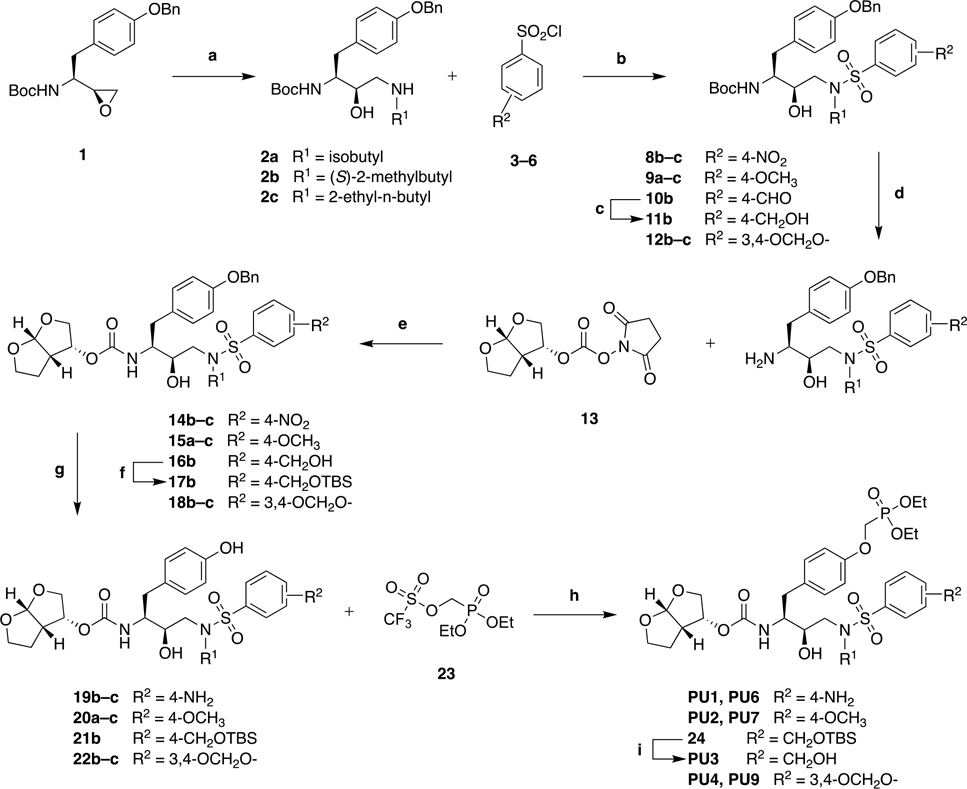
Protease inhibitors are the most potent antivirals against HIV-1, but they still lose efficacy against resistant variants. Improving the resistance profile is key to developing more robust inhibitors, which may be promising candidates for simplified next-generation antiretroviral therapies. In this study, we explored analogs of darunavir with a P1 phosphonate modification in combination with increasing size of the P1' hydrophobic group and various P2' moieties to improve potency against resistant variants. The phosphonate moiety substantially improved potency against highly mutated and resistant HIV-1 protease variants, but only when combined with more hydrophobic moieties at the P1' and P2' positions. Phosphonate analogs with a larger hydrophobic P1' moiety maintained excellent antiviral potency against a panel of highly resistant HIV-1 variants, with significantly improved resistance profiles. The cocrystal structures indicate that the phosphonate moiety makes extensive hydrophobic interactions with the protease, especially with the flap residues. Many residues involved in these protease-inhibitor interactions are conserved, enabling the inhibitors to maintain potency against highly resistant variants. These results highlight the need to balance inhibitor physicochemical properties by simultaneous modification of chemical groups to further improve resistance profiles.
蛋白酶抑制剂是对抗 HIV-1 最有效的抗病毒药物,但它们仍然会对抗药性变异体失去疗效。改善耐药性是开发更强大抑制剂的关键,这些抑制剂可能是简化下一代抗逆转录病毒疗法的有前途的候选药物。在这项研究中,我们探索了带有 P1 膦酸酯修饰的达芦那韦类似物,同时增加 P1' 疏水区和各种 P2' 部分的大小,以提高对耐药变体的效力。膦酸酯部分大大提高了对高度突变和耐药的 HIV-1 蛋白酶变体的效力,但只有与 P1' 和 P2' 位置的疏水区结合时才会如此。带有较大疏水区 P1' 部分的膦酸酯类似物对一组高度耐药的 HIV-1 变体保持了优异的抗病毒效力,且耐药性显著改善。共晶结构表明,膦酸酯部分与蛋白酶形成广泛的疏水相互作用,尤其是与瓣状结构残基。参与这些蛋白酶-抑制剂相互作用的许多残基是保守的,使抑制剂能够保持对高度耐药变体的效力。这些结果强调需要通过同时修饰化学基团来平衡抑制剂的物理化学性质,以进一步改善耐药性。