Department of Nephrology, The Third Xiangya Hospital, Central South University, Changsha, P.R. China.
The Critical Kidney Disease Research Center of Central South University, Changsha, P.R. China.
Ren Fail. 2023 Dec;45(1):2215880. doi: 10.1080/0886022X.2023.2215880.
The purpose of this study was to investigate the association between serum proprotein convertase subtilisin/kexin type 9 (PCSK9) levels and renal function impairment in type 2 diabetes mellitus (T2DM) patients.
PCSK9 levels were measured in T2DM patients, streptozotocin plus high-fat diet (STZ + HFD) mice, human proximal tubular epithelial (HK-2) cells treated with high glucose plus palmitic acid (HGPA) and the corresponding control groups. The T2DM patients were further divided into three groups according to serum PCSK9 levels. An analysis of clinical data was conducted, and a binary logistic regression model was used to test the relationship between potential predictors and urine albumin/urine creatinine ratio (UACR) and estimated glomerular filtration rate (eGFR).
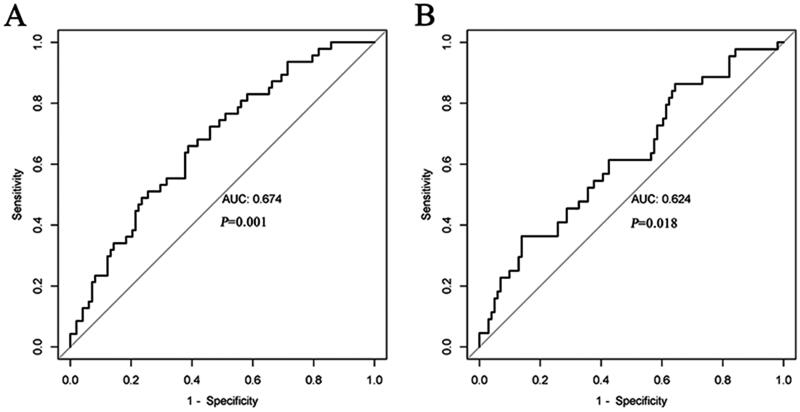
PCSK9 levels were higher in the DM group than in the control group in humans, mice and HK-2 cells. The systolic blood pressure (SBP), serum creatinine (Scr), blood urea nitrogen (BUN), triglyceride (TG), and urine α1-MG/urine creatinine ratio (UαCR) values in PCSK9 tertile 3 were significantly higher than those in PCSK9 tertile 1 ( < 0.05). The DBP and UACR values were significantly higher in PCSK9 tertile 3 than in PCSK9 tertile 1 and PCSK9 tertile 2 (both < 0.05). In addition, URCR values were significantly higher in PCSK9 tertile 3 and PCSK9 tertile 2 than in PCSK9 tertile 1 (both < 0.05). Serum PCSK9 levels were positively correlated with SBP, Scr, BUN, TG, URCR, UαCR and UACR but inversely correlated with eGFR. In STZ + HFD mice, serum PCSK9 levels were positively correlated with Scr, BUN and UACR, which was consistent with the findings in the patients. A logistic regression model revealed that serum PCSK9 is an independent risk factor for UACR ≥30 mg/g and eGFR <60 mL/min/1.73 m. The ROC curve showed that 170.53 ng/mL and 337.26 ng/mL PCSK9 were the best cutoff values for UACR ≥30 mg/g and eGFR <60 mL/min/1.73 m, respectively.
Serum PCSK9 levels are associated with renal function impairment in T2DM patients and in some patients lower PCSK9 may be helpful to decrease chronic kidney disease.
本研究旨在探讨血清前蛋白转化酶枯草溶菌素 9(PCSK9)水平与 2 型糖尿病(T2DM)患者肾功能损害的关系。
检测 T2DM 患者、链脲佐菌素加高脂饮食(STZ+HFD)小鼠、高糖加棕榈酸处理的人近端肾小管上皮(HK-2)细胞及相应对照组的 PCSK9 水平。根据血清 PCSK9 水平将 T2DM 患者进一步分为三组。进行临床数据分析,并使用二元逻辑回归模型检验潜在预测因子与尿白蛋白/尿肌酐比值(UACR)和估算肾小球滤过率(eGFR)之间的关系。
与对照组相比,人、鼠和 HK-2 细胞中的 DM 组 PCSK9 水平更高。PCSK9 三分位 3 组的收缩压(SBP)、血清肌酐(Scr)、血尿素氮(BUN)、甘油三酯(TG)和尿α1-MG/尿肌酐比值(UαCR)明显高于 PCSK9 三分位 1 组(均<0.05)。PCSK9 三分位 3 组的舒张压(DBP)和 UACR 明显高于 PCSK9 三分位 1 组和 PCSK9 三分位 2 组(均<0.05)。此外,PCSK9 三分位 3 组和 PCSK9 三分位 2 组的 URCR 值明显高于 PCSK9 三分位 1 组(均<0.05)。血清 PCSK9 水平与 SBP、Scr、BUN、TG、URCR、UαCR 和 UACR 呈正相关,与 eGFR 呈负相关。在 STZ+HFD 小鼠中,血清 PCSK9 水平与 Scr、BUN 和 UACR 呈正相关,与患者的结果一致。逻辑回归模型显示,血清 PCSK9 是 UACR≥30mg/g 和 eGFR<60mL/min/1.73m 的独立危险因素。ROC 曲线显示,170.53ng/mL 和 337.26ng/mL PCSK9 是 UACR≥30mg/g 和 eGFR<60mL/min/1.73m 的最佳截断值。
血清 PCSK9 水平与 T2DM 患者的肾功能损害有关,在某些患者中,较低的 PCSK9 可能有助于降低慢性肾脏病的发生。