Pedrosa Filipe C, Feizi Navid, Zhang Ruisi, Delaunay Remi, Sacco Dianne, Jagadeesan Jayender, Patel Rajni
Western University, ON, Canada.
Canadian Surgical Technologies and Advanced Robotics, ON, Canada.
Med Image Comput Comput Assist Interv. 2022 Sep;13437:626-635. doi: 10.1007/978-3-031-16449-1_60. Epub 2022 Sep 17.
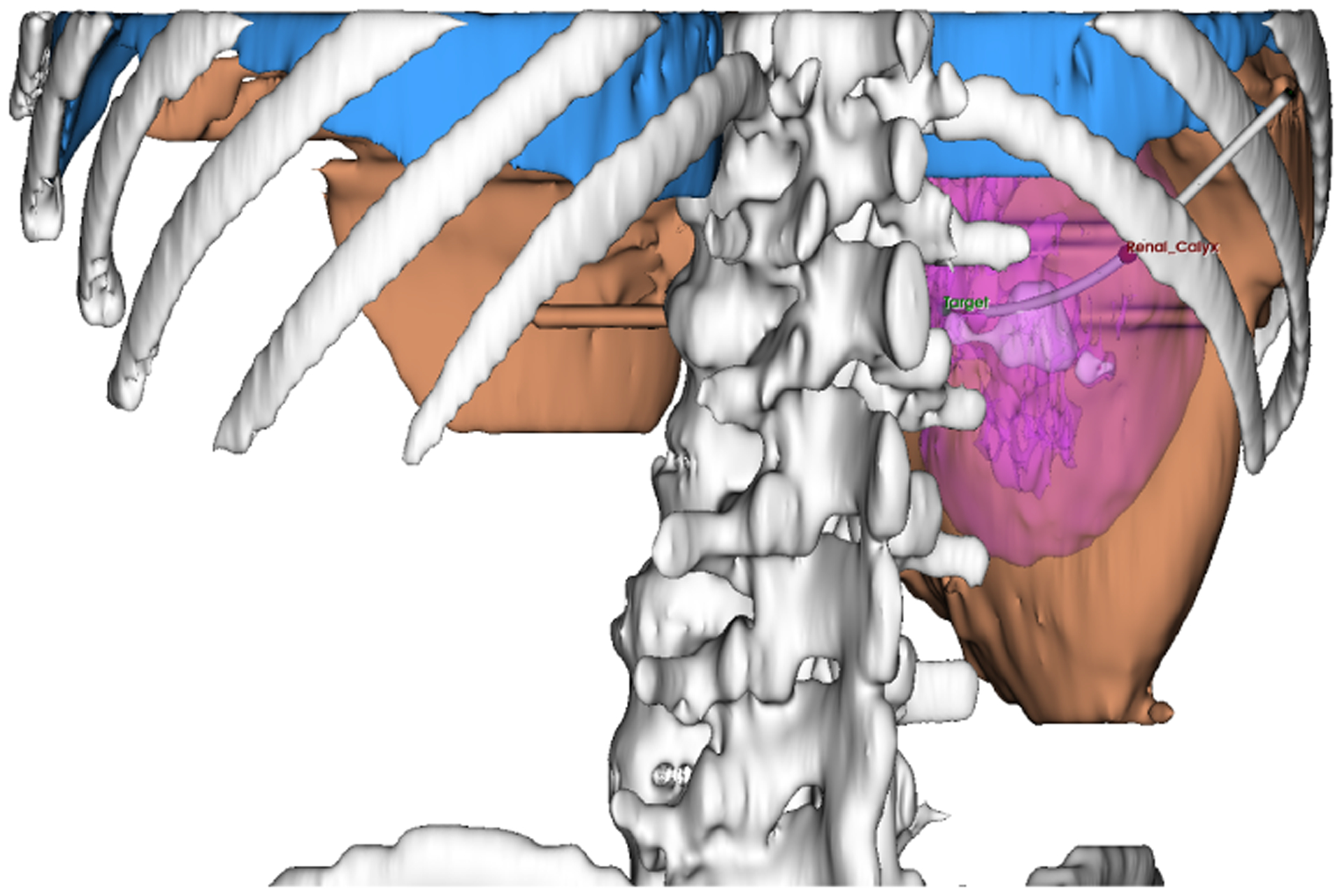
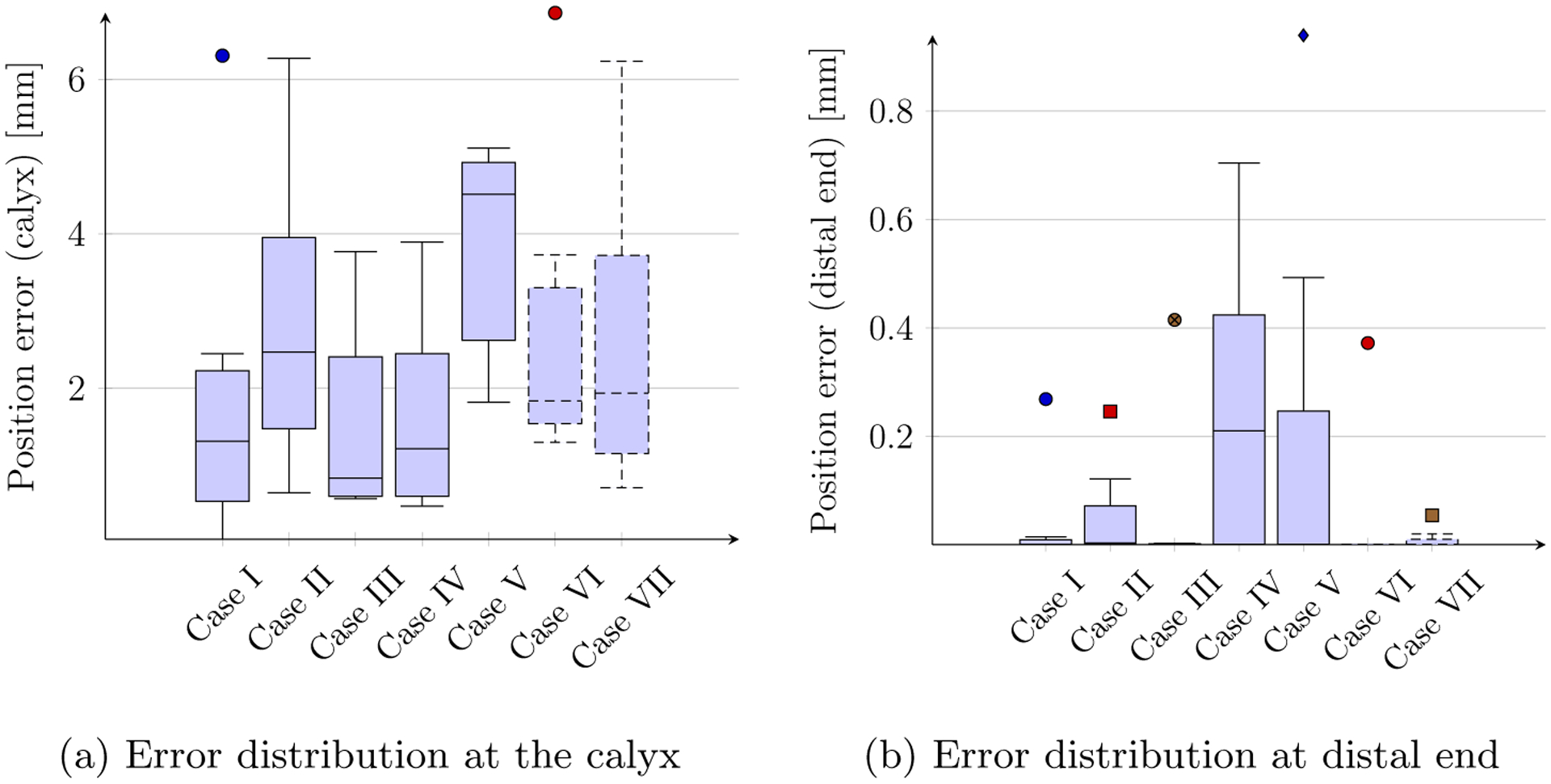
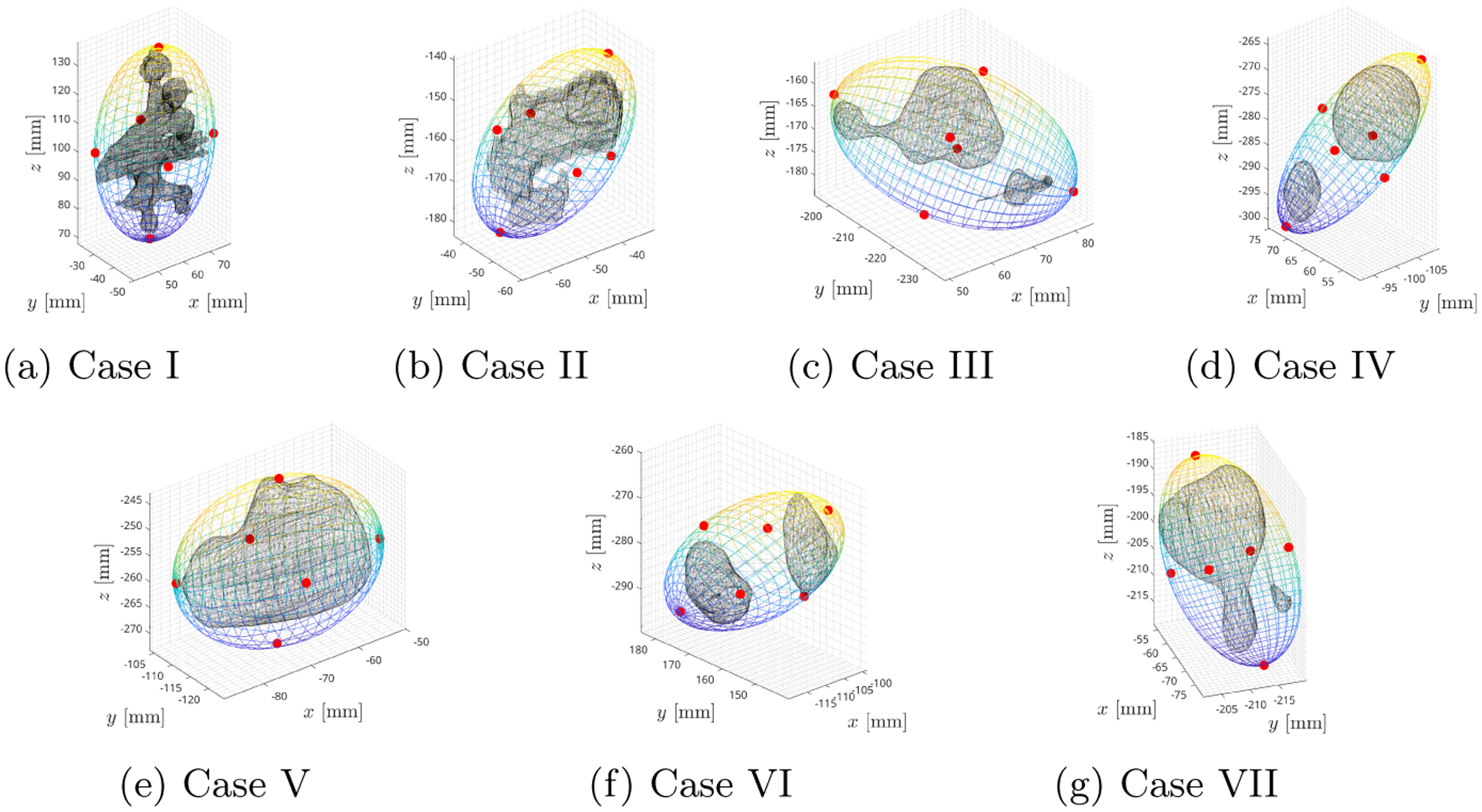
Percutaneous nephrolithotomy (PCNL) is considered a first-choice minimally invasive procedure for treating kidney stones larger than 2 cm. It yields higher stone-free rates than other minimally invasive techniques and is employed when extracorporeal shock wave lithotripsy or uteroscopy are, for instance, infeasible. Using this technique, surgeons create a tract through which a scope is inserted for gaining access to the stones. Traditional PCNL tools, however, present limited maneuverability, may require multiple punctures and often lead to excessive torquing of the instruments which can damage the kidney parenchyma and thus increase the risk of hemorrhage. We approach this problem by proposing a nested optimization-driven scheme for determining a single tract surgical plan along which a patient-specific concentric-tube robot (CTR) is deployed so as to enhance manipulability along the most dominant directions of the stone presentations. The approach is illustrated with seven sets of clinical data from patients who underwent PCNL. The simulated results may set the stage for achieving higher stone-free rates through single tract PCNL interventions while decreasing blood loss.
经皮肾镜取石术(PCNL)被认为是治疗直径大于2cm肾结石的首选微创手术。与其他微创技术相比,它能获得更高的结石清除率,当体外冲击波碎石术或输尿管镜检查不可行时会采用该方法。使用这种技术时,外科医生会创建一个通道,通过该通道插入内窥镜以接近结石。然而,传统的PCNL工具操作灵活性有限,可能需要多次穿刺,并且常常导致器械过度扭转,这可能会损伤肾实质,从而增加出血风险。我们通过提出一种嵌套优化驱动的方案来解决这个问题,该方案用于确定单通道手术计划,沿着该计划部署针对患者的同心管机器人(CTR),以增强沿结石最主要呈现方向的可操作性。通过七组接受PCNL治疗患者的临床数据对该方法进行了说明。模拟结果可能为通过单通道PCNL干预实现更高的结石清除率同时减少失血奠定基础。