Department of Urology, Institute of Urology (Laboratory of Reconstructive Urology), West China Hospital, Sichuan University, No. 37 Guo Xue Xiang, Chengdu, Sichuan, 610041, People's Republic of China.
BMC Urol. 2019 Oct 23;19(1):98. doi: 10.1186/s12894-019-0520-2.
Although the indications of minimally invasive treatments for pediatric urolithiasis are similar to those in adults, it is still crucial to make the right treatment decision due to the special considerations of children. This review aims to evaluate the efficacy and safety of extracorporeal shockwave lithotripsy (SWL), percutaneous nephrolithotomy (PCNL), and retrograde intrarenal surgery (RIRS) in the management of pediatric upper urinary tract stones.
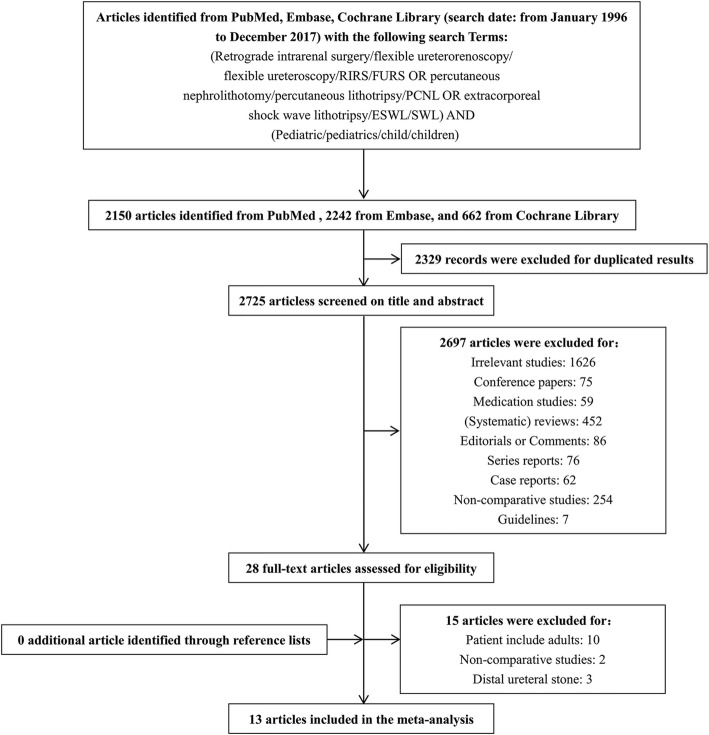
EMBASE, PubMed, and the Cochrane Library were searched from their first available date to March 2018. The studies that meet the inclusive criteria were included. The efficacy and safety of the treatments were assessed by means of meta-analysis of the stone free rate (SFR), complication rate, effectiveness quotient (EQ) and secondary outcome indicators.
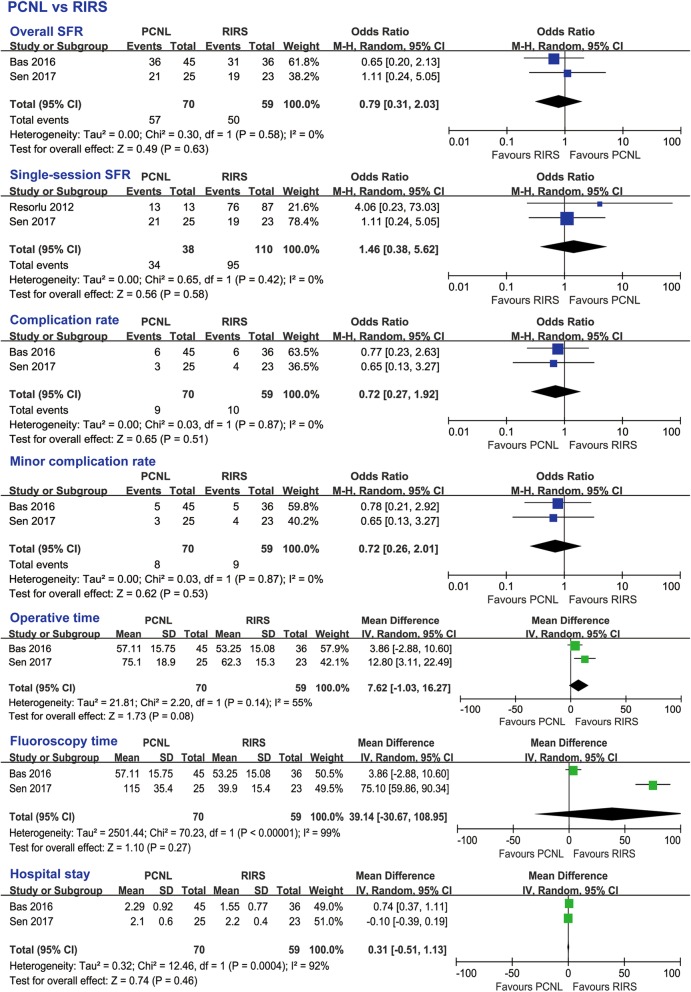
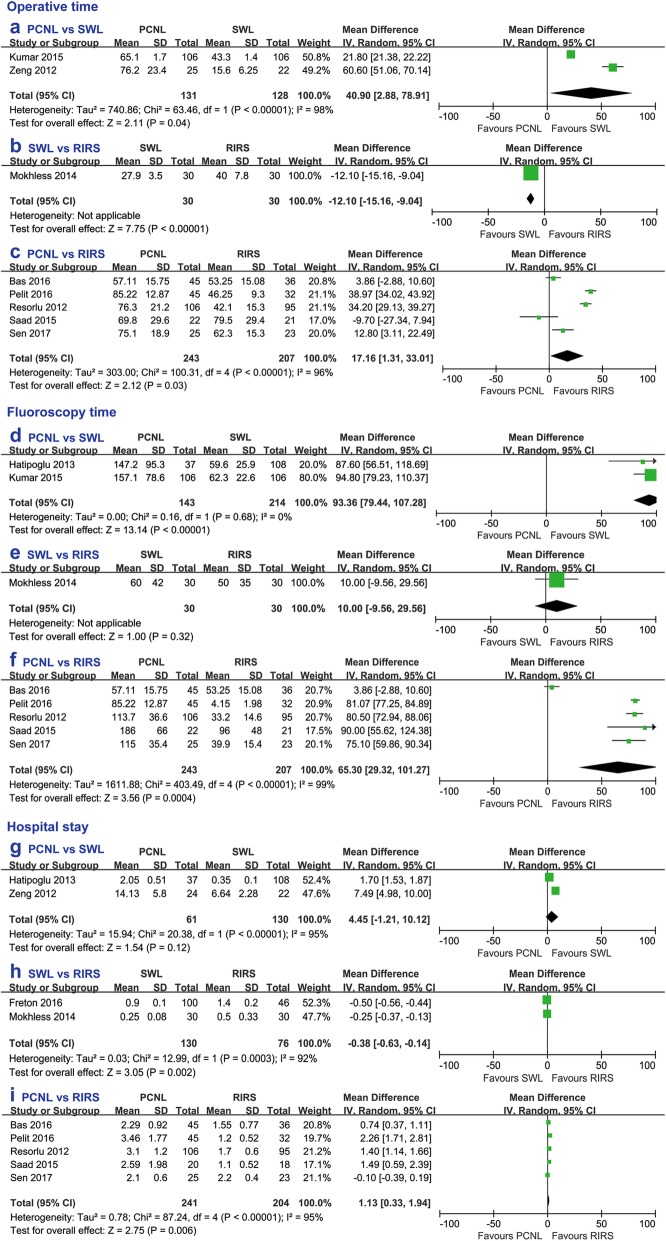
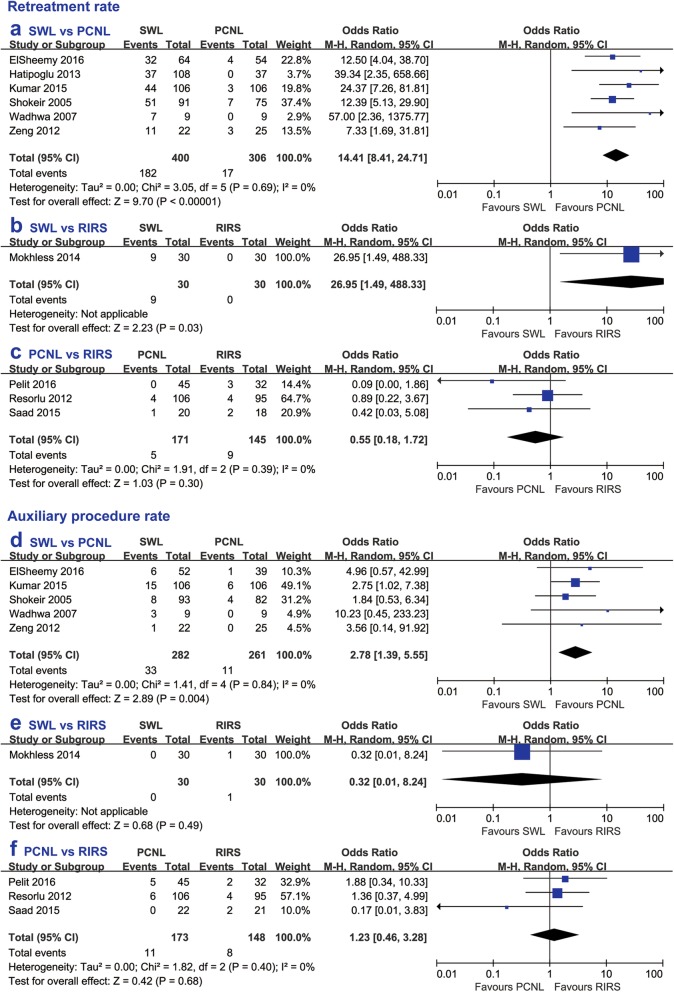
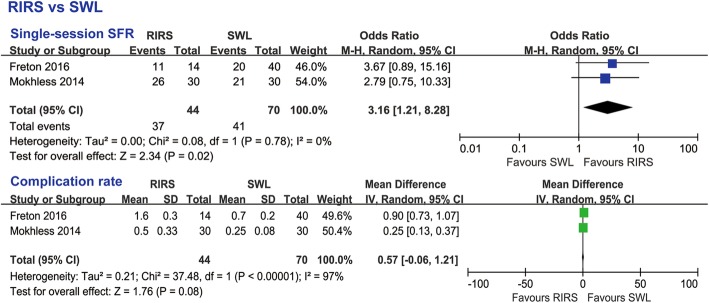
A total of 13 comparative studies were identified for data analysis. PCNL presented a significantly higher SFR compared with SWL. Similarly, the single-session SFR of RIRS was significantly higher than SWL. However, no significant difference was found between RIRS and SWL in the overall SFR. There was no significant difference between PCNL and RIRS in the SFR. Furthermore, no significant differences in complication rates were found among the three therapies. Compared with the other two treatments, PCNL had a longer operative time, fluoroscopy time and hospital stay. SWL had a shorter hospital stay, higher retreatment rate and auxiliary rate in comparison with the other two treatments. The present data also showed that PCNL presented a higher EQ than the other two treatments, and RIRS had a lower efficiency than SWL and PCNL. In the subgroup analysis of pediatric patients with stone ≤20 mm, the comparative results were similar to those described above, except for the higher complication rate of PCNL than SWL.
Although SWL as an outpatient procedure provides shorter hospital stay and reduces operative time, it has a lower SFR and higher retreatment rate than the other two treatments. PCNL exhibits a higher SFR and EQ than SWL; nevertheless, it has a longer operative time and fluoroscopy time than the other two procedures. RIRS offers a similar SFR as PCNL but a lower efficiency than PCNL.
尽管微创治疗小儿尿路结石的适应证与成人相似,但由于儿童的特殊情况,仍需慎重做出治疗决策。本综述旨在评估体外冲击波碎石术(SWL)、经皮肾镜取石术(PCNL)和逆行输尿管镜碎石术(RIRS)治疗小儿上尿路结石的疗效和安全性。
从建库至 2018 年 3 月,检索 EMBASE、PubMed 和 Cochrane Library 数据库,纳入符合纳入标准的研究。采用无结石率(SFR)、并发症发生率、有效率(EQ)和次要结局指标的荟萃分析评估治疗效果和安全性。
共纳入 13 项比较研究进行数据分析。PCNL 的 SFR 明显高于 SWL,RIRS 的单次 SFR 明显高于 SWL,但总体 SFR 与 SWL 无显著差异,与 RIRS 无显著差异。此外,三种治疗方法的并发症发生率无显著差异。与其他两种治疗方法相比,PCNL 的手术时间、透视时间和住院时间较长,SWL 的住院时间较短,再治疗率和辅助率较高。本研究还表明,PCNL 的 EQ 高于其他两种治疗方法,RIRS 的效率低于 SWL 和 PCNL。在结石大小≤20mm 的小儿患者亚组分析中,除 PCNL 的并发症发生率高于 SWL 外,其他结果与上述结果相似。
尽管 SWL 作为一种门诊治疗方法可缩短住院时间并减少手术时间,但与其他两种治疗方法相比,其 SFR 较低,再治疗率较高。PCNL 的 SFR 和 EQ 均高于 SWL,但手术时间和透视时间长于其他两种方法。RIRS 的 SFR 与 PCNL 相似,但效率低于 PCNL。