Epidemiology Branch, National Institute of Environmental Health Sciences, Research Triangle Park, North Carolina, United States of America.
Vanderbilt Genetics Institute, Vanderbilt University Medical Center, Nashville, Tennessee, United States of America.
PLoS Genet. 2023 May 31;19(5):e1010764. doi: 10.1371/journal.pgen.1010764. eCollection 2023 May.
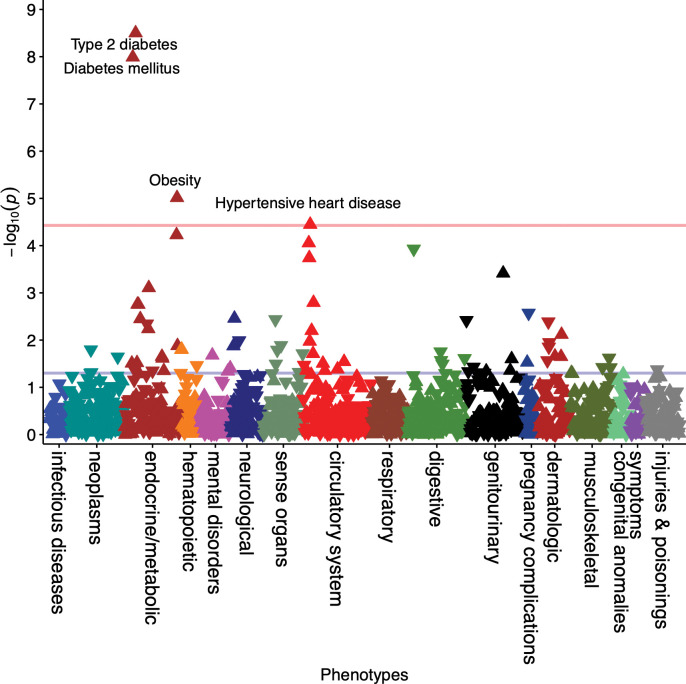
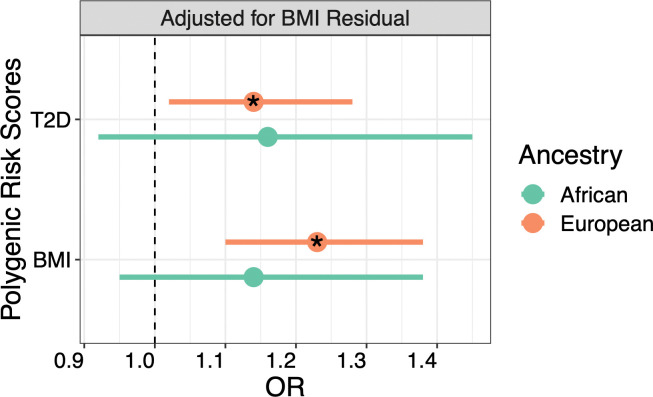
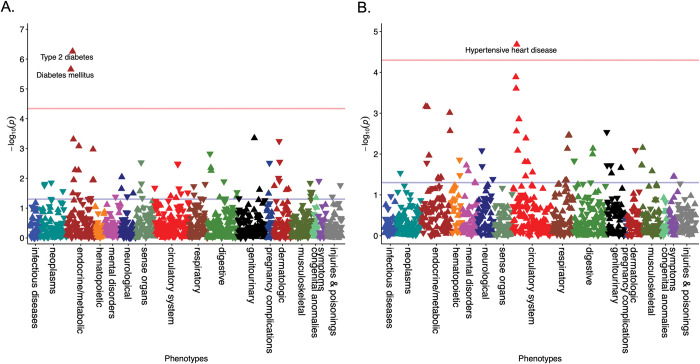
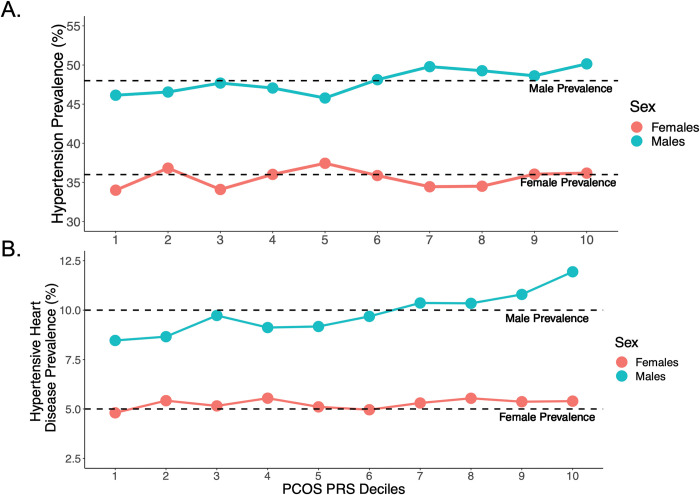
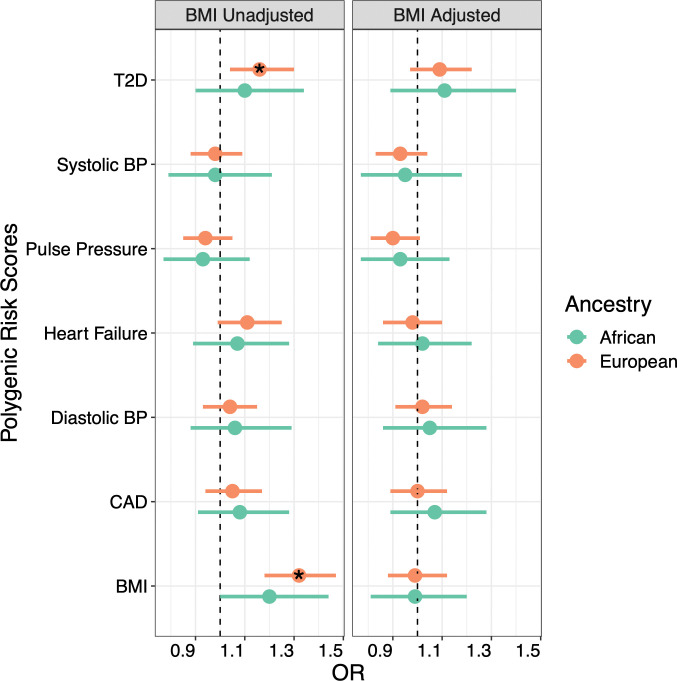
Females with polycystic ovary syndrome (PCOS), the most common endocrine disorder in women, have an increased risk of developing cardiometabolic disorders such as insulin resistance, obesity, and type 2 diabetes (T2D). While only diagnosable in females, males with a family history of PCOS can also exhibit a poor cardiometabolic profile. Therefore, we aimed to elucidate the role of sex in the cardiometabolic comorbidities observed in PCOS by conducting bidirectional genetic risk score analyses in both sexes. We first conducted a phenome-wide association study (PheWAS) using PCOS polygenic risk scores (PCOSPRS) to identify potential pleiotropic effects of PCOSPRS across 1,380 medical conditions recorded in the Vanderbilt University Medical Center electronic health record (EHR) database, in females and males. After adjusting for age and genetic ancestry, we found that European (EUR)-ancestry males with higher PCOSPRS were significantly more likely to develop hypertensive diseases than females at the same level of genetic risk. We performed the same analysis in an African (AFR)-ancestry population, but observed no significant associations, likely due to poor trans-ancestry performance of the PRS. Based on observed significant associations in the EUR-ancestry population, we then tested whether the PRS for comorbid conditions (e.g., T2D, body mass index (BMI), hypertension, etc.) also increased the odds of a PCOS diagnosis. Only BMIPRS and T2DPRS were significantly associated with a PCOS diagnosis in EUR-ancestry females. We then further adjusted the T2DPRS for measured BMI and BMIresidual (regressed on the BMIPRS and enriched for the environmental contribution to BMI). Results demonstrated that genetically regulated BMI primarily accounted for the relationship between T2DPRS and PCOS. Overall, our findings show that the genetic architecture of PCOS has distinct sex differences in associations with genetically correlated cardiometabolic traits. It is possible that the cardiometabolic comorbidities observed in PCOS are primarily explained by their shared genetic risk factors, which can be further influenced by biological variables including sex and BMI.
多囊卵巢综合征(PCOS)是女性最常见的内分泌疾病,患有该疾病的女性发生胰岛素抵抗、肥胖和 2 型糖尿病(T2D)等代谢紊乱的风险增加。虽然 PCOS 仅在女性中诊断,但有 PCOS 家族史的男性也可能表现出较差的代谢特征。因此,我们旨在通过在两性中进行双向遗传风险评分分析,阐明性别在 PCOS 中观察到的代谢合并症中的作用。我们首先使用多囊卵巢综合征多基因风险评分(PCOSPRS)在范德比尔特大学医学中心电子健康记录(EHR)数据库中记录的 1380 种疾病中进行了全表型关联研究(PheWAS),以鉴定 PCOSPRS 的潜在多效性影响,分别在女性和男性中进行。在调整年龄和遗传祖先后,我们发现,具有较高 PCOSPRS 的欧洲(EUR)血统男性比同遗传风险水平的女性更有可能患上高血压疾病。我们在非洲(AFR)血统人群中进行了相同的分析,但未观察到显著关联,可能是由于 PRS 的跨血统性能不佳。基于 EUR 血统人群中观察到的显著关联,我们随后测试了合并症(例如 T2D、体重指数(BMI)、高血压等)的 PRS 是否也会增加 PCOS 的诊断几率。只有 BMIPRS 和 T2DPRS 与 EUR 血统女性的 PCOS 诊断显著相关。然后,我们进一步调整了 T2DPRS,以测量 BMI 和 BMIresidual(回归于 BMIPRS,并富集了 BMI 的环境贡献)。结果表明,遗传调节的 BMI 主要解释了 T2DPRS 与 PCOS 之间的关系。总的来说,我们的研究结果表明,PCOS 的遗传结构在与遗传相关的代谢特征的关联方面存在明显的性别差异。可能是 PCOS 中观察到的代谢合并症主要由其共同的遗传危险因素解释,这些危险因素可以进一步受到包括性别和 BMI 在内的生物学变量的影响。