Gabbiadini Roberto, Dal Buono Arianna, Mastrorocco Elisabetta, Solitano Virginia, Repici Alessandro, Spinelli Antonino, Condorelli Gianluigi, Armuzzi Alessandro
IBD Center, Department of Gastroenterology, IRCCS Humanitas Research Hospital, Milan, Italy.
Department of Biomedical Sciences, Humanitas University, Milan, Italy.
Front Cardiovasc Med. 2023 May 16;10:1143293. doi: 10.3389/fcvm.2023.1143293. eCollection 2023.
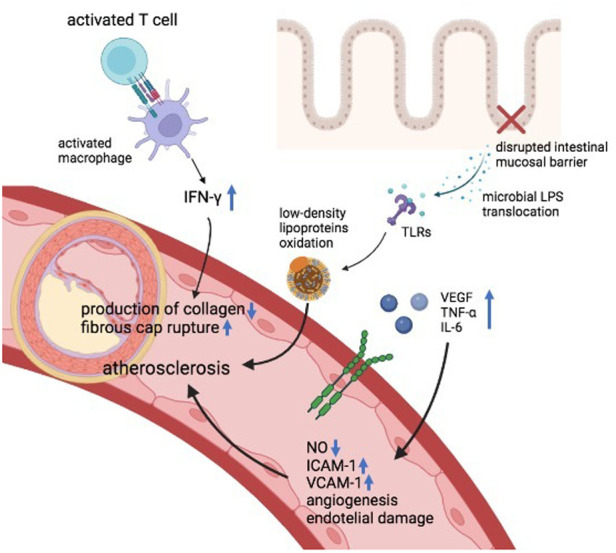
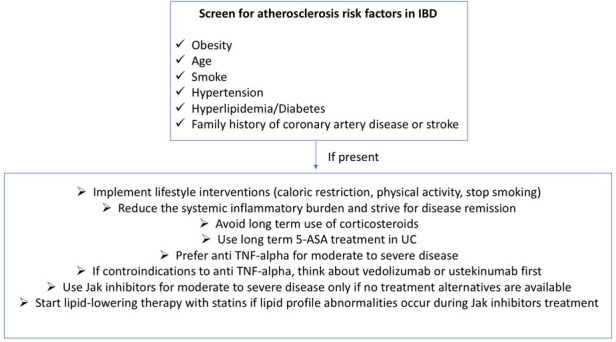
Atherosclerotic cardiovascular disease and stroke are the leading causes of morbidity and mortality worldwide. Along to the traditional risk factors for these diseases, chronic inflammation is known to be an important player in accelerating the process of atherosclerosis, which can result in an increased incidence of arterial thromboembolic events. As in other chronic inflammatory diseases, in the past few years, several studies suggested that subjects affected by inflammatory bowel diseases (IBD) may also be at an incremented risk of atherosclerotic disease, especially during the periods of disease's flare. Therefore, IBD treatment may assume an important role for achieving both disease remission and the control of the atherosclerotic risk. In this article we aimed to perform a comprehensive review on evidence on the increased risk of arterial thromboembolic events in patients affected by IBD and discuss the potential role of IBD therapy in reducing this risk.
动脉粥样硬化性心血管疾病和中风是全球发病和死亡的主要原因。除了这些疾病的传统危险因素外,已知慢性炎症在加速动脉粥样硬化进程中起重要作用,这可能导致动脉血栓栓塞事件的发生率增加。与其他慢性炎症性疾病一样,在过去几年中,多项研究表明,炎症性肠病(IBD)患者也可能有患动脉粥样硬化疾病的风险增加,尤其是在疾病发作期间。因此,IBD治疗对于实现疾病缓解和控制动脉粥样硬化风险可能具有重要作用。在本文中,我们旨在对IBD患者发生动脉血栓栓塞事件风险增加的证据进行全面综述,并讨论IBD治疗在降低这种风险方面的潜在作用。