Zhao Jing, Sun Xiaoan, Dai Huijie, Zhang Xianping, Zhang Dezhen, Zhu Xiaoping
Key Laboratory of Biology and Molecular Biology of University in Shandong, College of Seed and Facility Agricultural Engineering, Weifang University, Weifang 261061, China.
Facility Horticulture of University in Shandong, College of Agriculture, Weifang University of Science & Technology, Shouguang 262700, China.
Int J Genomics. 2023 May 22;2023:3807812. doi: 10.1155/2023/3807812. eCollection 2023.
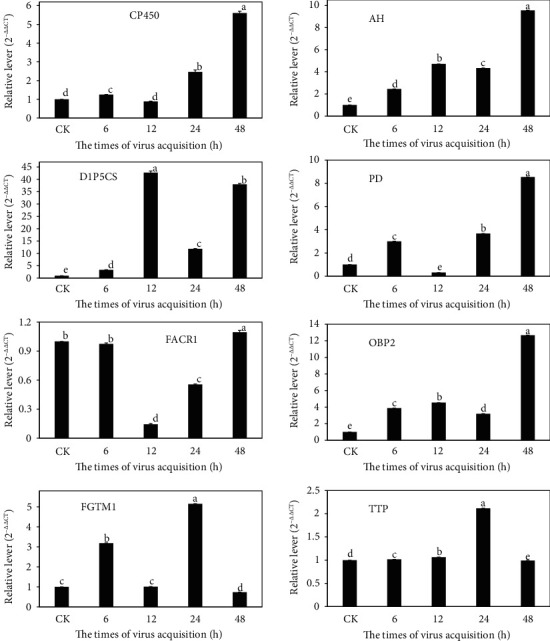
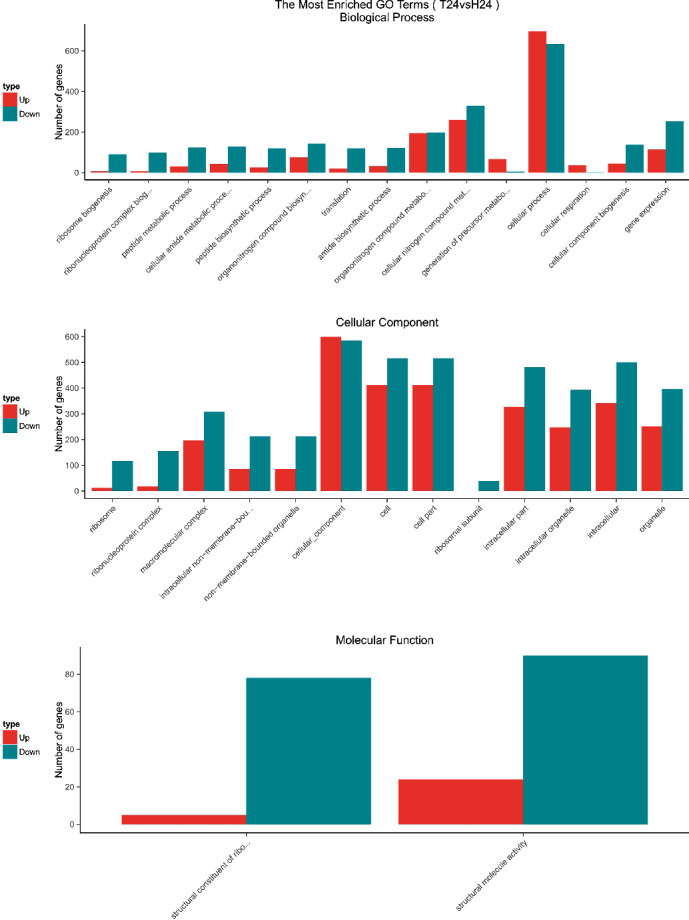
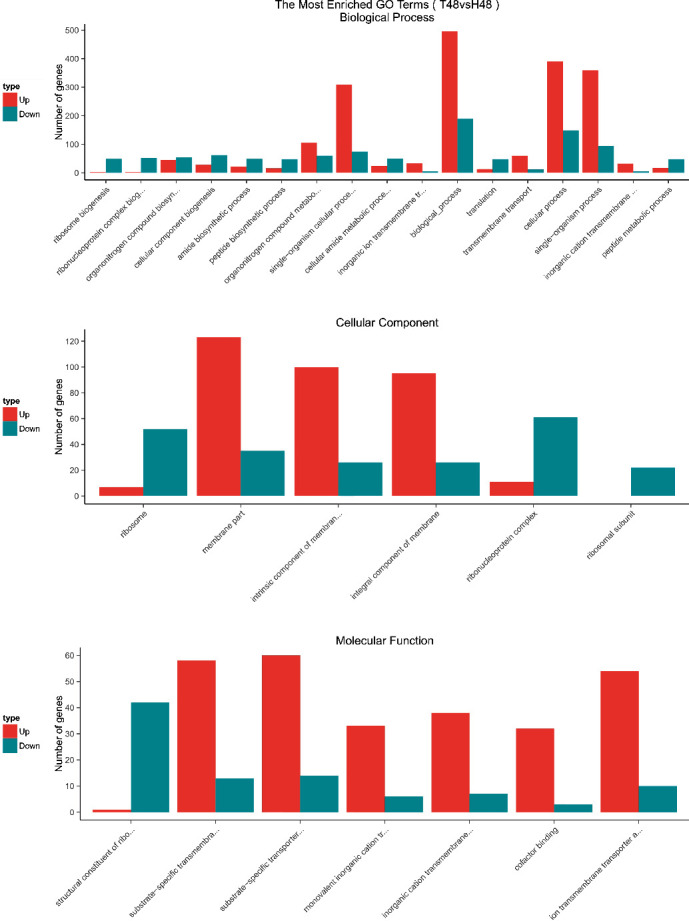
Tomato chlorosis virus (ToCV), transmitted by the whitefly, (Gennadius; Hemiptera: Aleyrodidae) has been continuously emerging on tomato plants and causing a significant economic loss throughout China. In the current study, RNA-Seq analysis was used to explore the gene expression profiles of Mediterranean (MED) that fed on both ToCV-infected and -uninfected tomato plants for 6, 12, 24, and 48 hours, respectively. The results revealed that dynamic changes occurred in the gene expressions of whiteflies at different time intervals after they acquired the virus. A total of 1709, 461, 4548, and 1748 differentially expressed genes (DEGs) were identified after a 6, 12, 24, and 48 hours feeding interval for the viral acquisition, respectively. The least number of expressed genes appeared in whiteflies with the 12 hours feeding treatment, and the largest numbers of those found in those with 24 hours feeding treatment. Kyoto Encyclopedia of Genes and Genomes pathway analysis revealed that MED responded to ToCV acquisition through altering its nerve system development, fertility, detoxification, glucose metabolism, and immune function before it lost its ability to transmit the virus. The number of DEGs, degree of differential gene expressions, expression level of the same gene, involved biological processes, and metabolic functions in whiteflies post the 12 hours feeding, and viral acquisition were different from those from other three feeding treatments, which could be a significant finding suggesting an effective control of MED should be done less than 12 hours after whiteflies started feeding on ToCV-infected tomatoes. Our results further provided a clarified understanding in how was protected from viral acquisitions through comparison of the differential profile of gene expressions in whiteflies feeding on plants that were infected by semipersistent viruses.
番茄褪绿病毒(ToCV)由烟粉虱(烟粉虱属;半翅目:粉虱科)传播,在中国各地的番茄植株上持续出现,并造成了重大经济损失。在本研究中,利用RNA测序分析来探究分别在感染和未感染ToCV的番茄植株上取食6、12、24和48小时的地中海烟粉虱(MED)的基因表达谱。结果显示,烟粉虱获取病毒后,在不同时间间隔其基因表达发生了动态变化。在取食病毒6、12、24和48小时后,分别鉴定出1709、461、4548和1748个差异表达基因(DEG)。取食处理12小时的烟粉虱中表达基因数量最少,而取食处理24小时的烟粉虱中表达基因数量最多。京都基因与基因组百科全书通路分析表明,在失去传播病毒能力之前,MED通过改变其神经系统发育、繁殖力、解毒作用、葡萄糖代谢和免疫功能来应对ToCV感染。取食12小时且获取病毒后的烟粉虱中DEG数量、差异基因表达程度、同一基因的表达水平、涉及的生物学过程和代谢功能与其他三种取食处理不同,这一重要发现表明,应在烟粉虱开始取食感染ToCV的番茄后不到12小时内对MED进行有效防治。通过比较取食半持久性病毒感染植物的烟粉虱基因表达差异谱,我们的结果进一步阐明了MED如何免受病毒感染。