Department of Oral Health Promotion, Tokushima University Graduate School of Biomedical Sciences, 3-18-15 Kuramoto, Tokushima 770-8504, Japan.
Department of Oral Science and Translational Research, College of Dental Medicine, Nova Southeastern University, Fort Lauderdale, FL, USA.
Ecotoxicol Environ Saf. 2023 Jul 15;260:115089. doi: 10.1016/j.ecoenv.2023.115089. Epub 2023 Jun 2.
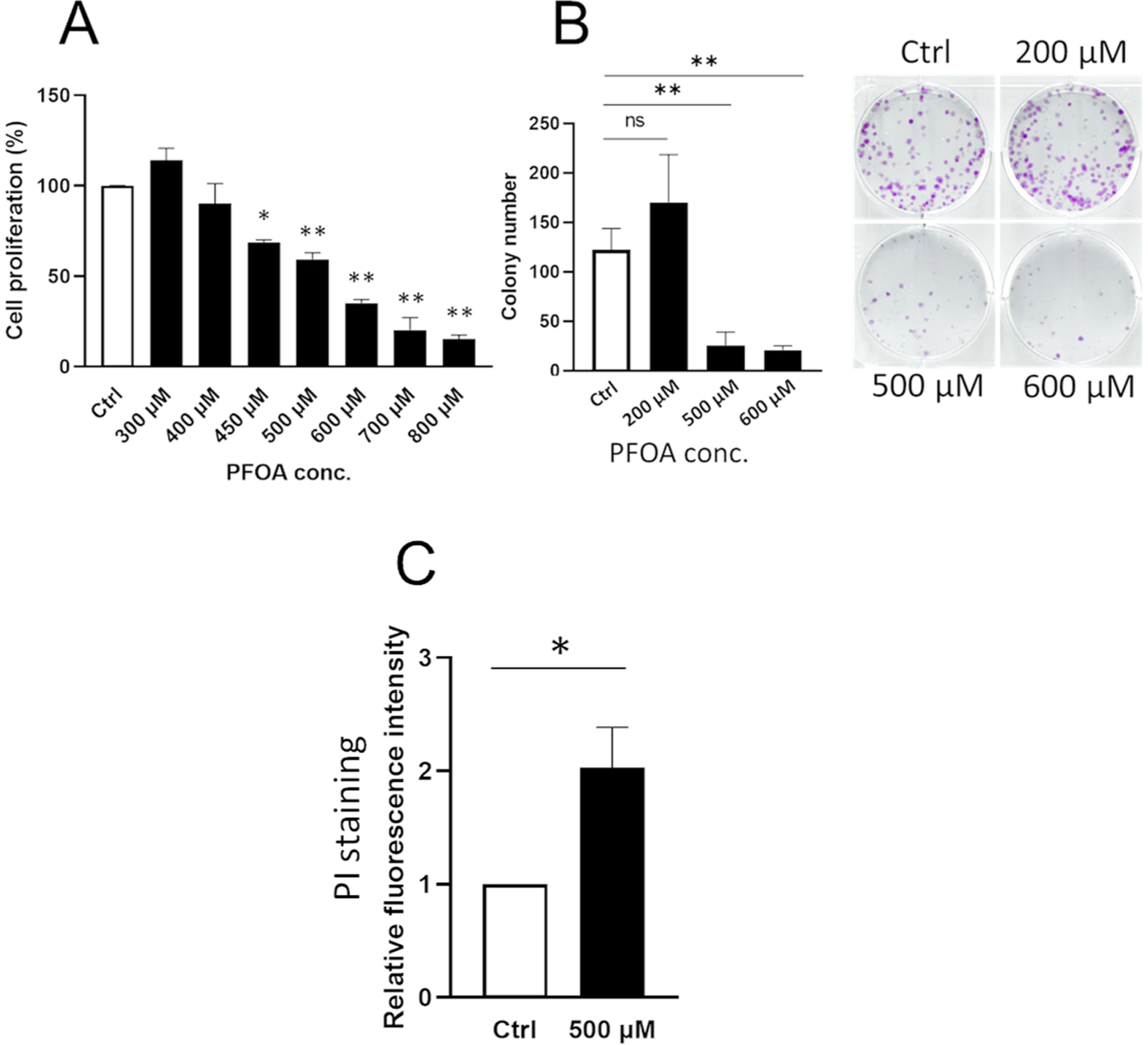
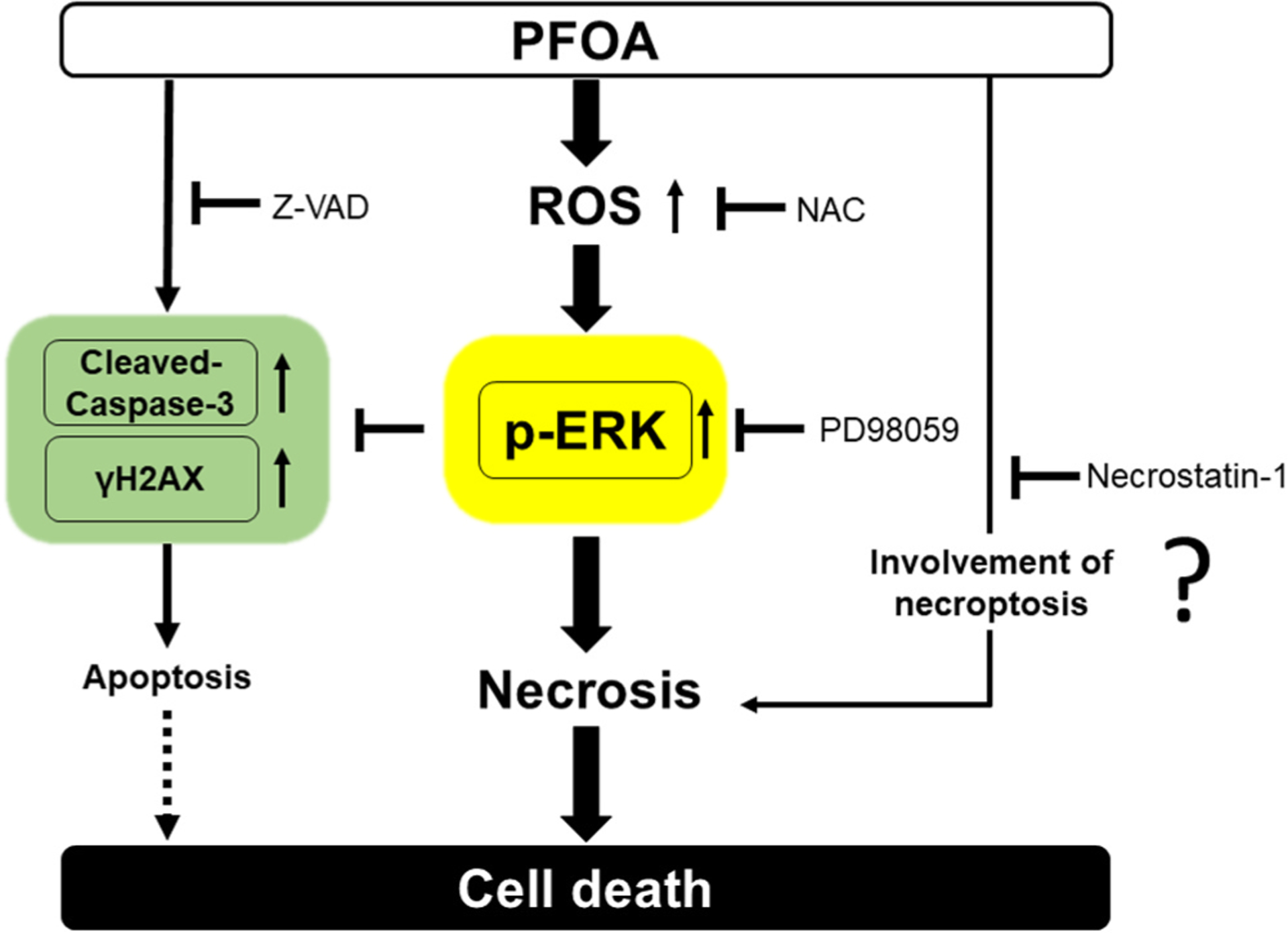
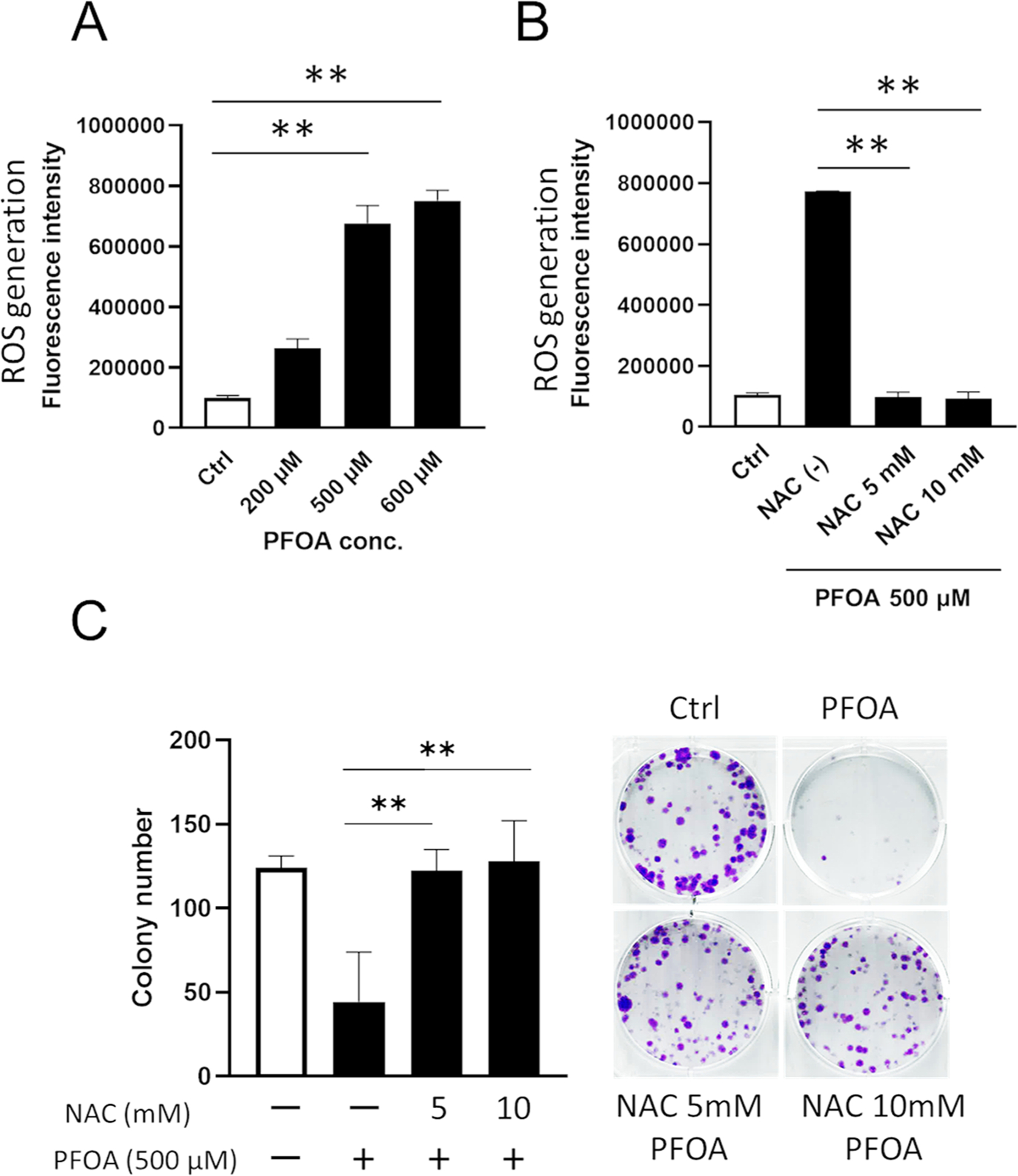
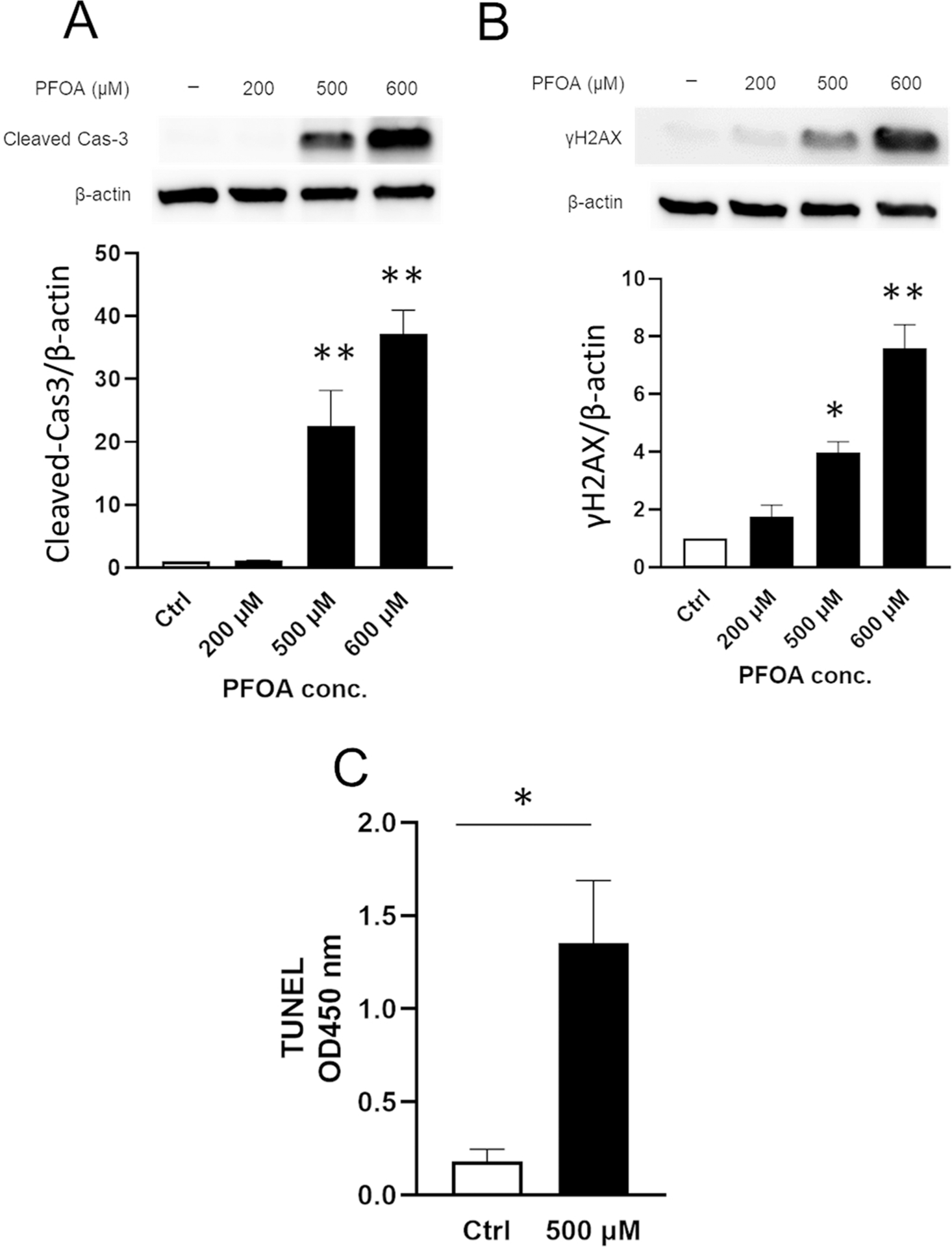
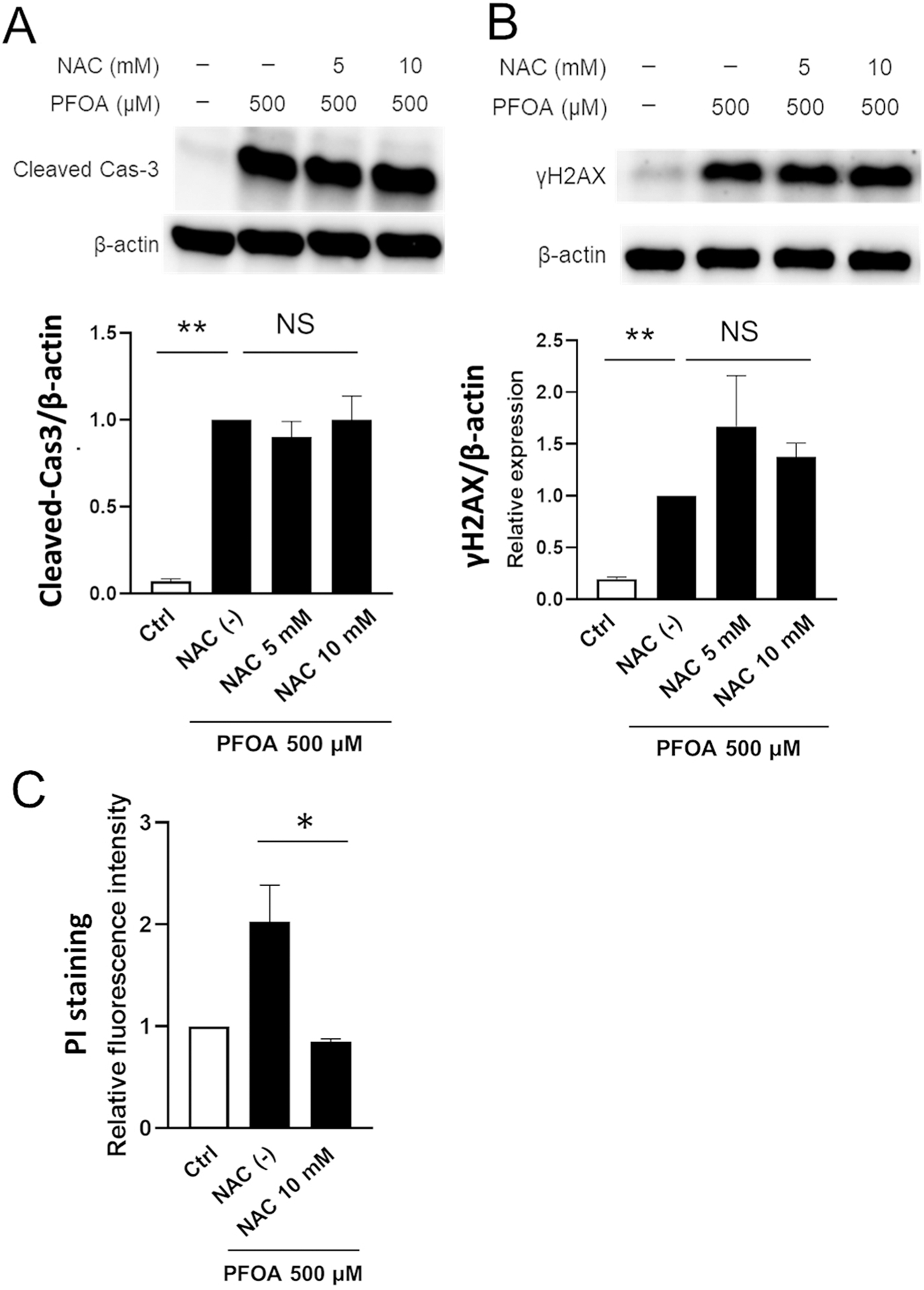
Perfluorooctanoic acid (PFOA) is an artificial fluorinated organic compound that has generated increased public attention due to its potential health hazards. Unsafe levels of PFOA exposure can affect reproduction, growth and development. During tooth enamel development (amelogenesis), environmental factors including fluoride can cause enamel hypoplasia. However, the effects of PFOA on ameloblasts and tooth enamel formation remain largely unknown. In the present study we demonstrate several PFOA-mediated cell death pathways (necrosis/necroptosis, and apoptosis) and assess the roles of ROS-MAPK/ERK signaling in PFOA-mediated cell death in mouse ameloblast-lineage cells (ALC). ALC cells were treated with PFOA. Cell proliferation and viability were analyzed by MTT assays and colony formation assays, respectively. PFOA suppressed cell proliferation and viability in a dose dependent manner. PFOA induced both necrosis (PI-positive cells) and apoptosis (cleaved-caspase-3, γH2AX and TUNEL-positive cells). PFOA significantly increased ROS production and up-regulated phosphor-(p)-ERK. Addition of ROS inhibitor N-acetyl cysteine (NAC) suppressed p-ERK and decreased necrosis, and increased cell viability compared to PFOA alone, whereas NAC did not change apoptosis. This suggests that PFOA-mediated necrosis was induced by ROS-MAPK/ERK signaling, but apoptosis was not associated with ROS. Addition of MAPK/ERK inhibitor PD98059 suppressed necrosis and increased cell viability compared to PFOA alone. Intriguingly, PD98059 augmented PFOA-mediated apoptosis. This suggests that p-ERK promoted necrosis but suppressed apoptosis. Addition of the necroptosis inhibitor Necrostatin-1 restored cell viability compared to PFOA alone, while pan-caspase inhibitor Z-VAD did not mitigate PFOA-mediated cell death. These results suggest that 1) PFOA-mediated cell death was mainly caused by necrosis/necroptosis by ROS-MAPK/ERK signaling rather than apoptosis, 2) MAPK/ERK signaling plays the dual roles (promoting necrosis and suppressing apoptosis) under PFOA treatment. This is the initial report to indicate that PFOA could be considered as a possible causative factor for cryptogenic enamel malformation. Further studies are required to elucidate the mechanisms of PFOA-mediated adverse effects on amelogenesis.
全氟辛酸(PFOA)是一种人工氟化有机化合物,由于其潜在的健康危害而引起了公众的广泛关注。不安全水平的 PFOA 暴露会影响生殖、生长和发育。在牙釉质发育(釉质发生)期间,包括氟化物在内的环境因素可导致釉质发育不全。然而,PFOA 对成釉细胞和牙釉质形成的影响在很大程度上仍不清楚。在本研究中,我们证明了几种 PFOA 介导的细胞死亡途径(坏死/坏死性凋亡和细胞凋亡),并评估了 ROS-MAPK/ERK 信号在 PFOA 介导的鼠成釉细胞系(ALC)细胞死亡中的作用。用 PFOA 处理 ALC 细胞。通过 MTT 分析和集落形成分析分别分析细胞增殖和活力。PFOA 呈剂量依赖性抑制细胞增殖和活力。PFOA 诱导坏死(PI 阳性细胞)和凋亡(cleaved-caspase-3、γH2AX 和 TUNEL 阳性细胞)。PFOA 显著增加 ROS 产生并上调磷酸化(p)-ERK。与单独使用 PFOA 相比,添加 ROS 抑制剂 N-乙酰半胱氨酸(NAC)可抑制 p-ERK 并减少坏死,同时增加细胞活力,而 NAC 对凋亡没有影响。这表明 PFOA 介导的坏死是由 ROS-MAPK/ERK 信号诱导的,但凋亡与 ROS 无关。与单独使用 PFOA 相比,添加 MAPK/ERK 抑制剂 PD98059 可抑制坏死并增加细胞活力。有趣的是,PD98059 增强了 PFOA 介导的细胞凋亡。这表明 p-ERK 促进坏死但抑制凋亡。与单独使用 PFOA 相比,添加坏死抑制剂 Necrostatin-1 可恢复细胞活力,而泛半胱天冬酶抑制剂 Z-VAD 不能减轻 PFOA 介导的细胞死亡。这些结果表明:1)PFOA 介导的细胞死亡主要是由 ROS-MAPK/ERK 信号引起的坏死/坏死性凋亡,而不是细胞凋亡,2)MAPK/ERK 信号在 PFOA 处理下发挥双重作用(促进坏死和抑制凋亡)。这是首次表明 PFOA 可能被视为隐源性牙釉质发育不全的一个可能致病因素。需要进一步研究以阐明 PFOA 对釉质发生的不良影响的机制。