Jarallah Somayah J, Aldossary Ahmad M, Tawfik Essam A, Altamimi Reem M, Alsharif Wijdan K, Alzahrani Nouf M, As Sobeai Homood M, Qamar Wajhul, Alfahad Ahmed J, Alshabibi Manal A, Alqahtani Sarah H, Alshehri Abdullah A, Almughem Fahad A
Advanced Diagnostics and Therapeutics Institute, Health Sector, King Abdulaziz City for Science and Technology (KACST), Riyadh 11442, Saudi Arabia.
Wellness and Preventative Medicine Institute, Health Sector, King Abdulaziz City for Science and Technology (KACST), Riyadh 11442, Saudi Arabia.
Saudi Pharm J. 2023 Jul;31(7):1139-1148. doi: 10.1016/j.jsps.2023.05.017. Epub 2023 May 19.
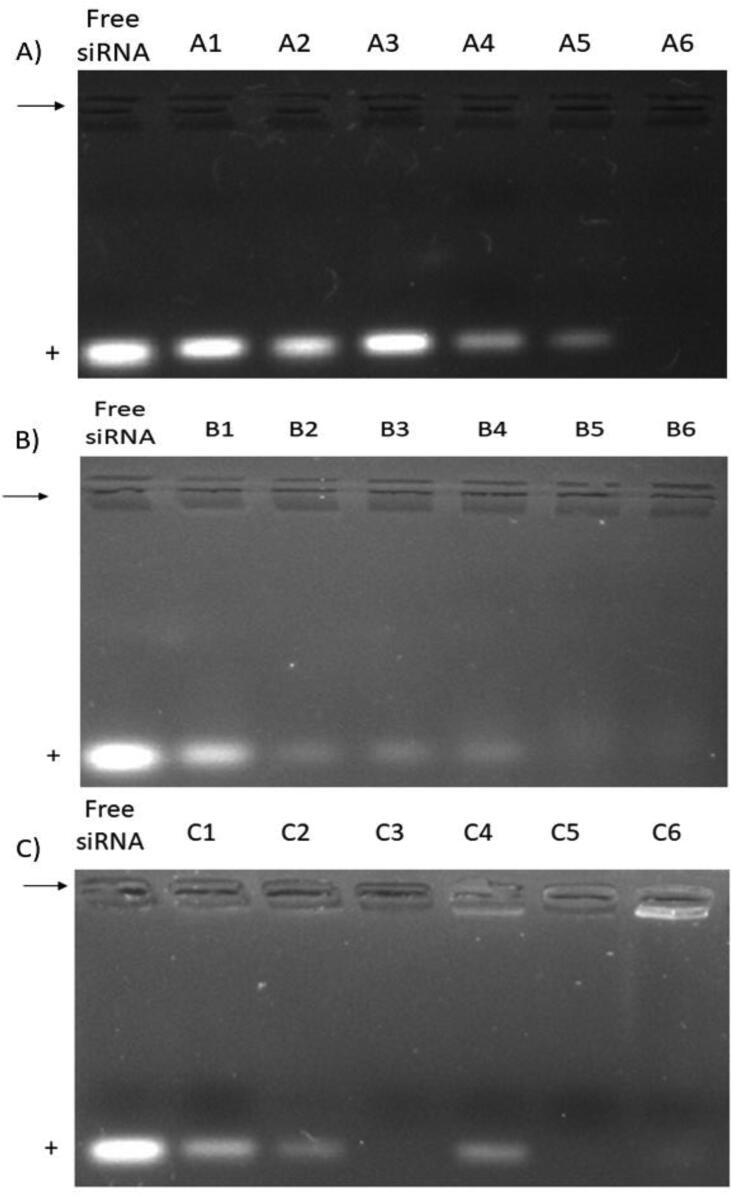
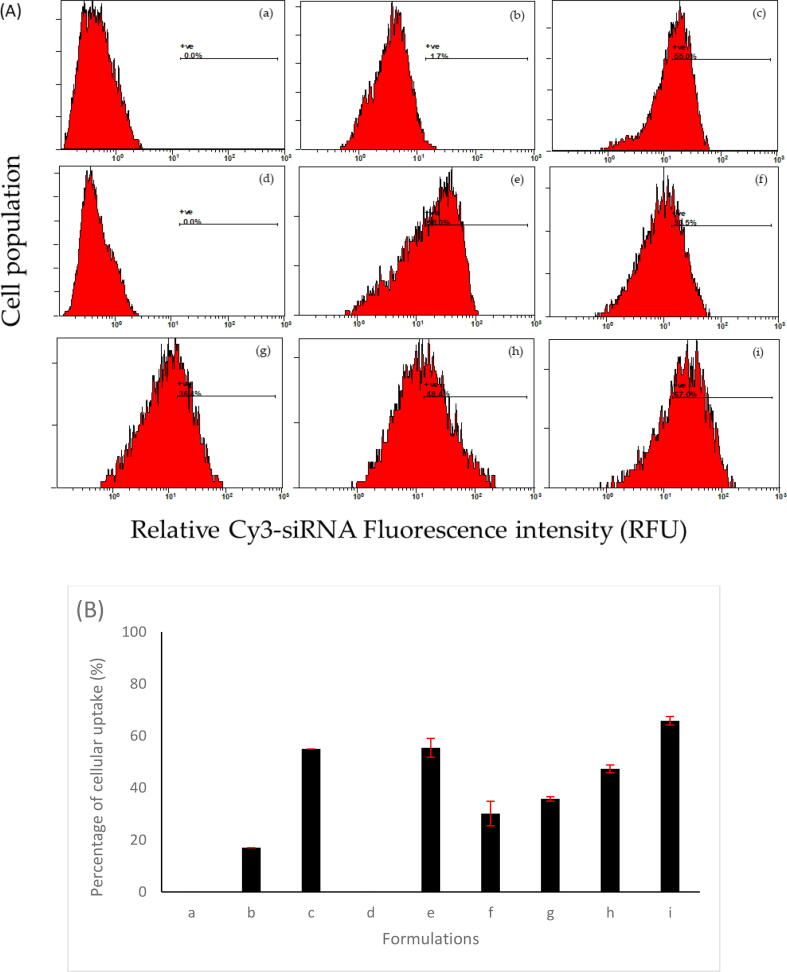
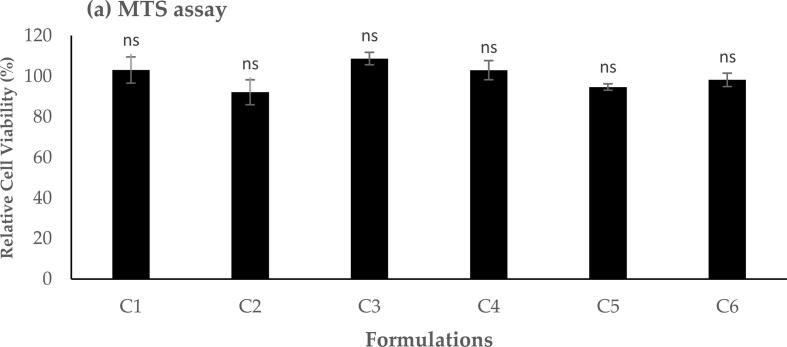
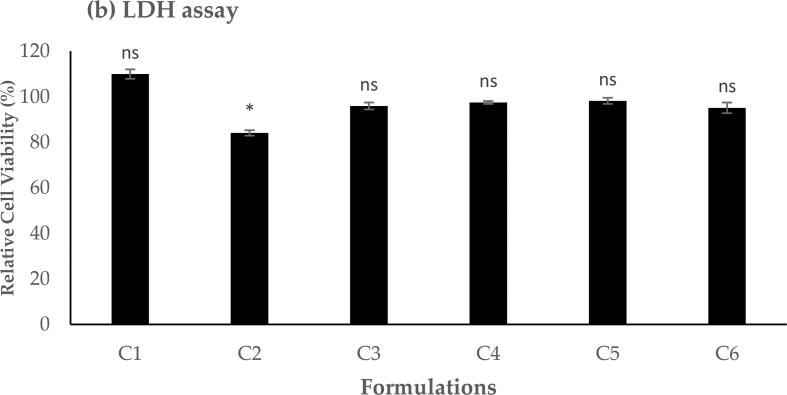
The efficient delivery of small interfering RNA (siRNA) to the targeted cells significantly affects the regulation of the overexpressed proteins involved in the progression of several genetic diseases. SiRNA molecules in naked form suffer from low internalization across the cell membrane, high susceptibility to degradation by nuclease enzyme and low stability, which hinder their efficacy. Therefore, there is an urge to develop a delivery system that can protect siRNA from degradation and facilitate their uptake across the cell membrane. In this study, the cationic lipid (GL67) was exploited, in addition to DC-Chol and DOPE lipids, to design an efficient liposomal nanocarrier for siRNA delivery. The physiochemical characterizations demonstrated that the molar ratio of 3:1 has proper particle size measurements from 144 nm to 332 nm and zeta potential of -9 mV to 47 mV that depends on the ratio of the GL67 in the liposomal formulation. Gel retardation assay exhibited that increasing the percentage of GL67 in the formulations has a good impact on the encapsulation efficiency compared to DC-Chol. The optimal formulations of the 3:1 M ratio also showed high metabolic activity against A549 cells following a 24 h cell exposure. Flow cytometry findings showed that the highest GL67 lipid ratio (100 % GL67 and 0 % DC-Chol) had the highest percentage of cellular uptake. The lipoplex nanocarriers based on GL67 lipid could potentially influence treating genetic diseases owing to the high internalization efficiency and safety profile.
将小干扰RNA(siRNA)有效递送至靶细胞,对几种遗传疾病进展过程中过表达蛋白的调控有显著影响。裸形式的siRNA分子存在细胞膜内化率低、易被核酸酶降解且稳定性差等问题,这阻碍了它们的功效。因此,迫切需要开发一种能保护siRNA不被降解并促进其跨细胞膜摄取的递送系统。在本研究中,除了DC - Chol和DOPE脂质外,还利用阳离子脂质(GL67)设计了一种用于siRNA递送的高效脂质体纳米载体。物理化学表征表明,3:1的摩尔比具有合适的粒径,范围为144纳米至332纳米,ζ电位为 - 9毫伏至47毫伏,这取决于脂质体制剂中GL67的比例。凝胶阻滞试验表明,与DC - Chol相比,增加制剂中GL67的百分比对包封效率有良好影响。3:1摩尔比的最佳制剂在细胞暴露24小时后对A549细胞也显示出高代谢活性。流式细胞术结果表明,最高的GL67脂质比例(100% GL67和0% DC - Chol)具有最高的细胞摄取百分比。基于GL67脂质的脂质体纳米载体由于其高内化效率和安全性,可能对治疗遗传疾病有潜在影响。