Cheng Jiaying, Xiao Mengshi, Ren Xinmiao, Secundo Francesco, Yu Ying, Nan Shihao, Chen Weimiao, Zhu Changliang, Kong Qing, Huang Youtao, Fu Xiaodan, Mou Haijin
College of Food Science and Engineering, Ocean University of China, Qingdao, 266003 China.
Istituto di Scienze e Tecnologie Chimiche "Giulio Natta", Consiglio Nazionale delle Ricerche, 20131 Milan, Italy.
Mar Life Sci Technol. 2023 May 29;5(2):242-256. doi: 10.1007/s42995-023-00176-z. eCollection 2023 May.
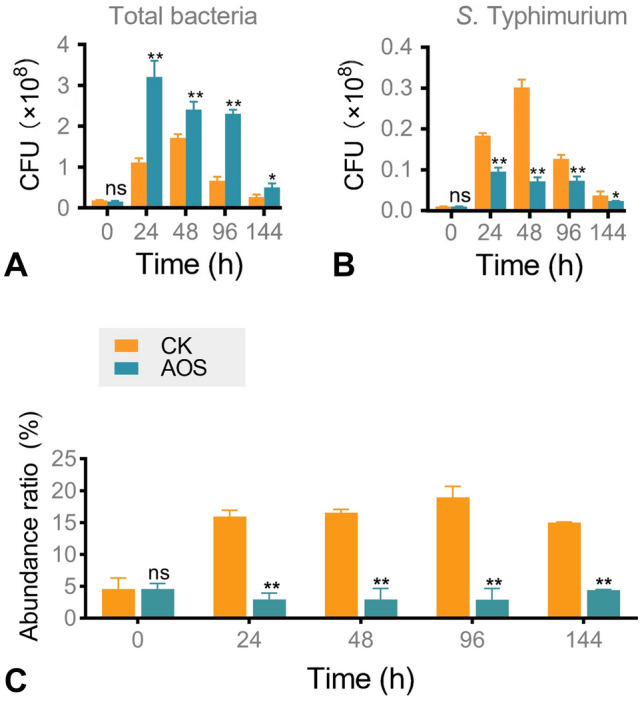
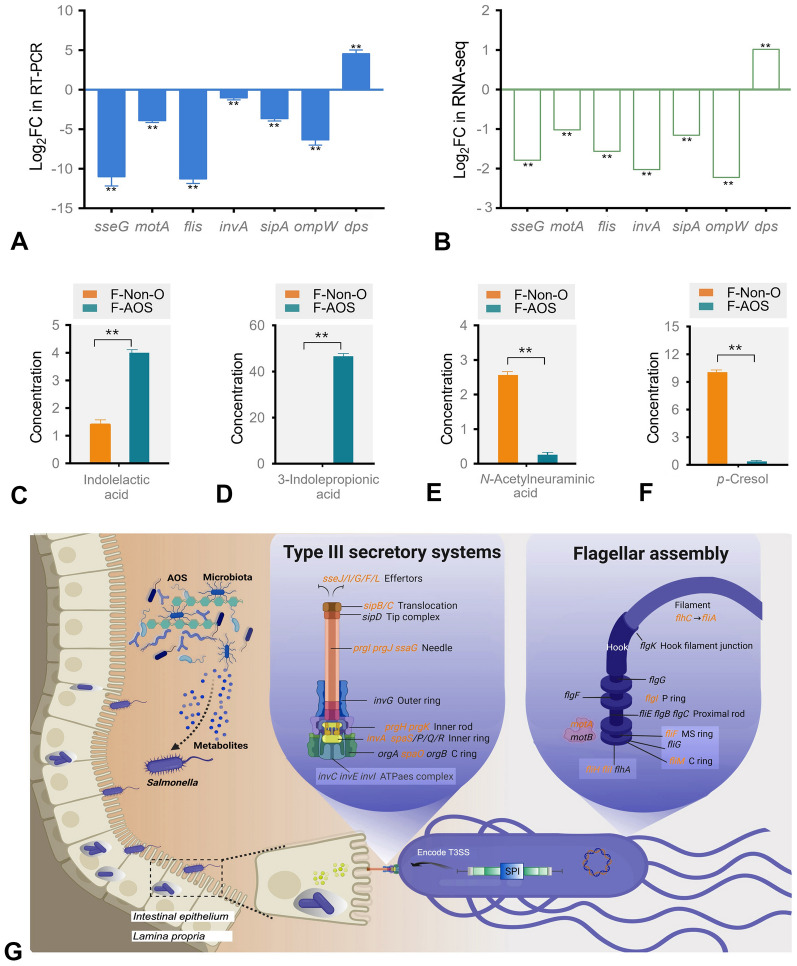
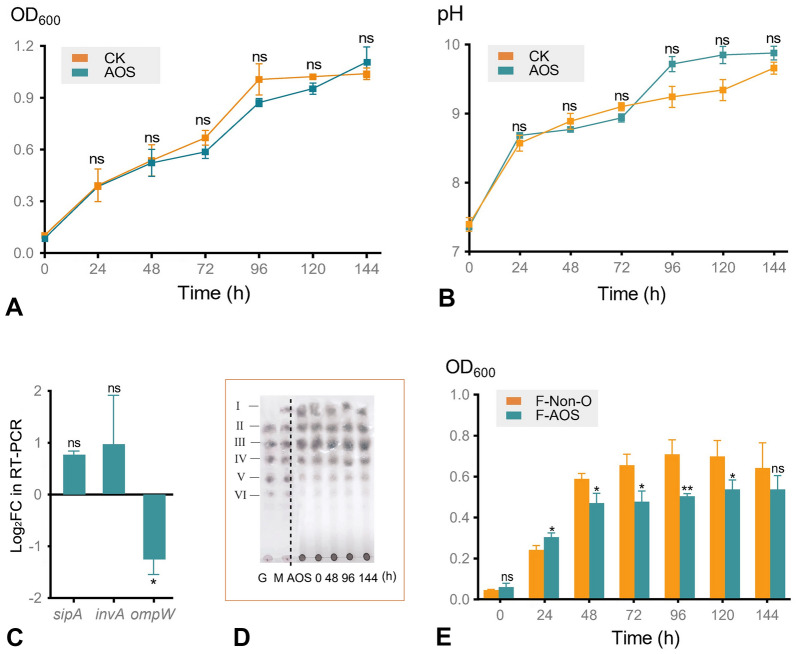
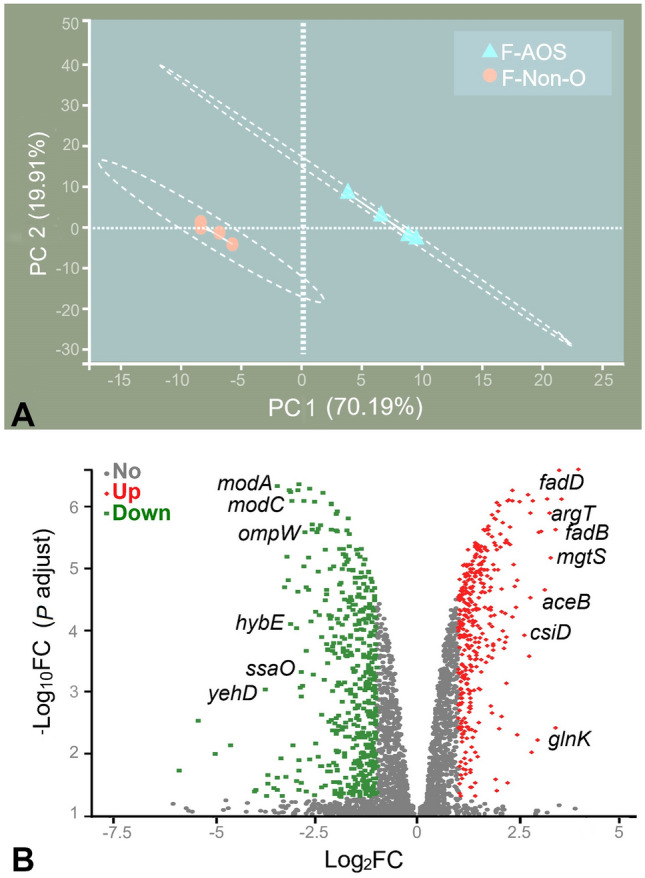
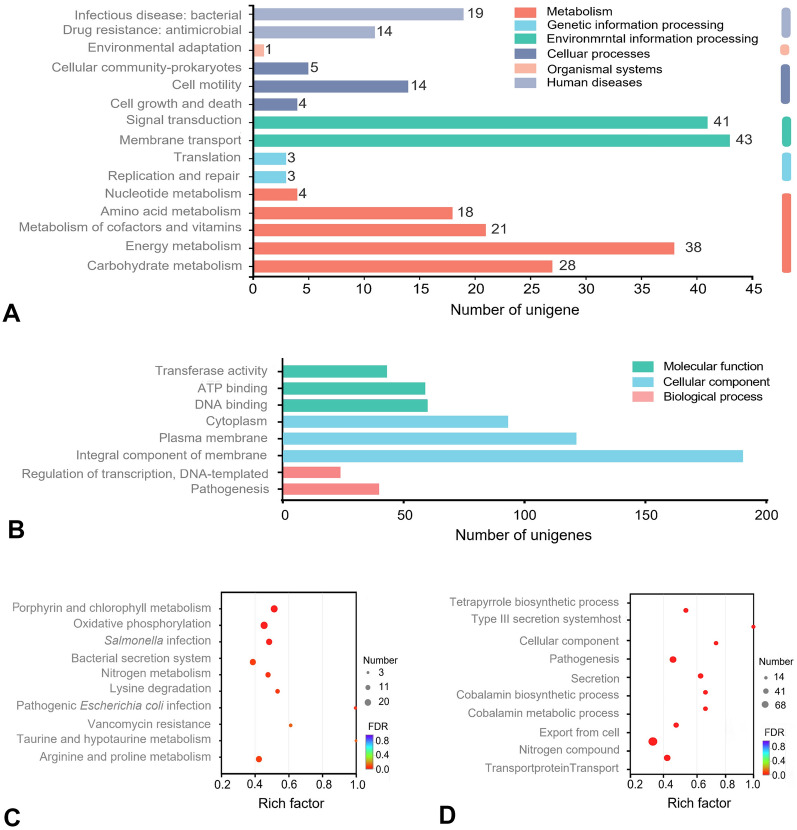
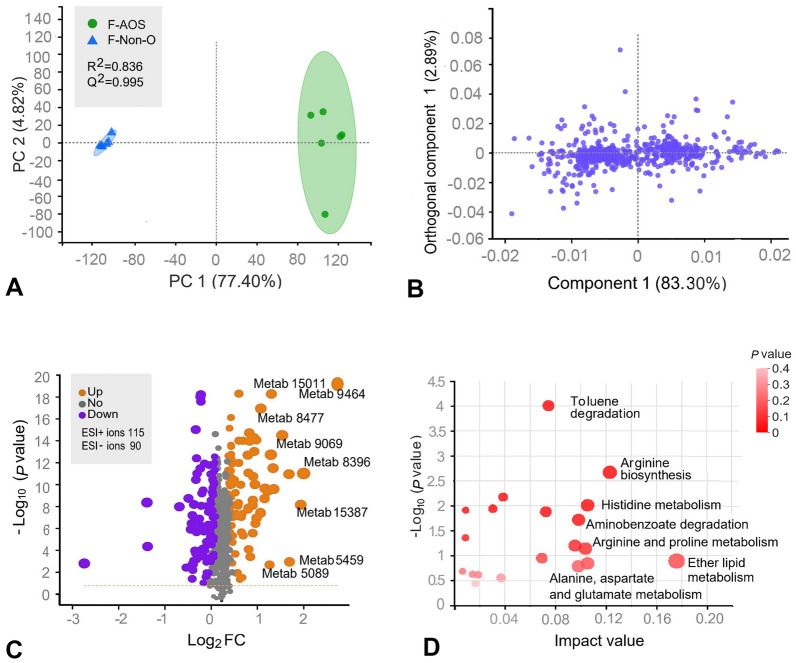
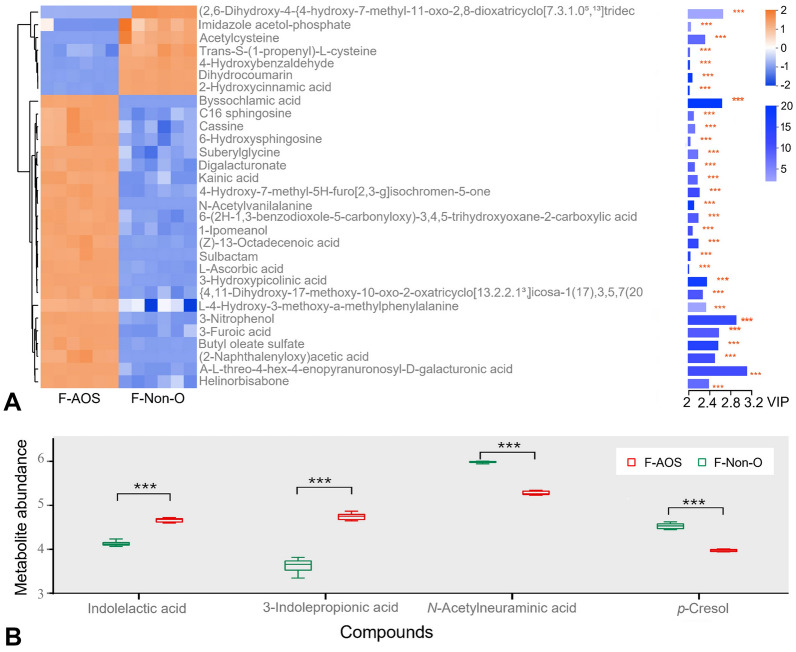
Alginate oligosaccharides (AOS), extracted from marine brown algae, are a common functional feed additive; however, it remains unclear whether they modulate the gut microbiota and microbial metabolites. The response of serovar Typhimurium, a common poultry pathogen, to AOS fermented with chicken fecal inocula was investigated using metabolomic and transcriptomic analyses. Single-strain cultivation tests showed that AOS did not directly inhibit the growth of . Typhimurium. However, when AOS were fermented by chicken fecal microbiota, the supernatant of fermented AOS (F-AOS) exhibited remarkable antibacterial activity against . Typhimurium, decreasing the abundance ratio of . Typhimurium in the fecal microbiota from 18.94 to 2.94%. Transcriptomic analyses showed that the 855 differentially expressed genes induced by F-AOS were mainly enriched in porphyrin and chlorophyll metabolism, oxidative phosphorylation, and infection-related pathways. RT-qPCR confirmed that F-AOS downregulated key genes involved in flagellar assembly and the type III secretory system of . Typhimurium, indicating metabolites in F-AOS can influence the growth and metabolism of . Typhimurium. Metabolomic analyses showed that 205 microbial metabolites were significantly altered in F-AOS. Among them, the increase in indolelactic acid and 3-indolepropionic acid levels were further confirmed using HPLC. This study provides a new perspective for the application of AOS as a feed additive against pathogenic intestinal bacteria.
The online version contains supplementary material available at 10.1007/s42995-023-00176-z.
从海洋褐藻中提取的海藻酸寡糖(AOS)是一种常见的功能性饲料添加剂;然而,它们是否能调节肠道微生物群和微生物代谢产物仍不清楚。利用代谢组学和转录组学分析,研究了常见家禽病原体鼠伤寒血清型对用鸡粪便接种物发酵的AOS的反应。单菌株培养试验表明,AOS不会直接抑制鼠伤寒沙门氏菌的生长。然而,当AOS被鸡粪便微生物群发酵时,发酵AOS(F-AOS)的上清液对鼠伤寒沙门氏菌表现出显著的抗菌活性,使粪便微生物群中鼠伤寒沙门氏菌的丰度比从18.94%降至2.94%。转录组学分析表明,F-AOS诱导的855个差异表达基因主要富集在卟啉和叶绿素代谢、氧化磷酸化以及感染相关途径中。RT-qPCR证实,F-AOS下调了鼠伤寒沙门氏菌鞭毛组装和III型分泌系统中的关键基因,表明F-AOS中的代谢产物可以影响鼠伤寒沙门氏菌的生长和代谢。代谢组学分析表明,F-AOS中有205种微生物代谢产物发生了显著变化。其中,吲哚乳酸和3-吲哚丙酸水平的升高通过高效液相色谱法进一步得到证实。本研究为AOS作为抗肠道病原菌饲料添加剂的应用提供了新的视角。
在线版本包含可在10.1007/s42995-023-00176-z获取的补充材料。