National Food Institute, Technical University of Denmark, Kgs. Lyngby, Denmark.
Faculty of Bioresources and Environmental Sciences, Ishikawa Prefectural University, Ishikawa, Japan.
Nat Microbiol. 2021 Nov;6(11):1367-1382. doi: 10.1038/s41564-021-00970-4. Epub 2021 Oct 21.
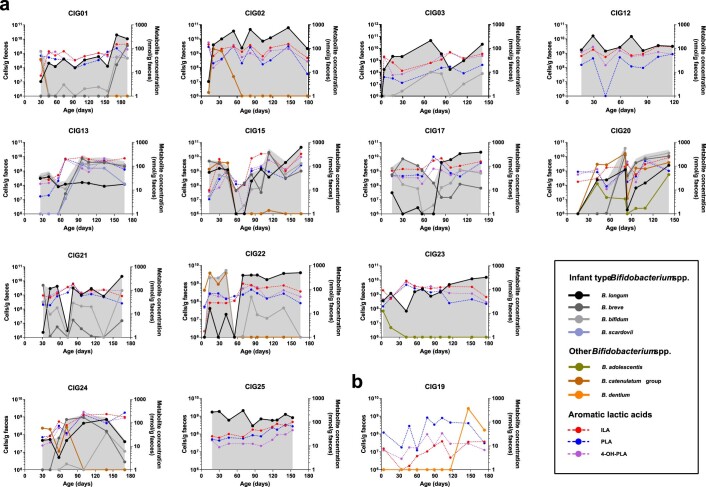
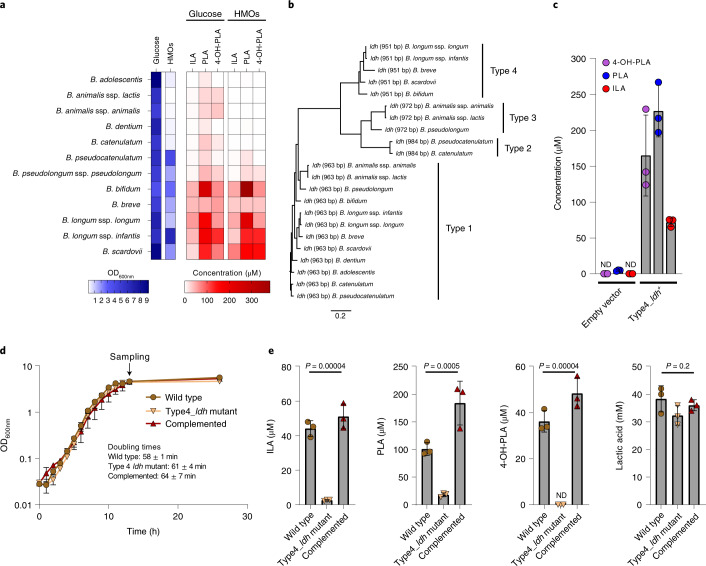
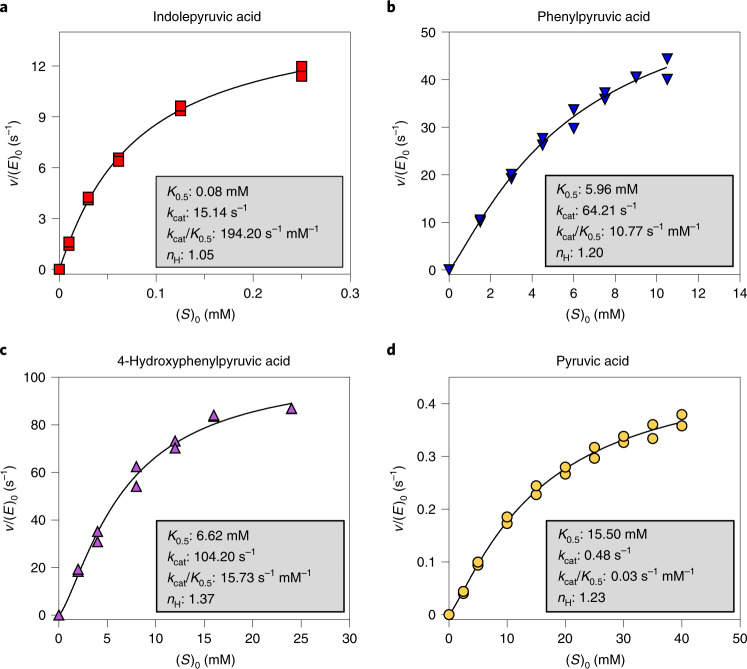
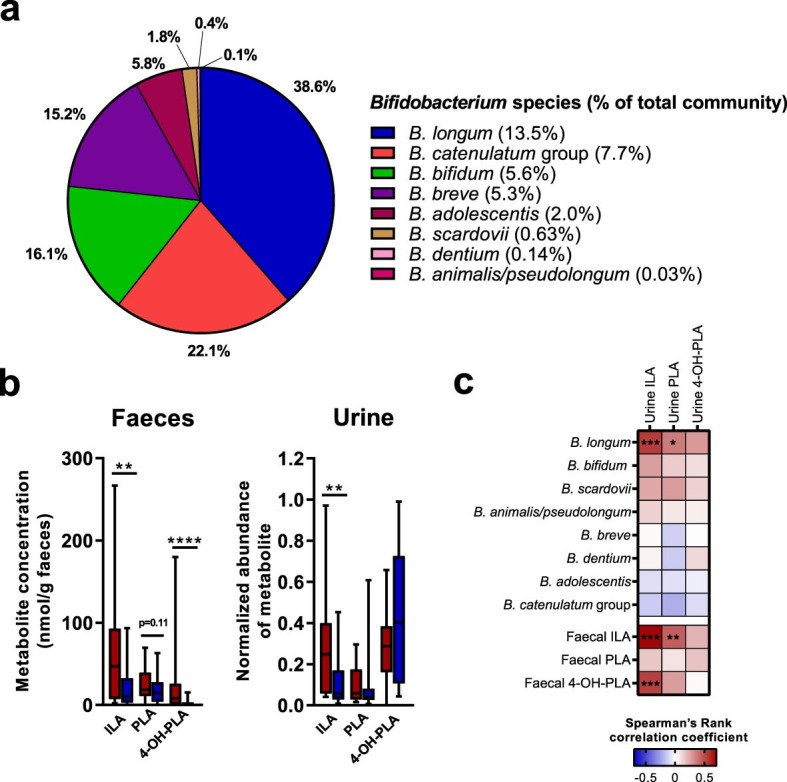
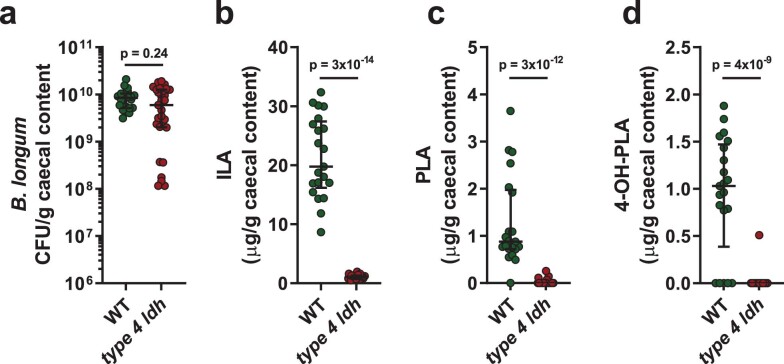
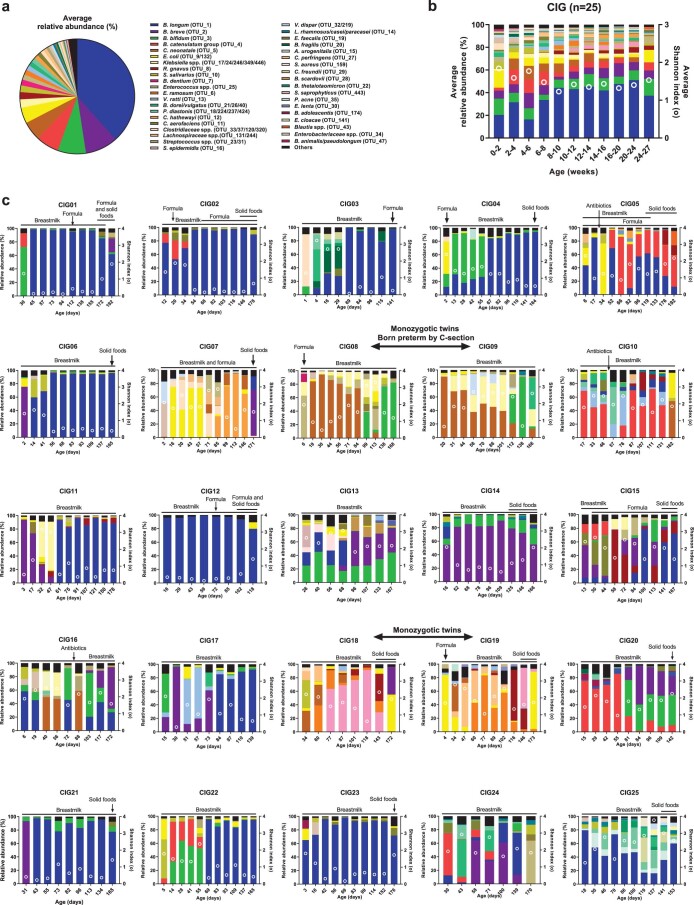
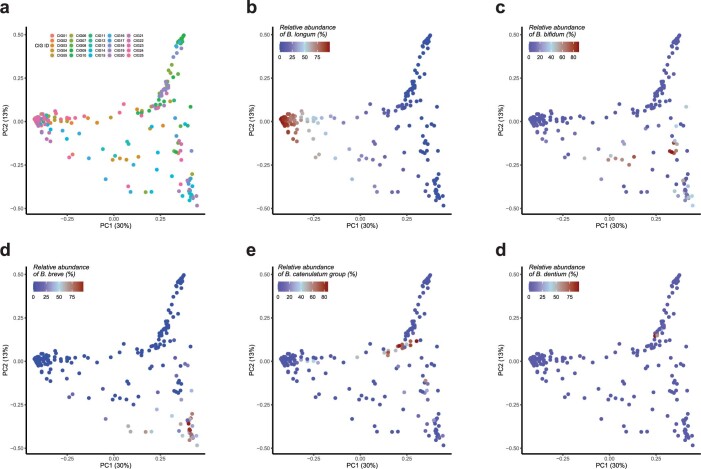
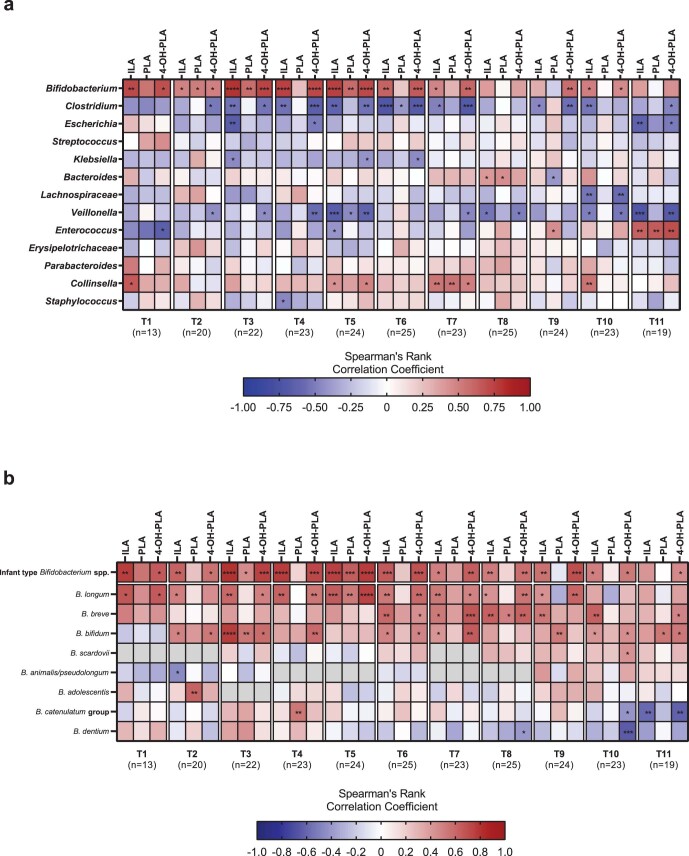
Breastfeeding profoundly shapes the infant gut microbiota, which is critical for early life immune development, and the gut microbiota can impact host physiology in various ways, such as through the production of metabolites. However, few breastmilk-dependent microbial metabolites mediating host-microbiota interactions are currently known. Here, we demonstrate that breastmilk-promoted Bifidobacterium species convert aromatic amino acids (tryptophan, phenylalanine and tyrosine) into their respective aromatic lactic acids (indolelactic acid, phenyllactic acid and 4-hydroxyphenyllactic acid) via a previously unrecognized aromatic lactate dehydrogenase (ALDH). The ability of Bifidobacterium species to convert aromatic amino acids to their lactic acid derivatives was confirmed using monocolonized mice. Longitudinal profiling of the faecal microbiota composition and metabolome of Danish infants (n = 25), from birth until 6 months of age, showed that faecal concentrations of aromatic lactic acids are correlated positively with the abundance of human milk oligosaccharide-degrading Bifidobacterium species containing the ALDH, including Bifidobacterium longum, B. breve and B. bifidum. We further demonstrate that faecal concentrations of Bifidobacterium-derived indolelactic acid are associated with the capacity of these samples to activate in vitro the aryl hydrocarbon receptor (AhR), a receptor important for controlling intestinal homoeostasis and immune responses. Finally, we show that indolelactic acid modulates ex vivo immune responses of human CD4 T cells and monocytes in a dose-dependent manner by acting as an agonist of both the AhR and hydroxycarboxylic acid receptor 3 (HCA). Our findings reveal that breastmilk-promoted Bifidobacterium species produce aromatic lactic acids in the gut of infants and suggest that these microbial metabolites may impact immune function in early life.
母乳喂养深刻地塑造了婴儿肠道微生物群,这对早期生命的免疫发育至关重要,而肠道微生物群可以通过多种方式影响宿主生理,例如通过代谢物的产生。然而,目前已知的介导宿主-微生物群相互作用的母乳依赖性微生物代谢物很少。在这里,我们证明了母乳促进的双歧杆菌属通过以前未被识别的芳香族乳酸脱氢酶(ALDH)将芳香族氨基酸(色氨酸、苯丙氨酸和酪氨酸)转化为各自的芳香乳酸(吲哚乳酸、苯乳酸和 4-羟基苯乳酸)。使用单定植的小鼠证实了双歧杆菌属将芳香族氨基酸转化为其乳酸衍生物的能力。对丹麦婴儿(n=25)的粪便微生物群组成和代谢组学的纵向分析表明,从出生到 6 个月大,粪便中芳香乳酸的浓度与含有 ALDH 的人乳寡糖降解双歧杆菌属的丰度呈正相关,包括长双歧杆菌、短双歧杆菌和双歧双歧杆菌。我们进一步证明,粪便中双歧杆菌衍生的吲哚乳酸的浓度与这些样本体外激活芳香烃受体(AhR)的能力有关,AhR 是控制肠道内稳态和免疫反应的重要受体。最后,我们表明吲哚乳酸通过作为 AhR 和羟羧酸受体 3(HCA)的激动剂,以剂量依赖的方式调节人 CD4 T 细胞和单核细胞的体外免疫反应。我们的研究结果揭示了母乳促进的双歧杆菌属在婴儿肠道中产生芳香族乳酸,并表明这些微生物代谢物可能影响生命早期的免疫功能。