Department of Clinical Laboratory, State Key Laboratory of Complex Severe and Rare Diseases, Peking Union Medical College Hospital, Chinese Academy of Medical Science and Peking Union Medical College, Beijing, China.
State Key Laboratory of Proteomics, Beijing Proteome Research Center, National Center for Protein Sciences-Beijing (PHOENIX Center), Beijing Institute of Lifeomics, Beijing, China.
Signal Transduct Target Ther. 2021 Aug 17;6(1):304. doi: 10.1038/s41392-021-00718-w.
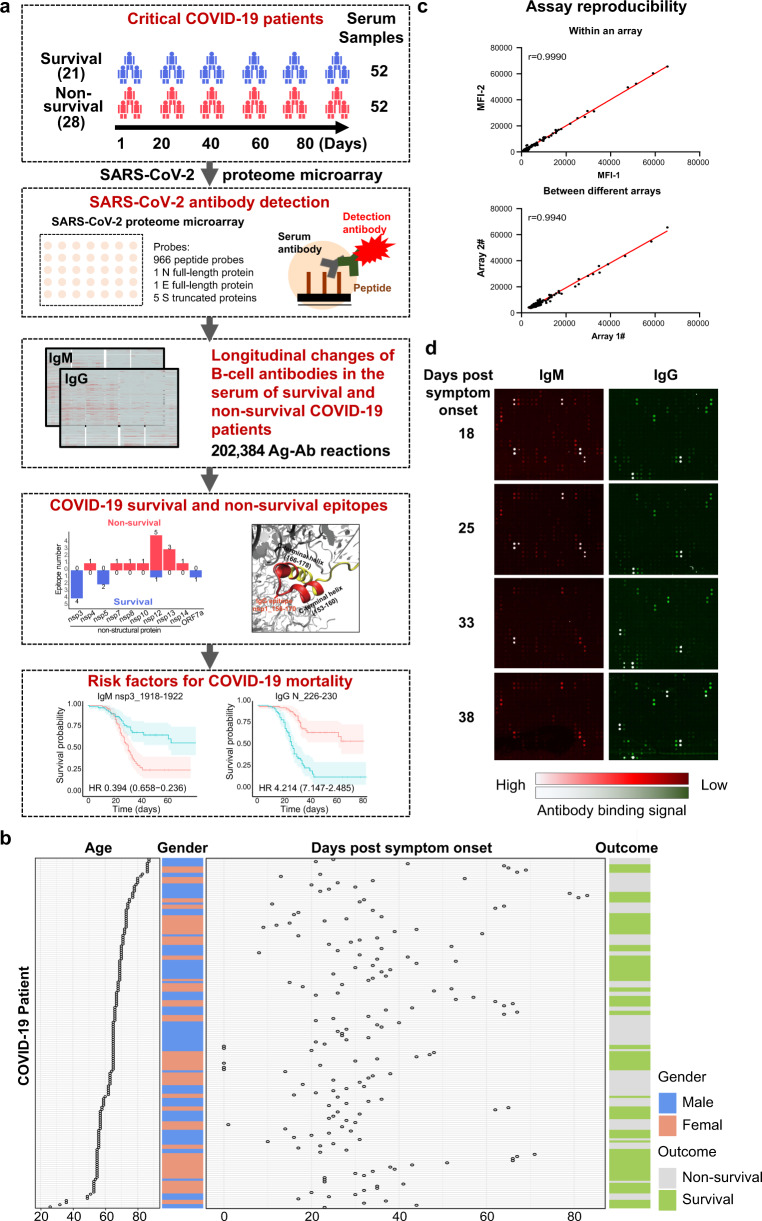
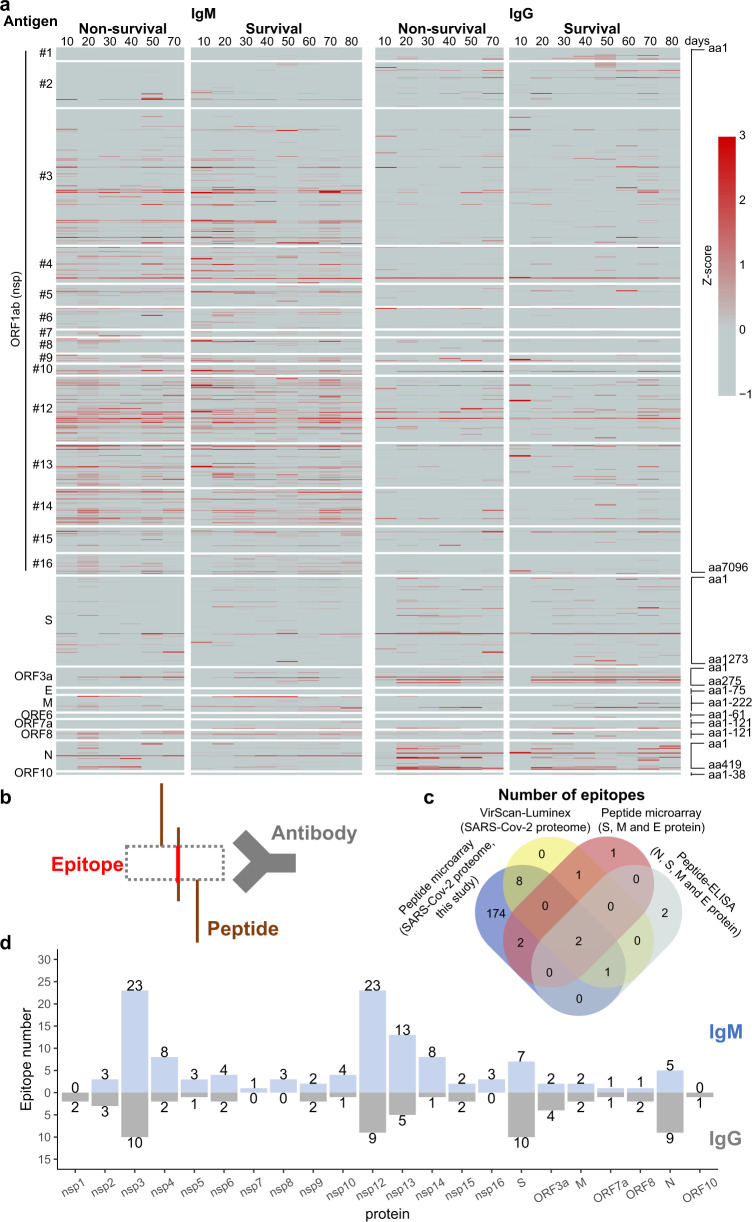
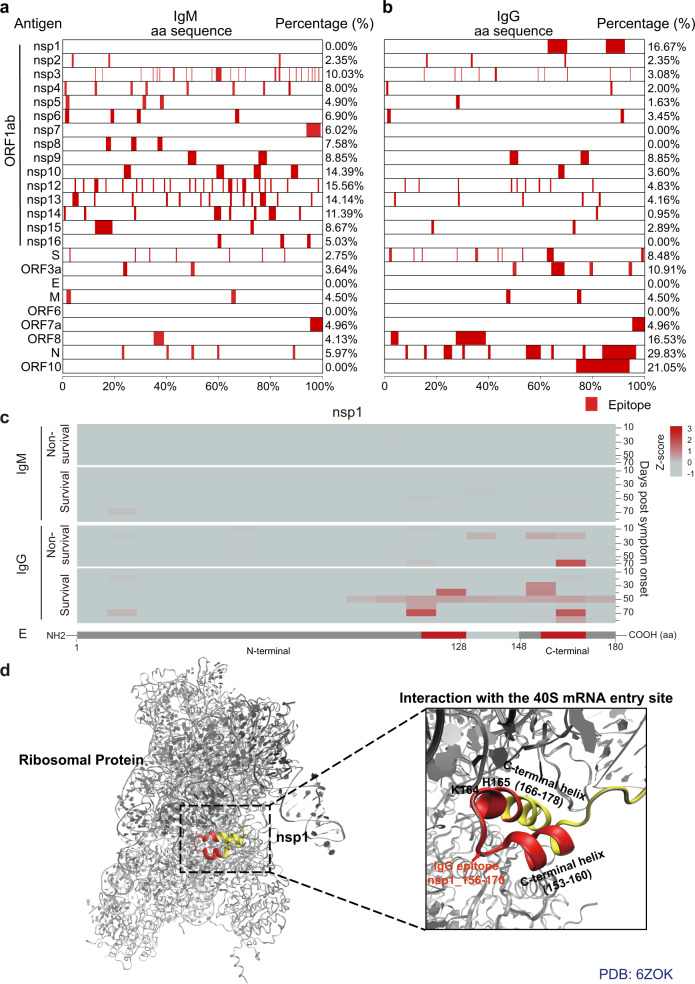
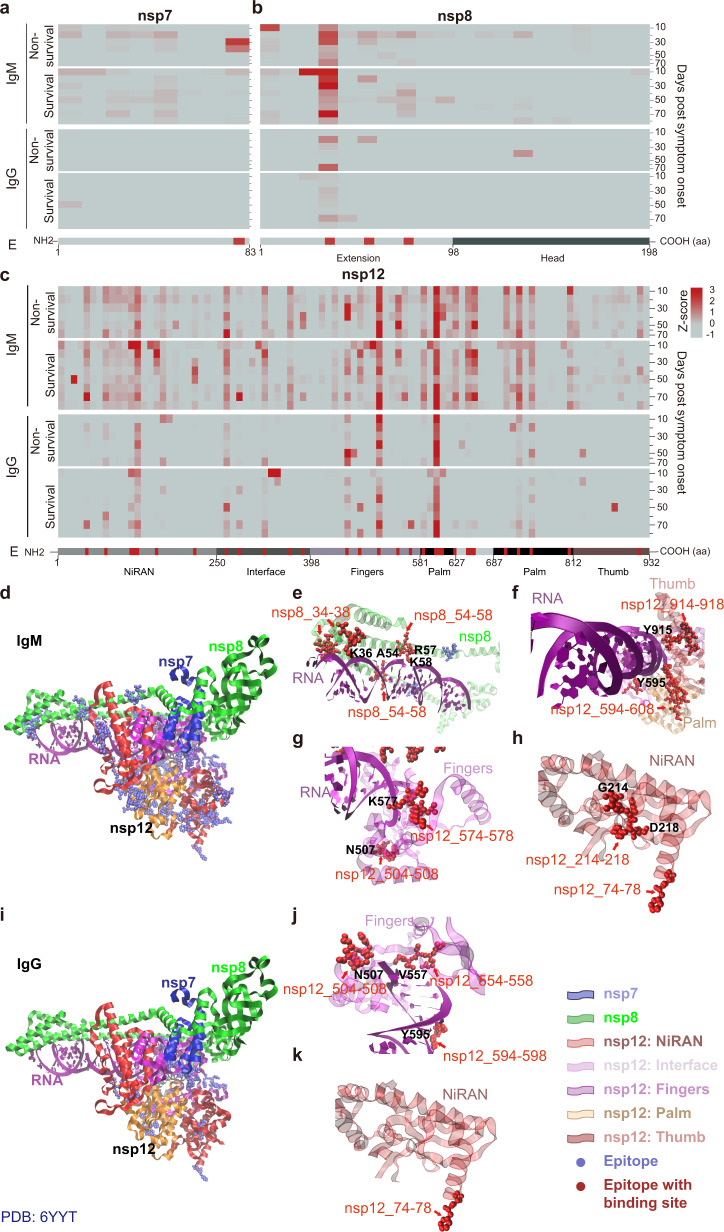
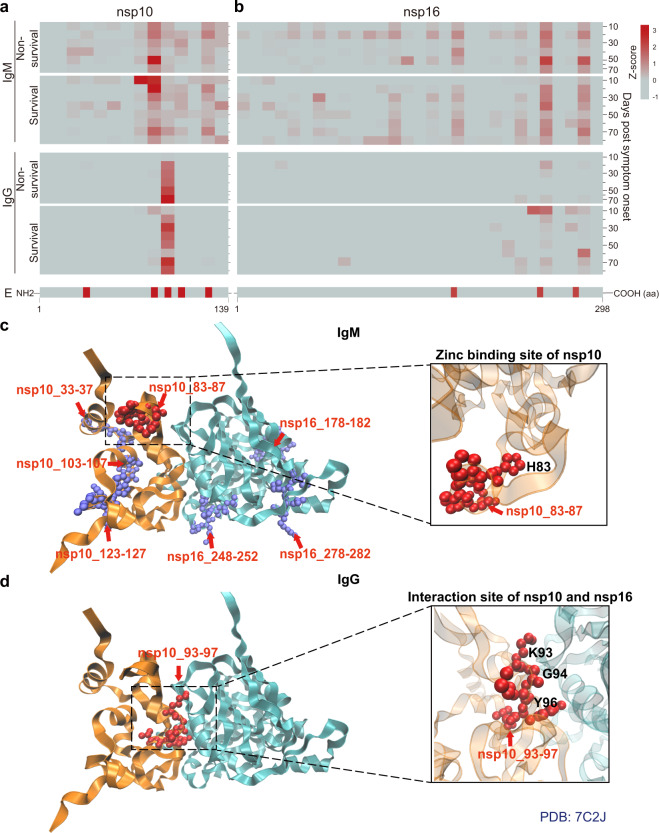
A comprehensive analysis of the humoral immune response to the severe acute respiratory syndrome coronavirus 2 (SARS-CoV-2) is essential in understanding COVID-19 pathogenesis and developing antibody-based diagnostics and therapy. In this work, we performed a longitudinal analysis of antibody responses to SARS-CoV-2 proteins in 104 serum samples from 49 critical COVID-19 patients using a peptide-based SARS-CoV-2 proteome microarray. Our data show that the binding epitopes of IgM and IgG antibodies differ across SARS-CoV-2 proteins and even within the same protein. Moreover, most IgM and IgG epitopes are located within nonstructural proteins (nsps), which are critical in inactivating the host's innate immune response and enabling SARS-CoV-2 replication, transcription, and polyprotein processing. IgM antibodies are associated with a good prognosis and target nsp3 and nsp5 proteases, whereas IgG antibodies are associated with high mortality and target structural proteins (Nucleocapsid, Spike, ORF3a). The epitopes targeted by antibodies in patients with a high mortality rate were further validated using an independent serum cohort (n = 56) and using global correlation mapping analysis with the clinical variables that are associated with COVID-19 severity. Our data provide fundamental insight into humoral immunity during SARS-CoV-2 infection. SARS-CoV-2 immunogenic epitopes identified in this work could also help direct antibody-based COVID-19 treatment and triage patients.
对严重急性呼吸综合征冠状病毒 2(SARS-CoV-2)的体液免疫反应进行全面分析对于理解 COVID-19 的发病机制以及开发基于抗体的诊断和治疗方法至关重要。在这项工作中,我们使用基于肽的 SARS-CoV-2 蛋白质组微阵列对 49 例重症 COVID-19 患者的 104 份血清样本进行了 SARS-CoV-2 蛋白的纵向分析。我们的数据表明,IgM 和 IgG 抗体的结合表位在 SARS-CoV-2 蛋白之间甚至在同一蛋白内都有所不同。此外,大多数 IgM 和 IgG 表位位于非结构蛋白(nsps)内,这些蛋白在使宿主先天免疫反应失活和使 SARS-CoV-2 复制、转录和多蛋白加工方面至关重要。IgM 抗体与良好的预后相关,其靶标为 nsp3 和 nsp5 蛋白酶,而 IgG 抗体与高死亡率相关,其靶标为结构蛋白(核衣壳、刺突、ORF3a)。在高死亡率患者中,使用独立的血清队列(n=56)和与 COVID-19 严重程度相关的临床变量的全球相关映射分析对抗体靶向的表位进行了进一步验证。我们的数据为 SARS-CoV-2 感染期间的体液免疫提供了基本的见解。本研究中鉴定的 SARS-CoV-2 免疫原性表位也有助于指导基于抗体的 COVID-19 治疗和对患者进行分类。