Harrington Auguste G, Maxwell Jessica A
Melbourne School of Psychological Sciences, University of Melbourne, Melbourne, 3010 Australia.
McMaster University, Hamilton, Canada.
Sex Roles. 2023;88(11-12):514-528. doi: 10.1007/s11199-023-01366-w. Epub 2023 Apr 29.
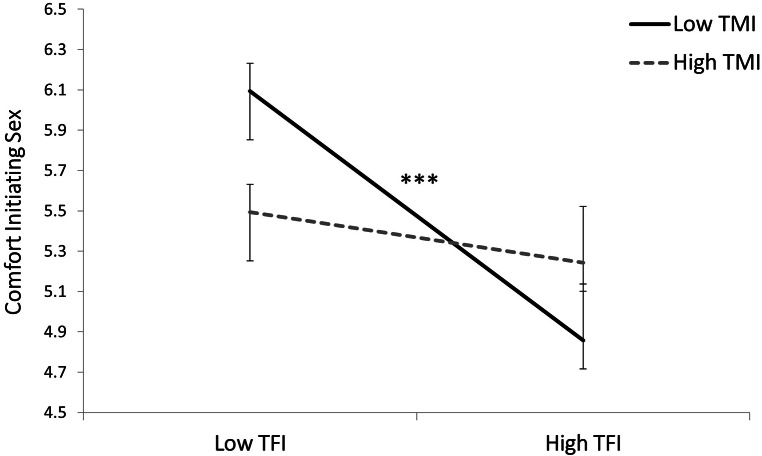
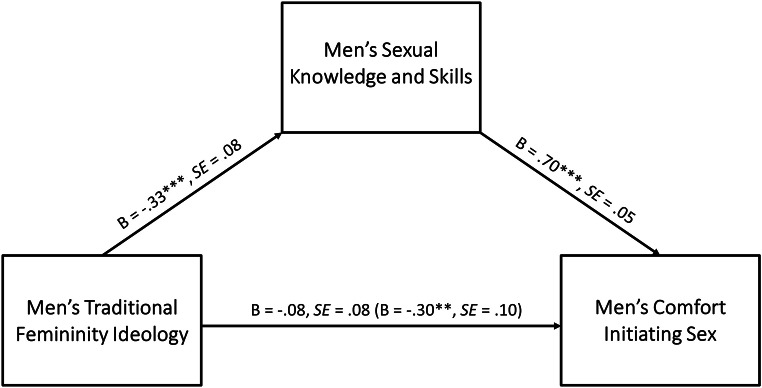
Traditional gender roles dictate rigid rules and standards prescribing which behaviors, thoughts, and feelings are considered masculine and feminine within sexual contexts, and thus internalizing these beliefs (higher traditional gender ideology) may influence sexual attitudes. Prior theorizing has primarily focused on how women's traditional beliefs about women's gender roles (traditional femininity ideology) and men's traditional beliefs about men's gender roles (traditional masculinity ideology) influence their sexual assertiveness. Yet, men can hold traditional beliefs about women, and women can hold traditional beliefs about men, and these beliefs should have important implications for sexual assertiveness. We addressed this gap by testing how both heterosexual women's ( = 389) and men's ( = 393) traditional masculinity and femininity ideologies associate with their reported comfort initiating sex and comfort refusing sex in their relationships. When accounting for both sets of beliefs, women's traditional beliefs about men's and women's roles interacted to predict comfort initiating sex, but not comfort refusing sex. Men's traditional beliefs about men's roles predicted less comfort refusing sex, and their traditional beliefs about women's roles predicted less comfort initiating sex. This novel research underscores the importance of considering beliefs about both sets of traditional gender roles for understanding people's sexual attitudes.
The online version contains supplementary material available at 10.1007/s11199-023-01366-w.
传统性别角色规定了严格的规则和标准,规定了在性情境中哪些行为、思想和情感被视为男性化和女性化,因此内化这些信念(更高的传统性别观念)可能会影响性态度。先前的理论主要关注女性对女性性别角色的传统信念(传统女性气质观念)和男性对男性性别角色的传统信念(传统男性气质观念)如何影响他们的性自信。然而,男性可以持有关于女性的传统信念,女性也可以持有关于男性的传统信念,这些信念应该对性自信有重要影响。我们通过测试异性恋女性(n = 389)和男性(n = 393)的传统男性气质和女性气质观念如何与他们在恋爱关系中报告的主动提出性行为的舒适度和拒绝性行为的舒适度相关联,来填补这一空白。在考虑这两组信念时,女性对男性和女性角色的传统信念相互作用,预测主动提出性行为的舒适度,但不预测拒绝性行为的舒适度。男性对男性角色的传统信念预测拒绝性行为的舒适度较低,而他们对女性角色的传统信念预测主动提出性行为的舒适度较低。这项新颖的研究强调了考虑关于两组传统性别角色的信念对于理解人们性态度的重要性。
在线版本包含可在10.1007/s11199-023-01366-w获取的补充材料。