Instituto de Tecnologia Química e Biológica António Xavier, Universidade Nova de Lisboa (ITQB NOVA), Avenida da República, 2780-901, Oeiras, Portugal.
Institute for Bioengineering and Biosciences (IBB) and Associate Laboratory-Institute for Health and Bioeconomy (i4HB), Instituto Superior Técnico, Universidade de Lisboa, Av. Rovisco Pais, 1049-001, Lisboa, Portugal.
NPJ Biofilms Microbiomes. 2023 Jun 7;9(1):34. doi: 10.1038/s41522-023-00397-1.
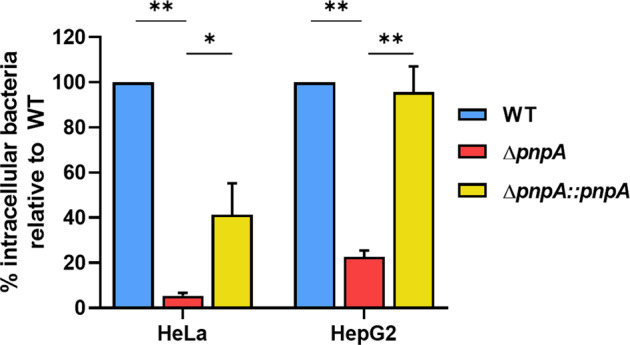
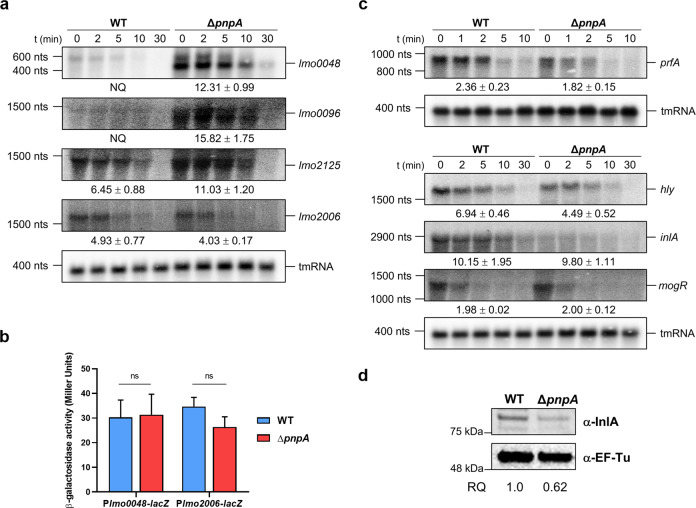
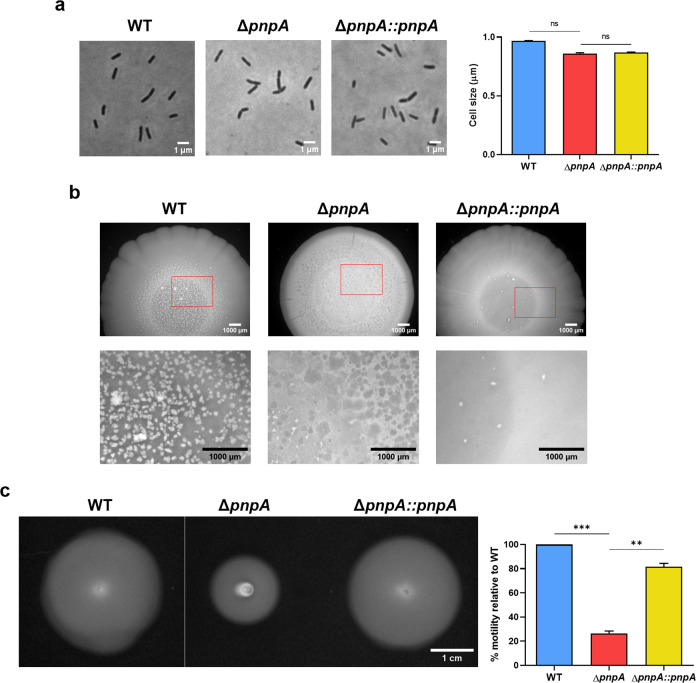
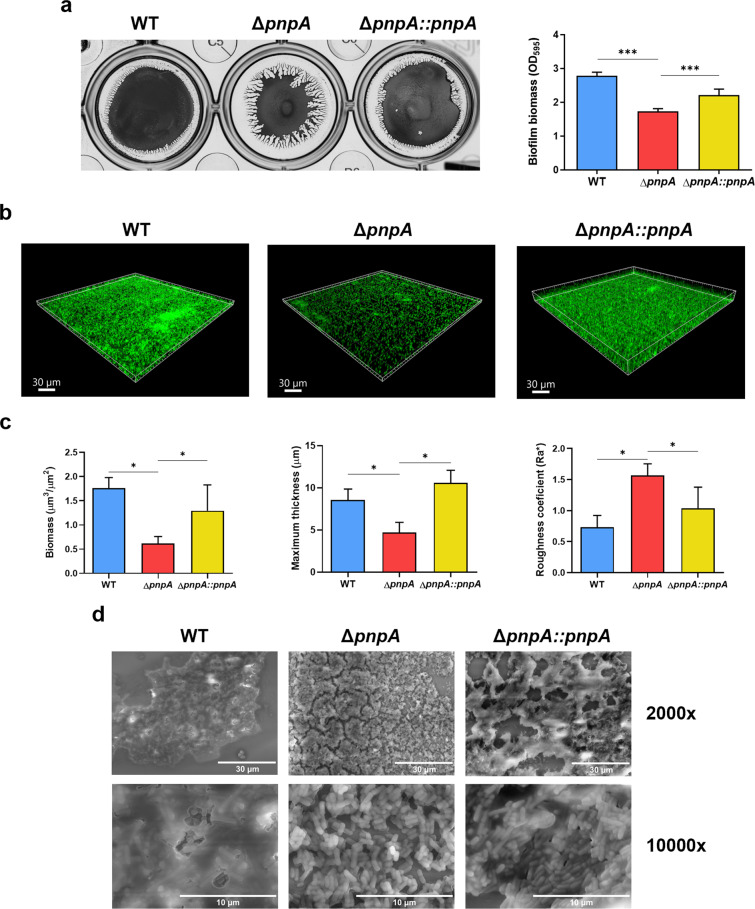
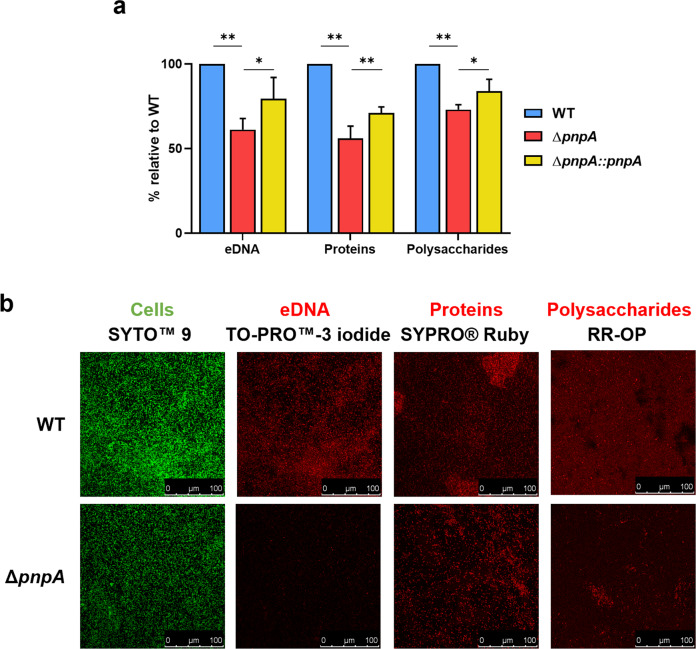
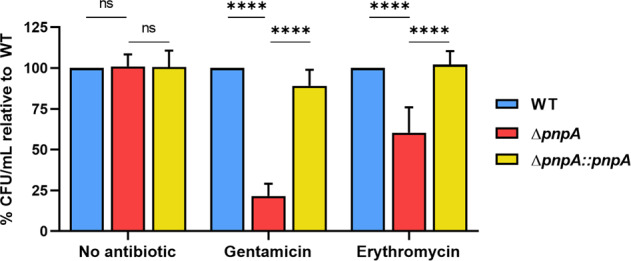
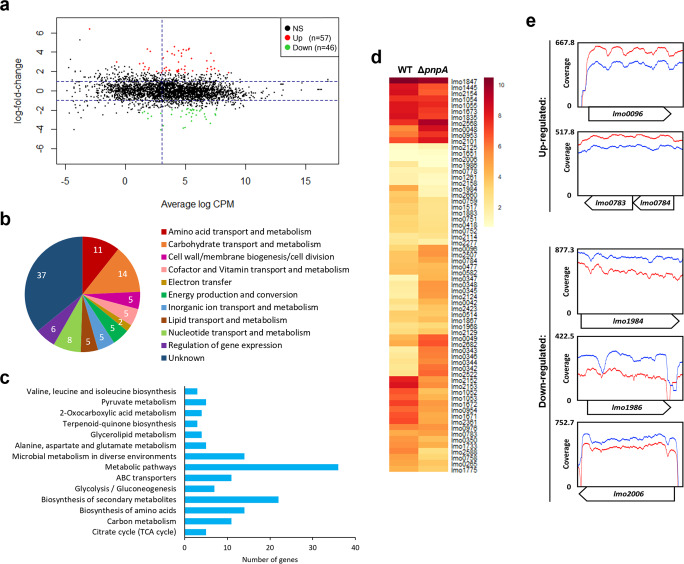
Biofilms provide an environment that protects microorganisms from external stresses such as nutrient deprivation, antibiotic treatments, and immune defences, thereby creating favorable conditions for bacterial survival and pathogenesis. Here we show that the RNA-binding protein and ribonuclease polynucleotide phosphorylase (PNPase) is a positive regulator of biofilm formation in the human pathogen Listeria monocytogenes, a major responsible for food contamination in food-processing environments. The PNPase mutant strain produces less biofilm biomass and exhibits an altered biofilm morphology that is more susceptible to antibiotic treatment. Through biochemical assays and microscopical analysis, we demonstrate that PNPase is a previously unrecognized regulator of the composition of the biofilm extracellular matrix, greatly affecting the levels of proteins, extracellular DNA, and sugars. Noteworthy, we have adapted the use of the fluorescent complex ruthenium red-phenanthroline for the detection of polysaccharides in Listeria biofilms. Transcriptomic analysis of wild-type and PNPase mutant biofilms reveals that PNPase impacts many regulatory pathways associated with biofilm formation, particularly by affecting the expression of genes involved in the metabolism of carbohydrates (e.g., lmo0096 and lmo0783, encoding PTS components), of amino acids (e.g., lmo1984 and lmo2006, encoding biosynthetic enzymes) and in the Agr quorum sensing-like system (lmo0048-49). Moreover, we show that PNPase affects mRNA levels of the master regulator of virulence PrfA and PrfA-regulated genes, and these results could help to explain the reduced bacterial internalization in human cells of the ΔpnpA mutant. Overall, this work demonstrates that PNPase is an important post-transcriptional regulator for virulence and adaptation to the biofilm lifestyle of Gram-positive bacteria and highlights the expanding role of ribonucleases as critical players in pathogenicity.
生物膜为微生物提供了一个环境,使其免受营养缺乏、抗生素治疗和免疫防御等外部压力的影响,从而为细菌的生存和发病创造了有利条件。在这里,我们表明 RNA 结合蛋白和核糖核酸酶多核苷酸磷酸化酶(PNPase)是人类病原体李斯特菌生物膜形成的正调控因子,李斯特菌是导致食品加工环境中食物污染的主要原因。PNPase 突变株产生的生物膜生物量较少,并且表现出改变的生物膜形态,更容易受到抗生素治疗的影响。通过生化测定和显微镜分析,我们证明 PNPase 是生物膜细胞外基质组成的一个以前未被识别的调节剂,极大地影响了蛋白质、细胞外 DNA 和糖的水平。值得注意的是,我们已经适应了使用荧光复合物钌红-菲咯啉来检测李斯特菌生物膜中的多糖。野生型和 PNPase 突变体生物膜的转录组分析表明,PNPase 影响与生物膜形成相关的许多调控途径,特别是通过影响参与碳水化合物代谢的基因的表达(例如,编码 PTS 成分的 lmo0096 和 lmo0783),氨基酸(例如,编码生物合成酶的 lmo1984 和 lmo2006)和 Agr 群体感应样系统(lmo0048-49)。此外,我们表明 PNPase 影响毒力主调控因子 PrfA 和 PrfA 调控基因的 mRNA 水平,这些结果有助于解释ΔpnpA 突变体在人类细胞中细菌内化减少的原因。总的来说,这项工作表明 PNPase 是革兰氏阳性菌毒力和适应生物膜生活方式的重要转录后调节剂,并强调了核糖核酸酶作为致病性关键因素的作用不断扩大。