Department of Chemistry, Fudan University, 2005 Songhu Road, Shanghai, 200438, China.
Zhuhai Fudan Innovation Institute, Zhuhai, 519000, China.
Nat Commun. 2023 Jun 7;14(1):3308. doi: 10.1038/s41467-023-38865-z.
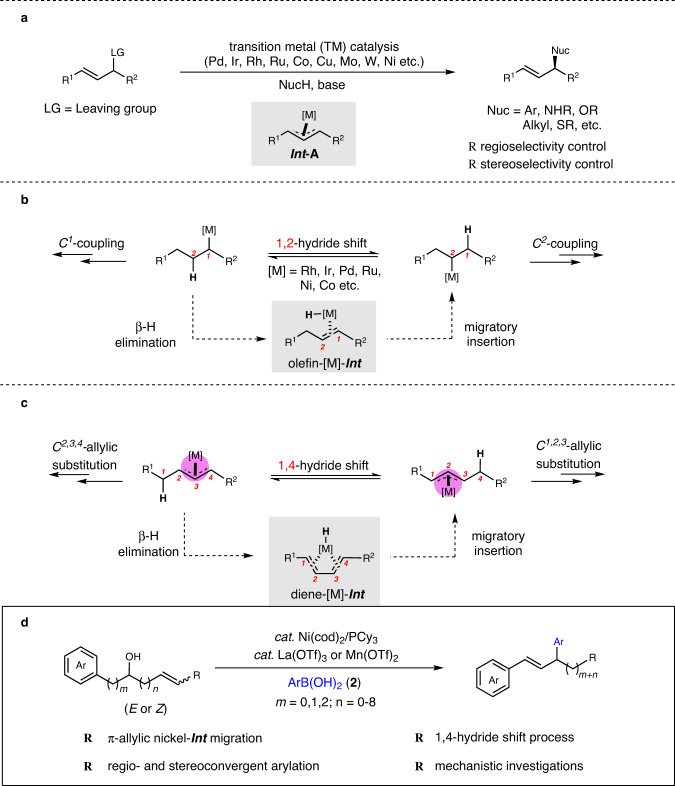
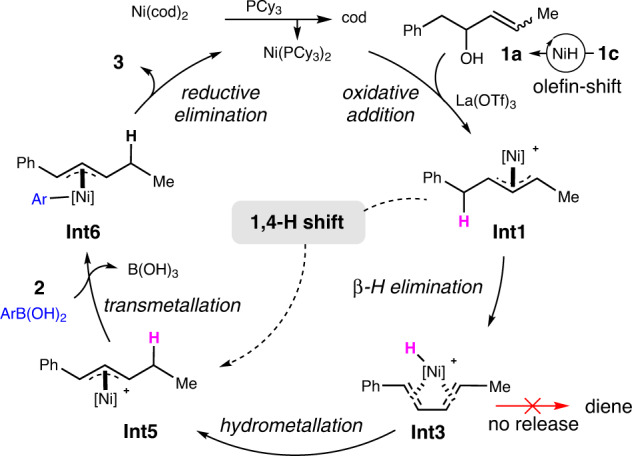
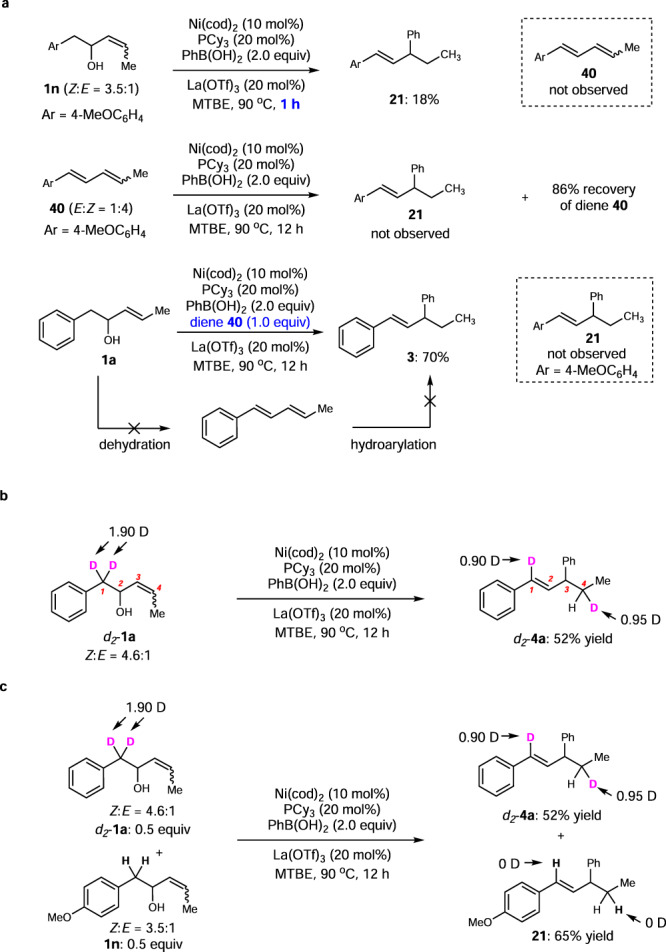
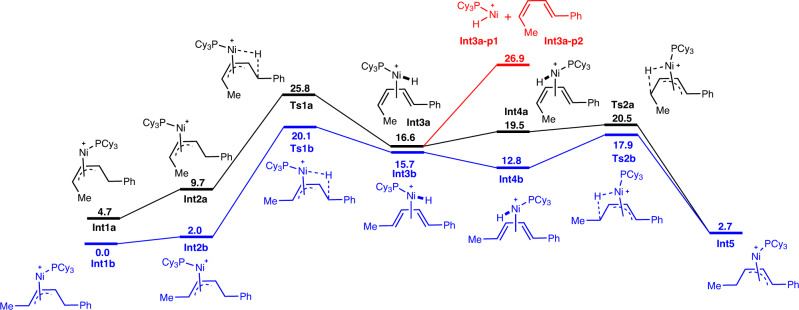
Transition-metal-catalyzed allylic substitution reactions (Tsuji-Trost reactions) proceeding via a π-allyl metal intermediate have been demonstrated as a powerful tool in synthetic chemistry. Herein, we disclose an unprecedented π-allyl metal species migration, walking on the carbon chain involving 1,4-hydride shift as confirmed by deuterium labeling experiments. This migratory allylic arylation can be realized under dual catalysis of nickel and lanthanide triflate, a Lewis acid. Olefin migration has been observed to preferentially occur with the substrate of 1,n-enols (n ≥ 3). The robust nature of the allylic substitution strategy is reflected by a broad scope of substrates with the control of regio- and stereoselectivity. DFT studies suggest that π-allyl metal species migration consists of the sequential β-H elimination and migratory insertion, with diene not being allowed to release from the metal center before producing a new π-allyl nickel species.
过渡金属催化的烯丙基取代反应(Tsuji-Trost 反应)通过π-烯丙基金属中间体进行,已被证明是合成化学中的一种强大工具。在此,我们揭示了一种前所未有的π-烯丙基金属物种迁移,通过氘标记实验证实,该迁移涉及 1,4-氢化物转移,在碳链上行走。这种迁移性烯丙基芳基化可以在镍和镧系三氟甲磺酸盐(路易斯酸)的双催化作用下实现。烯烃迁移被观察到优先发生在 1,n-烯醇(n ≥ 3)的底物上。烯丙基取代策略的稳健性体现在广泛的底物范围内,具有区域和立体选择性的控制。DFT 研究表明,π-烯丙基金属物种迁移包括顺序β-H 消除和迁移性插入,在产生新的π-烯丙基镍物种之前,二烯不能从金属中心释放。