Department of Colorectal Surgery, Sir Run Run Shaw Hospital, Zhejiang University School of Medicine, Hangzhou, Zhejiang, China.
Department of Surgical Oncology, Hangzhou Cancer Hospital, Hangzhou, Zhejiang, China.
Drug Deliv. 2023 Dec;30(1):2219427. doi: 10.1080/10717544.2023.2219427.
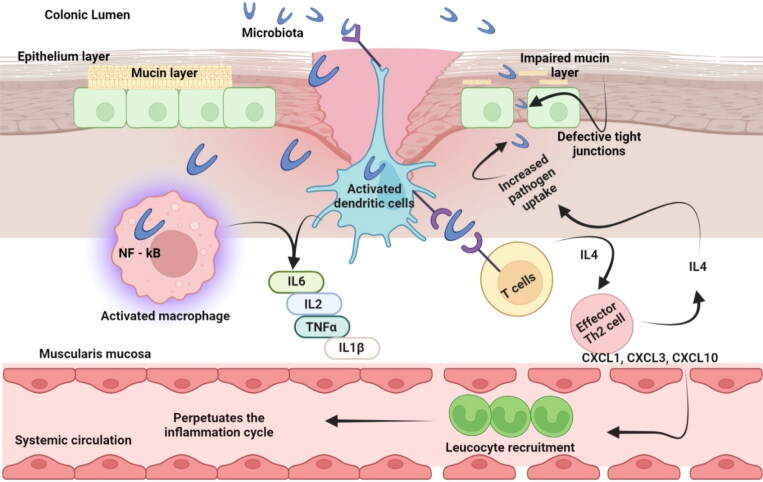
The pharmacological approach to treating gastrointestinal diseases is suffering from various challenges. Among such gastrointestinal diseases, ulcerative colitis manifests inflammation at the colon site specifically. Patients suffering from ulcerative colitis notably exhibit thin mucus layers that offer increased permeability for the attacking pathogens. In the majority of ulcerative colitis patients, the conventional treatment options fail in controlling the symptoms of the disease leading to distressing effects on the quality of life. Such a scenario is due to the failure of conventional therapies to target the loaded moiety into specific diseased sites in the colon. Targeted carriers are needed to address this issue and enhance the drug effects. Conventional nanocarriers are mostly readily cleared and have nonspecific targeting. To accumulate the desired concentration of the therapeutic candidates at the inflamed area of the colon, smart nanomaterials with responsive nature have been explored recently that include pH responsive, reactive oxygen species responsive (ROS), enzyme responsive and thermo - responsive smart nanocarrier systems. The formulation of such responsive smart nanocarriers from nanotechnology scaffolds has resulted in the selective release of therapeutic drugs, avoiding systemic absorption and limiting the undesired delivery of targeting drugs into healthy tissues. Recent advancements in the field of responsive nanocarrier systems have resulted in the fabrication of multi-responsive systems i.e. dual responsive nanocarriers and derivitization that has increased the biological tissues and smart nanocarrier's interaction. In addition, it has also led to efficient targeting and significant cellular uptake of the therapeutic moieties. Herein, we have highlighted the latest status of the responsive nanocarrier drug delivery system, its applications for on-demand delivery of drug candidates for ulcerative colitis, and the prospects are underpinned.
治疗胃肠道疾病的药理学方法正面临着各种挑战。在这些胃肠道疾病中,溃疡性结肠炎主要在结肠部位表现出炎症。患有溃疡性结肠炎的患者明显表现出薄的黏液层,这使得侵袭病原体的通透性增加。在大多数溃疡性结肠炎患者中,传统的治疗方法无法控制疾病的症状,导致生活质量受到痛苦的影响。这种情况是由于传统疗法未能将负载物靶向到结肠中的特定病变部位。需要靶向载体来解决这个问题并增强药物效果。传统的纳米载体大多容易被清除且具有非特异性靶向性。为了在结肠的炎症区域积聚治疗候选物的所需浓度,最近已经探索了具有响应性的智能纳米材料,包括 pH 响应、活性氧响应(ROS)、酶响应和温度响应智能纳米载体系统。这些响应性智能纳米载体的制剂从纳米技术支架中产生了治疗药物的选择性释放,避免了系统吸收并限制了靶向药物向健康组织的不良传递。在响应性纳米载体系统领域的最新进展导致了多响应系统的制造,即双响应纳米载体和衍生化,这增加了生物组织和智能纳米载体的相互作用。此外,它还导致了治疗部分的有效靶向和显著的细胞摄取。本文重点介绍了响应性纳米载体药物传递系统的最新现状,及其在溃疡性结肠炎按需递药中的应用,并提出了展望。