Department of Gastroenterology, The Second People's Hospital of Hefei, Hefei Hospital Affiliated to Anhui Medical University, Hefei, 230011, China.
School of Biopharmacy, China Pharmaceutical University, Nanjing, 210009, China.
J Nanobiotechnology. 2022 Sep 5;20(1):404. doi: 10.1186/s12951-022-01603-6.
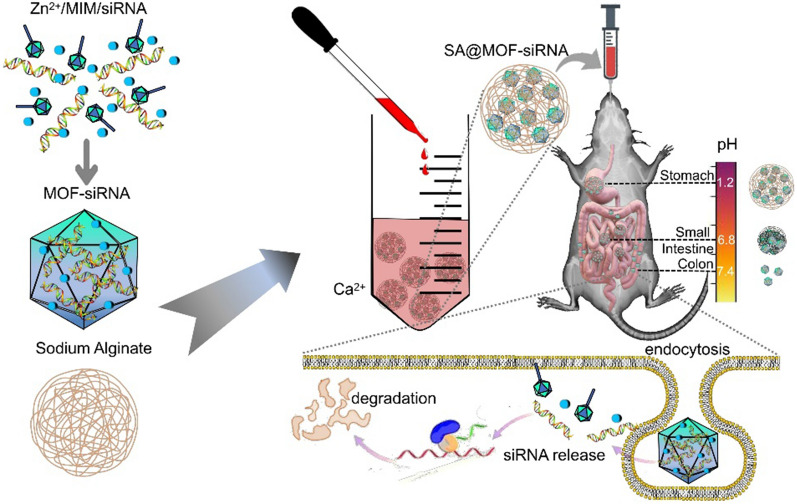
Ulcerative colitis (UC) is a major type of inflammatory bowel disease (IBD), which could induce bloody stool, diarrhea, colon atrophy and eventually lead to colorectal cancer. The conventional daily oral administration of drugs only relieve the inflammatory response of colon in the short term, Biological agents such as antibody drugs has proven its efficiency in inhibiting colitis, while the low drug bioavailability means that large doses of antibodies are required, ultimately causing systemic toxicity. Small interfering RNA (siRNA) has significant advantages over antibody drugs in terms of safety and efficacy, and it have been widely applied as potential candidates for a variety of inflammation-related diseases. However, oral delivery of siRNA fails to overcome the degradation of the gastrointestinal environment to produce a significant therapeutic effect in ulcerative colitis. Herein, we design the hybrid delivery system that the siRNA loaded MOF encapsulated in the sodium alginate particles to overcome the barriers in the oral process.
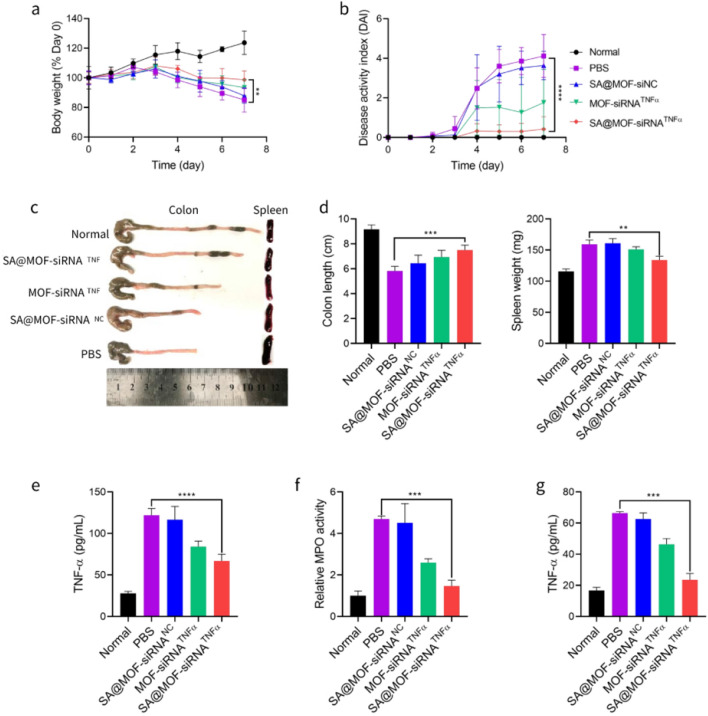
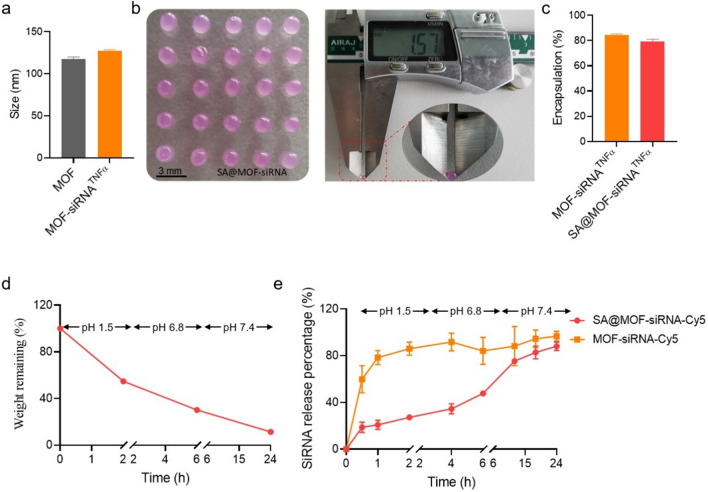
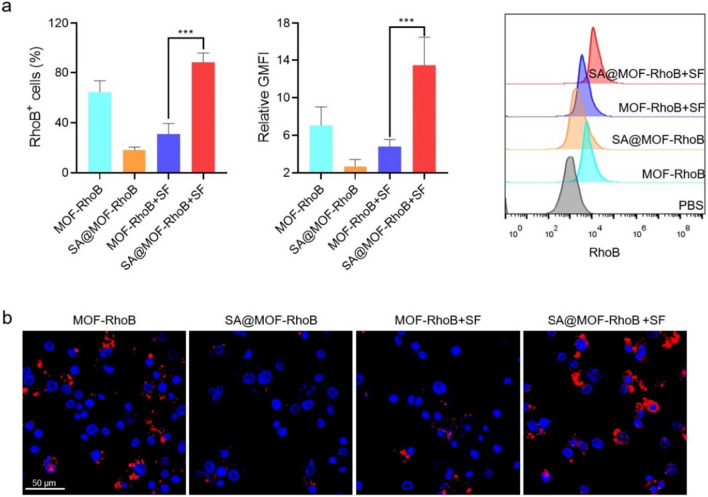
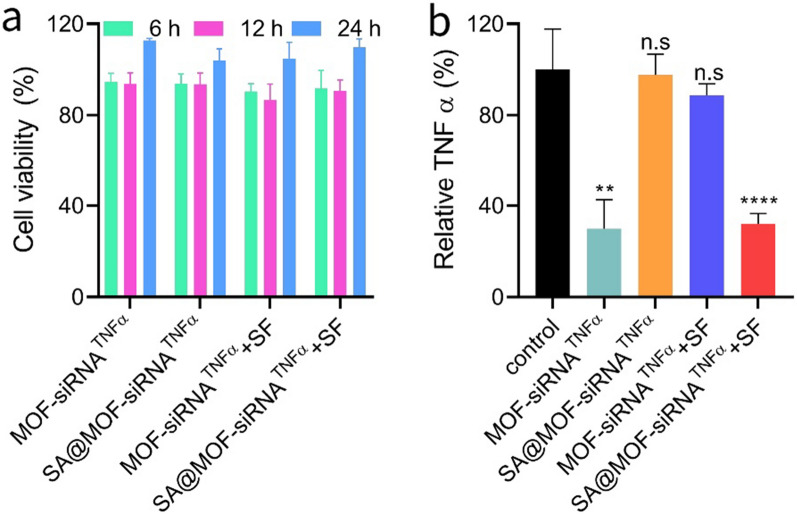
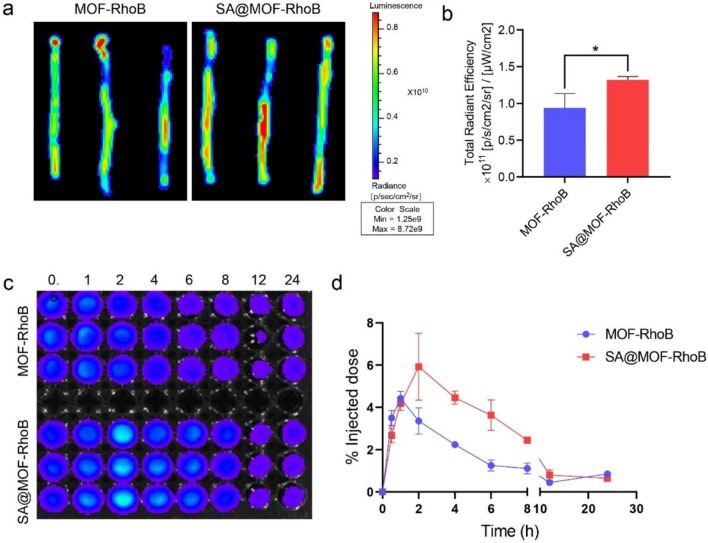
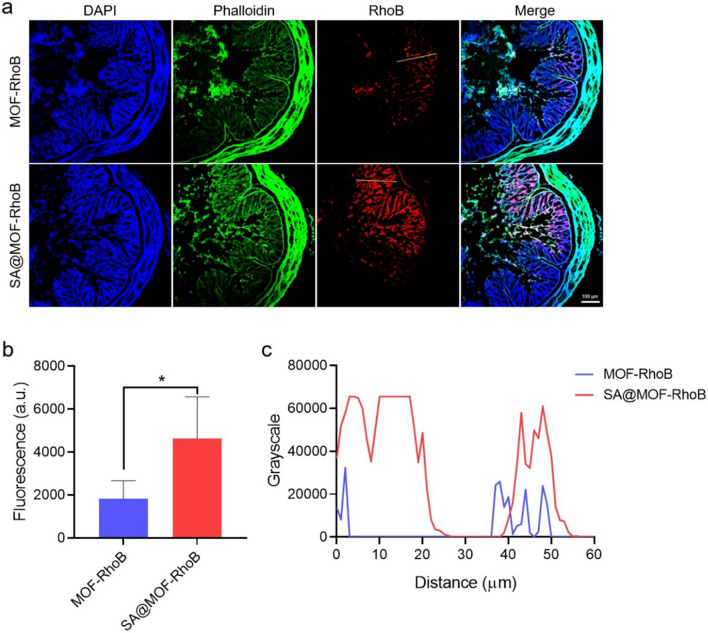
The hybrid delivery system (SA@MOF-siRNA) was successfully constructed, and it could not only survive the low pH environment in the stomach and small intestine, but also taken up more by inflammatory macrophages, as well as released much more MOF-siRNA. Moreover, SA@MOF-siRNA tended to enriched and infiltrated into local colon tissues. As a result, SA@MOF-siRNA significantly reduced the progression of colitis, of which the treated mice did not experience significant weight loss, bloody stools and diarrhea.
We confirmed that the formulation of hydrogel-metal-organic framework hybrids could improve the protection of incorporated payload in the gastric and early small intestine, enhancing the delivery of MOF-siRNA to colon.
溃疡性结肠炎(UC)是一种主要的炎症性肠病(IBD),可导致血便、腹泻、结肠萎缩,最终导致结直肠癌。传统的每日口服药物仅能在短期内缓解结肠的炎症反应,抗体类生物制剂已被证明能有效抑制结肠炎,但由于药物生物利用度低,需要大剂量的抗体,最终导致全身毒性。小干扰 RNA(siRNA)在安全性和疗效方面比抗体药物具有显著优势,已广泛应用于多种炎症相关疾病的潜在候选药物。然而,siRNA 的口服递送无法克服胃肠道环境的降解,因此在溃疡性结肠炎中无法产生显著的治疗效果。在此,我们设计了一种混合递送系统,将负载 siRNA 的 MOF 封装在海藻酸钠颗粒中,以克服口服过程中的障碍。
成功构建了混合递送系统(SA@MOF-siRNA),它不仅能在胃和小肠的低 pH 环境中存活,还能被炎症巨噬细胞更多地摄取,并释放更多的 MOF-siRNA。此外,SA@MOF-siRNA 倾向于在局部结肠组织中蓄积和渗透。结果,SA@MOF-siRNA 显著减缓了结肠炎的进展,接受治疗的小鼠体重没有明显减轻,也没有出现血便和腹泻。
我们证实了水凝胶-金属有机框架混合体制剂的配方可以改善包裹在其中的有效载荷在胃和早期小肠中的保护作用,增强 MOF-siRNA 向结肠的递送。