Rigby Charlotte, Sabsay Kimberly, Bisht Karishma, Eggink Dirk, Jalal Hamid, Te Velthuis Aartjan J W
Lewis Thomas Laboratory, Department of Molecular Biology, Princeton University, 08544 New Jersey, United States.
University of Cambridge, Department of Pathology, Addenbrooke's Hospital, Cambridge CB2 2QQ, United Kingdom.
bioRxiv. 2023 Aug 2:2023.05.25.542331. doi: 10.1101/2023.05.25.542331.
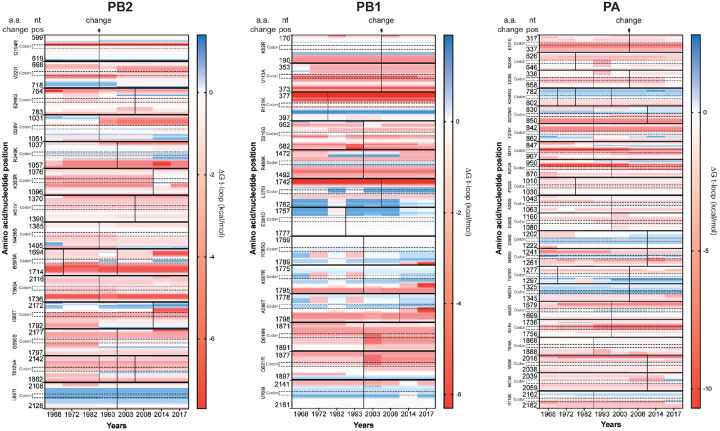
RNA viruses are important human pathogens that cause seasonal epidemics and occasional pandemics. Examples are influenza A viruses (IAV) and coronaviruses (CoV). When emerging IAV and CoV spill over to humans, they adapt to evade immune responses and optimize their replication and spread in human cells. In IAV, adaptation occurs in all viral proteins, including the viral ribonucleoprotein (RNP) complex. RNPs consists of a copy of the viral RNA polymerase, a double-helical coil of nucleoprotein, and one of the eight segments of the IAV RNA genome. The RNA segments and their transcripts are partially structured to coordinate the packaging of the viral genome and modulate viral mRNA translation. In addition, RNA structures can affect the efficiency of viral RNA synthesis and the activation of host innate immune response. Here, we investigated if RNA structures that modulate IAV replication processivity, so called template loops (t-loops), vary during the adaptation of pandemic and emerging IAV to humans. Using cell culture-based replication assays and sequence analyses, we find that the sensitivity of the IAV H3N2 RNA polymerase to t-loops increased between isolates from 1968 and 2017, whereas the total free energy of t-loops in the IAV H3N2 genome was reduced. This reduction is particularly prominent in the PB1 gene. In H1N1 IAV, we find two separate reductions in t-loop free energy, one following the 1918 pandemic and one following the 2009 pandemic. No destabilization of t-loops is observed in the IBV genome, whereas analysis of SARS-CoV-2 isolates reveals destabilization of viral RNA structures. Overall, we propose that a loss of free energy in the RNA genome of emerging respiratory RNA viruses may contribute to the adaption of these viruses to the human population.
RNA病毒是重要的人类病原体,可引发季节性流行疾病以及偶尔的大流行。甲型流感病毒(IAV)和冠状病毒(CoV)就是例子。当新出现的IAV和CoV传播给人类时,它们会发生适应性变化以逃避免疫反应,并优化其在人类细胞中的复制和传播。在IAV中,所有病毒蛋白包括病毒核糖核蛋白(RNP)复合物都会发生适应性变化。RNP由病毒RNA聚合酶的一个副本、核蛋白的双螺旋线圈以及IAV RNA基因组八个片段之一组成。RNA片段及其转录本具有部分结构,以协调病毒基因组的包装并调节病毒mRNA翻译。此外,RNA结构可影响病毒RNA合成的效率以及宿主先天免疫反应的激活。在此,我们研究了调节IAV复制持续性的RNA结构(即所谓的模板环,t环)在大流行和新出现的IAV适应人类的过程中是否会发生变化。通过基于细胞培养的复制试验和序列分析,我们发现,1968年至2017年分离出的IAV H3N2 RNA聚合酶对t环的敏感性增加,而IAV H3N2基因组中t环的总自由能降低。这种降低在PB1基因中尤为明显。在H1N1 IAV中,我们发现t环自由能有两次独立降低,一次在1918年大流行之后,一次在2009年大流行之后。在传染性支气管炎病毒(IBV)基因组中未观察到t环的不稳定,而对严重急性呼吸综合征冠状病毒2(SARS-CoV-2)分离株的分析显示病毒RNA结构不稳定。总体而言,我们认为新出现的呼吸道RNA病毒RNA基因组中自由能的损失可能有助于这些病毒适应人类群体。