Wang Peng, Li Ruikai, Li Yuqi, Tan Siwei, Jiang Jie, Liu Huiling, Wei Xiuqing
Department of Gastroenterology, The Third Affiliated Hospital of Sun Yat-sen University, Guangzhou, Guangdong, P. R. China.
Gastroenterol Rep (Oxf). 2023 Jun 6;11:goad032. doi: 10.1093/gastro/goad032. eCollection 2023.
Berberine effectively alleviates non-alcoholic fatty liver disease (NAFLD). Nevertheless, the mechanism is incompletely comprehended. It has been reported that SIRT1 mediates lipid metabolism in liver and berberine promotes the expression of in hepatocytes. We hypothesized that SIRT1 mediated the effect of berberine on NAFLD.
The effects of berberine on NAFLD were evaluated in C57BL/6J mice fed a high-fat diet (HFD) and in mouse primary hepatocytes and cell lines exposed to palmitate. The change of fatty acid oxidation (FAO) and the activity of CPT1A were observed in HepG2 cells. Quantitative real-time polymerase chain reaction and Western blot were employed to observe the expression of and lipid metabolism-related molecules. The interaction between SIRT1 and CPT1A was investigated by using co-immunoprecipitation assay in HEK293T cells.
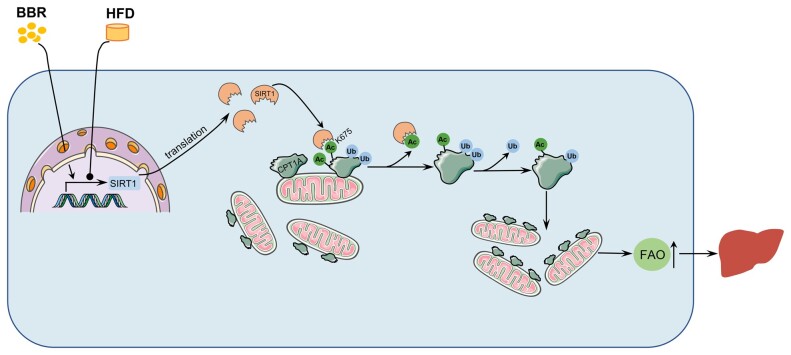
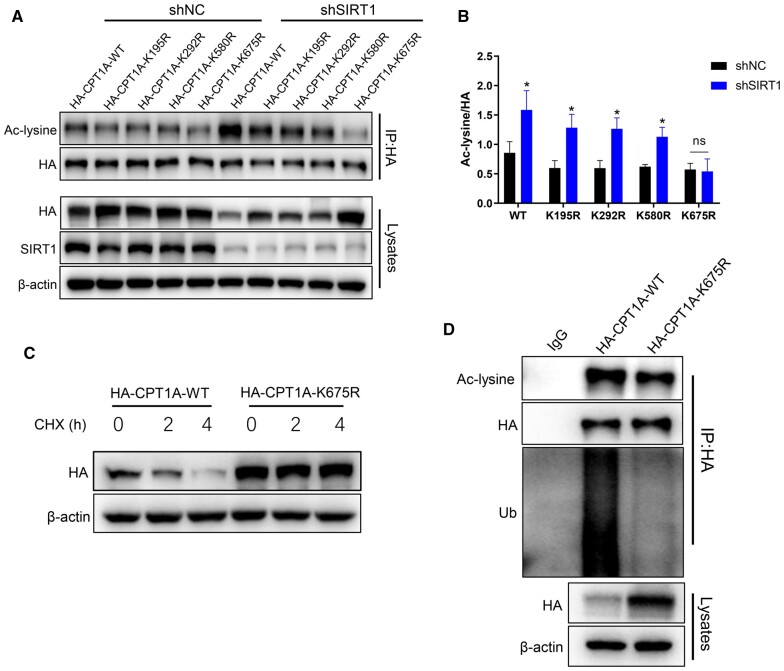
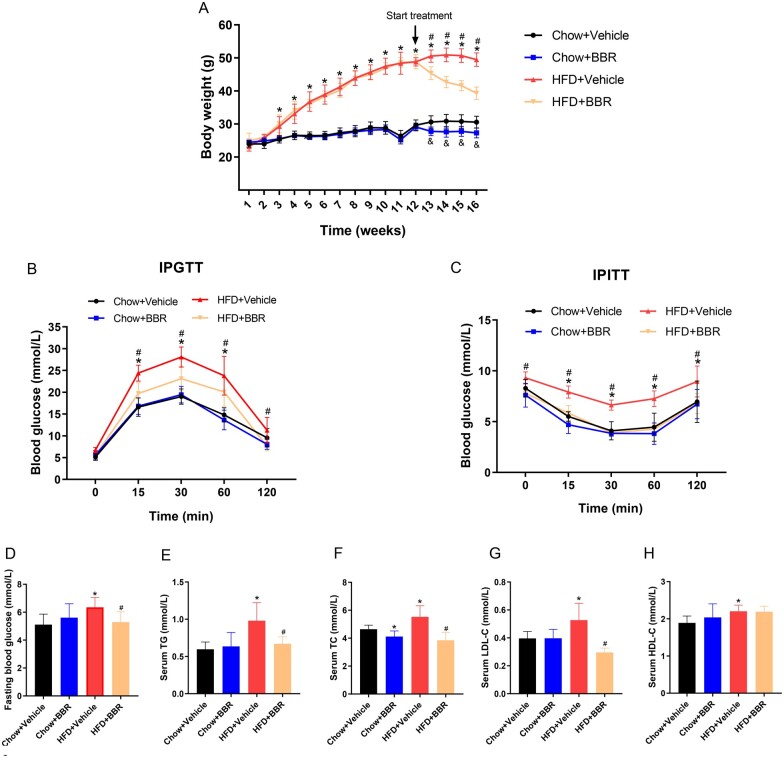
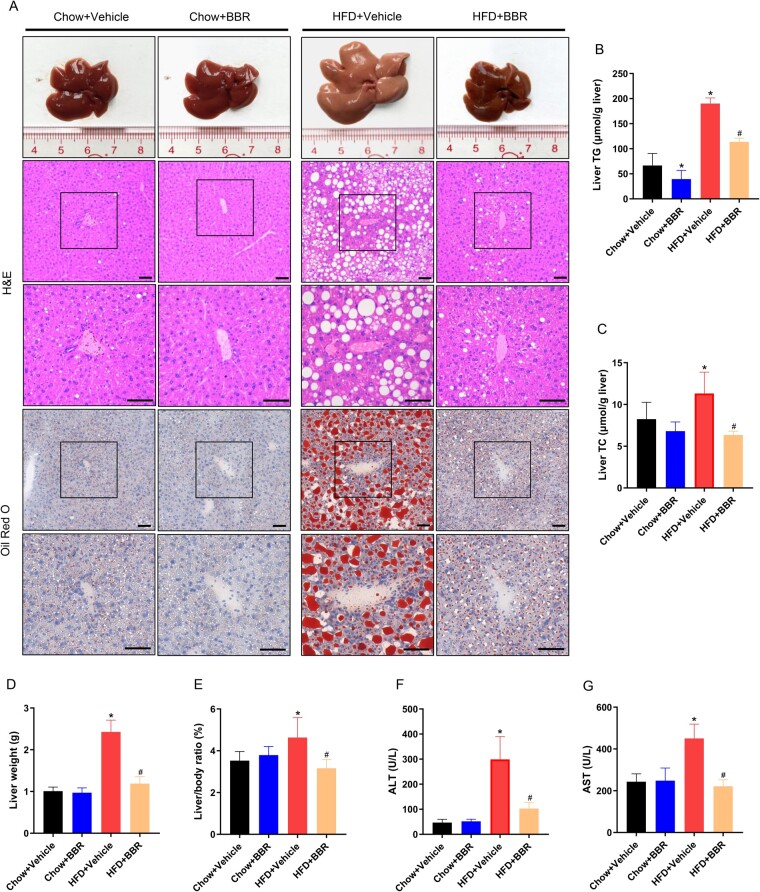
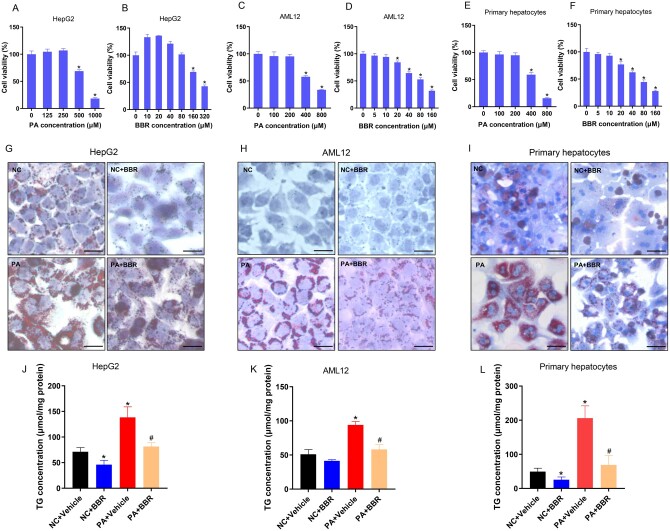
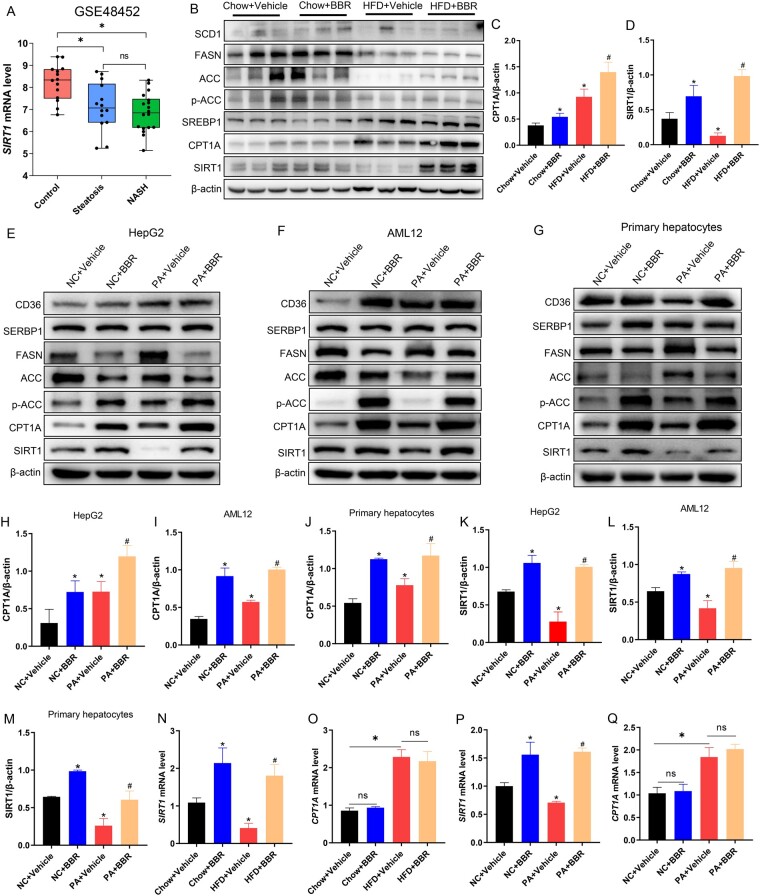
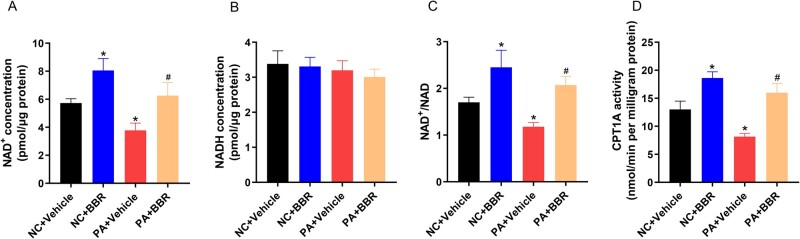
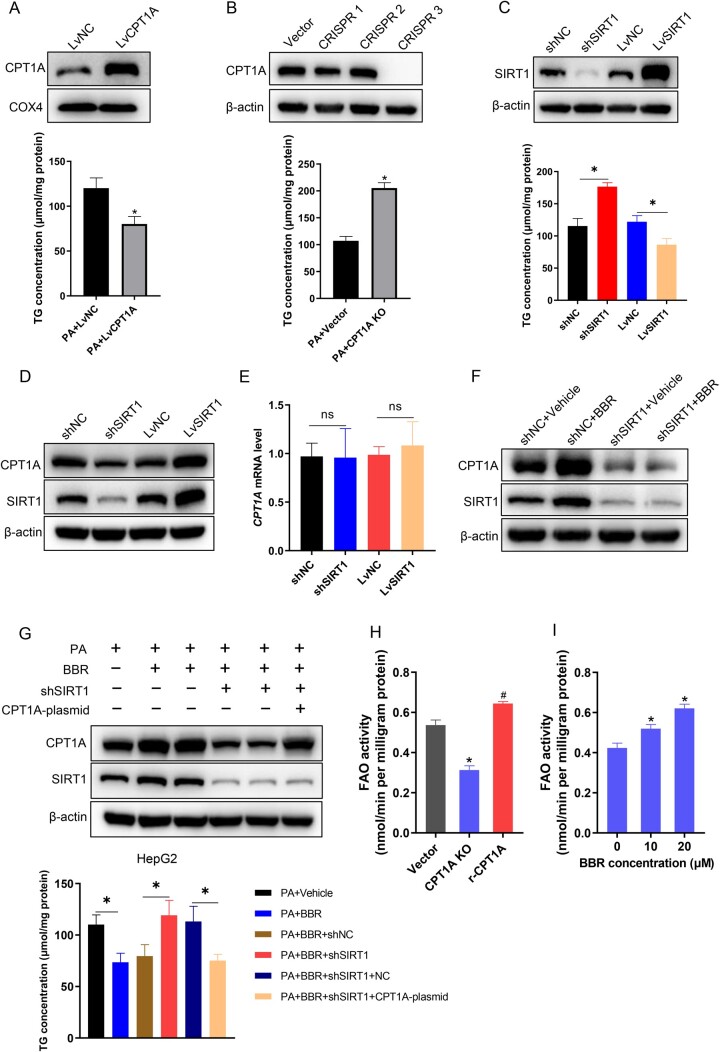
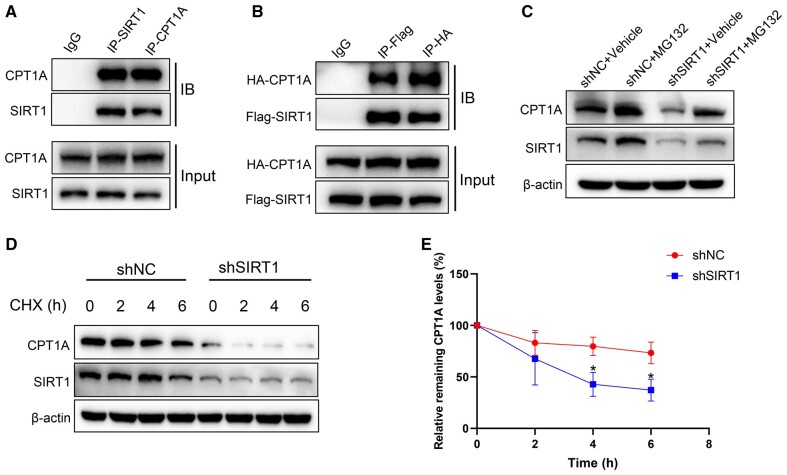
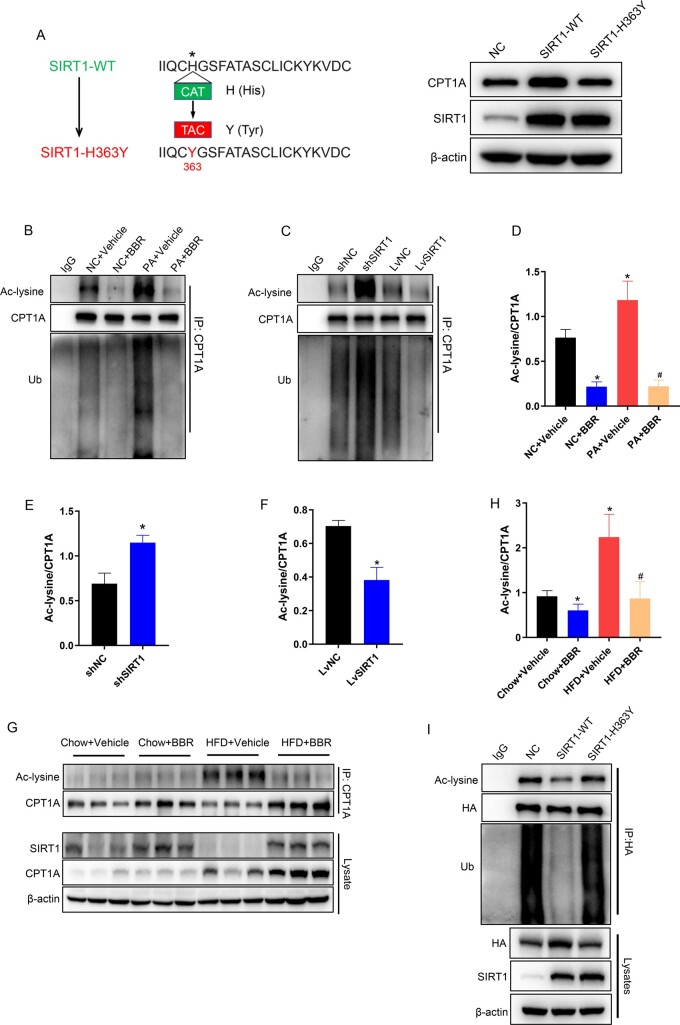
Berberine treatment attenuated hepatic steatosis, reduced triglyceride (190.1 ± 11.2 μmol/g liver vs 113.6 ± 7.6 μmol/g liver, 0.001) and cholesterol (11.3 ± 2.5 μmol/g liver vs 6.3 ± 0.4 μmol/g liver, 0.001) concentration in the liver, and improved lipid and glucose metabolism disorders compared with the HFD group. The expression of was reduced in the liver of NAFLD patients and mouse models. Berberine increased the expression of and promoted the protein level of and its activity in HepG2 cells. overexpression mimicked the effect of berberine on reducing triglyceride levels in HepG2 cells, whereas knock-down attenuated the effect of berberine. Mechanistically, berberine increased the expression of . SIRT1 deacetylated CPT1A at the Lys675 site, which suppressed its ubiquitin-dependent degradation, thereby promoting FAO and alleviating non-alcoholic liver steatosis.
Berberine promoted SIRT1 deacetylation of CPT1A at the Lys675 site, which reduced the ubiquitin-dependent degradation of CPT1A and ameliorated non-alcoholic liver steatosis.
黄连素可有效缓解非酒精性脂肪性肝病(NAFLD)。然而,其作用机制尚未完全明确。据报道,SIRT1介导肝脏中的脂质代谢,且黄连素可促进肝细胞中[具体基因名称未给出]的表达。我们推测SIRT1介导了黄连素对NAFLD的影响。
在喂食高脂饮食(HFD)的C57BL/6J小鼠以及暴露于棕榈酸的小鼠原代肝细胞和细胞系中评估黄连素对NAFLD的影响。在HepG2细胞中观察脂肪酸氧化(FAO)的变化和CPT1A的活性。采用定量实时聚合酶链反应和蛋白质免疫印迹法观察[具体基因名称未给出]及脂质代谢相关分子的表达。在HEK293T细胞中通过免疫共沉淀实验研究SIRT1与CPT1A之间的相互作用。
与HFD组相比,黄连素治疗减轻了肝脏脂肪变性,降低了肝脏中甘油三酯(190.1±11.2μmol/g肝脏 vs 113.6±7.6μmol/g肝脏,P<0.001)和胆固醇(11.3±2.5μmol/g肝脏 vs 6.3±0.4μmol/g肝脏,P<0.001)的浓度,并改善了脂质和葡萄糖代谢紊乱。NAFLD患者和小鼠模型肝脏中[具体基因名称未给出]的表达降低。黄连素增加了[具体基因名称未给出]的表达,并促进了HepG2细胞中[具体蛋白名称未给出]的蛋白水平及其活性。[具体基因名称未给出]过表达模拟了黄连素对降低HepG2细胞中甘油三酯水平的作用,而[具体基因名称未给出]敲低则减弱了黄连素的作用。机制上,黄连素增加了[具体基因名称未给出]的表达。SIRT1使CPT1A的675位赖氨酸位点去乙酰化,抑制其泛素依赖性降解,从而促进FAO并减轻非酒精性肝脂肪变性。
黄连素促进SIRT1使CPT1A在675位赖氨酸位点去乙酰化,减少了CPT1A的泛素依赖性降解,改善了非酒精性肝脂肪变性。