• 文献检索
  • 文档翻译
  • 深度研究
  • 学术资讯
  • Suppr Zotero 插件Zotero 插件
  • 邀请有礼
  • 套餐&价格
  • 历史记录
应用&插件
Suppr Zotero 插件Zotero 插件浏览器插件Mac 客户端Windows 客户端微信小程序
定价
高级版会员购买积分包购买API积分包
服务
文献检索文档翻译深度研究API 文档MCP 服务
关于我们
关于 Suppr公司介绍联系我们用户协议隐私条款
关注我们

Suppr 超能文献

核心技术专利:CN118964589B侵权必究
粤ICP备2023148730 号-1Suppr @ 2026

文献检索

告别复杂PubMed语法,用中文像聊天一样搜索,搜遍4000万医学文献。AI智能推荐,让科研检索更轻松。

立即免费搜索

文件翻译

保留排版,准确专业,支持PDF/Word/PPT等文件格式,支持 12+语言互译。

免费翻译文档

深度研究

AI帮你快速写综述,25分钟生成高质量综述,智能提取关键信息,辅助科研写作。

立即免费体验

秀丽隐杆线虫 Shugoshin 调控纤毛中的 TAC-1。

The Caenorhabditis elegans Shugoshin regulates TAC-1 in cilia.

机构信息

Department of Biology, University of Saskatchewan, Saskatoon, Canada.

Department of Molecular Biology & Biochemistry, Simon Fraser University, Burnaby, BC, V5A 1S6, Canada.

出版信息

Sci Rep. 2023 Jun 9;13(1):9410. doi: 10.1038/s41598-023-36430-8.

DOI:10.1038/s41598-023-36430-8
PMID:37296204
原文链接:https://pmc.ncbi.nlm.nih.gov/articles/PMC10256747/
Abstract

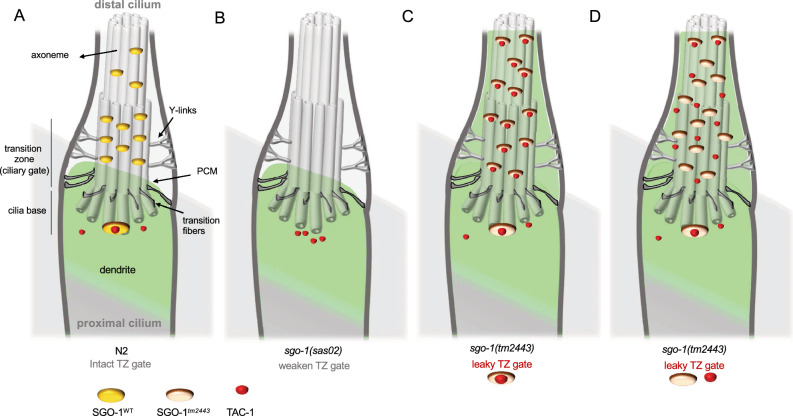
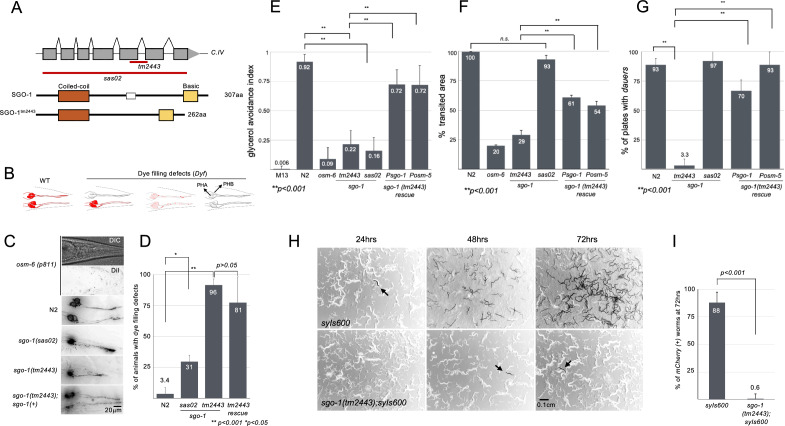
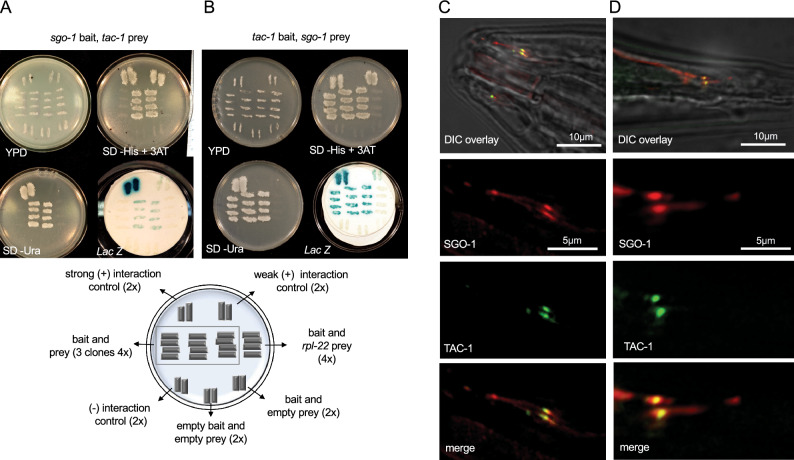
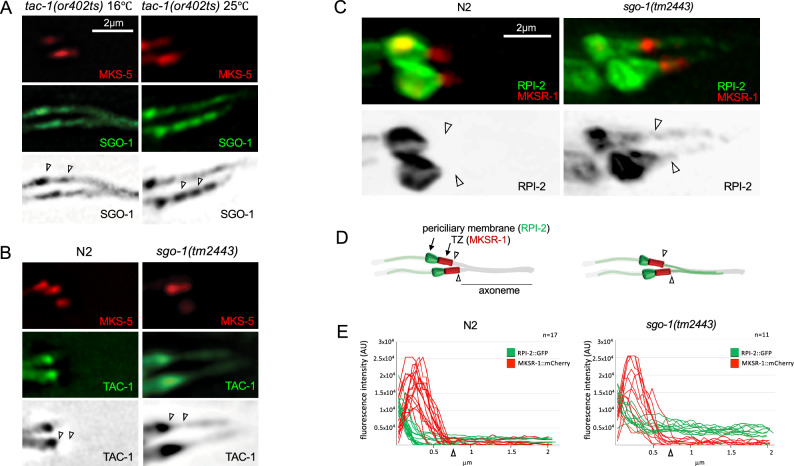
The conserved Shugoshin (SGO) protein family is essential for mediating proper chromosome segregation from yeast to humans but has also been implicated in diverse roles outside of the nucleus. SGO's roles include inhibiting incorrect spindle attachment in the kinetochore, regulating the spindle assembly checkpoint (SAC), and ensuring centriole cohesion in the centrosome, all functions that involve different microtubule scaffolding structures in the cell. In Caenorhabditis elegans, a species with holocentric chromosomes, SGO-1 is not required for cohesin protection or spindle attachment but appears important for licensing meiotic recombination. Here we provide the first functional evidence that in C. elegans, Shugoshin functions in another extranuclear, microtubule-based structure, the primary cilium. We identify the centrosomal and microtubule-regulating transforming acidic coiled-coil protein, TACC/TAC-1, which also localizes to the basal body, as an SGO-1 binding protein. Genetic analyses indicate that TAC-1 activity must be maintained below a threshold at the ciliary base for correct cilia function, and that SGO-1 likely participates in constraining TAC-1 to the basal body by influencing the function of the transition zone 'ciliary gate'. This research expands our understanding of cellular functions of Shugoshin proteins and contributes to the growing examples of overlap between kinetochore, centrosome and cilia proteomes.

摘要

保守的 SGO(Shugoshin)蛋白家族对于从酵母到人介导正确的染色体分离是必不可少的,但也被牵连到细胞核外的各种作用。SGO 的作用包括抑制动粒中不正确的纺锤体附着,调节纺锤体组装检查点(SAC),并确保中心体中的中心粒黏合,所有这些功能都涉及细胞中不同的微管支架结构。在具有全染色体的秀丽隐杆线虫中,SGO-1 对于黏连蛋白保护或纺锤体附着不是必需的,但似乎对于有丝分裂重组的许可很重要。在这里,我们提供了第一个功能证据,表明在秀丽隐杆线虫中,Shugoshin 在另一个核外的、基于微管的结构中发挥作用,即初级纤毛。我们鉴定了中心体和微管调节转化酸性卷曲螺旋蛋白 TACC/TAC-1,它也定位于基体,作为 SGO-1 的结合蛋白。遗传分析表明,TAC-1 的活性必须在纤毛基部的一个阈值以下维持,以确保正确的纤毛功能,并且 SGO-1 可能通过影响过渡区“纤毛门”的功能来参与限制 TAC-1 到基体。这项研究扩展了我们对 Shugoshin 蛋白细胞功能的理解,并为动粒、中心体和纤毛蛋白质组之间的重叠提供了越来越多的例子。
https://cdn.ncbi.nlm.nih.gov/pmc/blobs/df92/10256747/e8775c2183a3/41598_2023_36430_Fig6_HTML.jpg
https://cdn.ncbi.nlm.nih.gov/pmc/blobs/df92/10256747/638a13320cb9/41598_2023_36430_Fig1_HTML.jpg
https://cdn.ncbi.nlm.nih.gov/pmc/blobs/df92/10256747/71d286a1ea30/41598_2023_36430_Fig2_HTML.jpg
https://cdn.ncbi.nlm.nih.gov/pmc/blobs/df92/10256747/daa025bb0872/41598_2023_36430_Fig3_HTML.jpg
https://cdn.ncbi.nlm.nih.gov/pmc/blobs/df92/10256747/8496ef9814c8/41598_2023_36430_Fig4_HTML.jpg
https://cdn.ncbi.nlm.nih.gov/pmc/blobs/df92/10256747/33cb33a2f77f/41598_2023_36430_Fig5_HTML.jpg
https://cdn.ncbi.nlm.nih.gov/pmc/blobs/df92/10256747/e8775c2183a3/41598_2023_36430_Fig6_HTML.jpg
https://cdn.ncbi.nlm.nih.gov/pmc/blobs/df92/10256747/638a13320cb9/41598_2023_36430_Fig1_HTML.jpg
https://cdn.ncbi.nlm.nih.gov/pmc/blobs/df92/10256747/71d286a1ea30/41598_2023_36430_Fig2_HTML.jpg
https://cdn.ncbi.nlm.nih.gov/pmc/blobs/df92/10256747/daa025bb0872/41598_2023_36430_Fig3_HTML.jpg
https://cdn.ncbi.nlm.nih.gov/pmc/blobs/df92/10256747/8496ef9814c8/41598_2023_36430_Fig4_HTML.jpg
https://cdn.ncbi.nlm.nih.gov/pmc/blobs/df92/10256747/33cb33a2f77f/41598_2023_36430_Fig5_HTML.jpg
https://cdn.ncbi.nlm.nih.gov/pmc/blobs/df92/10256747/e8775c2183a3/41598_2023_36430_Fig6_HTML.jpg

相似文献

1
The Caenorhabditis elegans Shugoshin regulates TAC-1 in cilia.秀丽隐杆线虫 Shugoshin 调控纤毛中的 TAC-1。
Sci Rep. 2023 Jun 9;13(1):9410. doi: 10.1038/s41598-023-36430-8.
2
Caenorhabditis elegans TAC-1 and ZYG-9 form a complex that is essential for long astral and spindle microtubules.秀丽隐杆线虫的TAC-1和ZYG-9形成一种复合物,该复合物对于长星状微管和纺锤体微管至关重要。
Curr Biol. 2003 Sep 2;13(17):1506-11. doi: 10.1016/s0960-9822(03)00597-9.
3
Kinetochore Recruitment of the Spindle and Kinetochore-Associated (Ska) Complex Is Regulated by Centrosomal PP2A in .中心体 PP2A 调控纺锤体和着丝粒相关(Ska)复合物的着丝粒募集
Genetics. 2019 Jun;212(2):509-522. doi: 10.1534/genetics.119.302105. Epub 2019 Apr 24.
4
TAC-1 and ZYG-9 form a complex that promotes microtubule assembly in C. elegans embryos.TAC-1和ZYG-9形成一种复合物,该复合物促进秀丽隐杆线虫胚胎中的微管组装。
Curr Biol. 2003 Sep 2;13(17):1488-98. doi: 10.1016/s0960-9822(03)00582-7.
5
A role for Shugoshin in human cilia?守护蛋白在人体纤毛中起作用吗?
MicroPubl Biol. 2023 Dec 12;2023. doi: 10.17912/micropub.biology.001013. eCollection 2023.
6
The spindle assembly checkpoint in Caenorhabditis elegans: one who lacks Mad1 becomes mad one.秀丽隐杆线虫中的纺锤体组装检查点:缺失Mad1的个体变得疯狂。
Cell Cycle. 2009 Feb 1;8(3):338-44. doi: 10.4161/cc.8.3.7448. Epub 2009 Feb 17.
7
TAC-1, a regulator of microtubule length in the C. elegans embryo.TAC-1,一种秀丽隐杆线虫胚胎中微管长度的调节因子。
Curr Biol. 2003 Sep 2;13(17):1499-505. doi: 10.1016/s0960-9822(03)00577-3.
8
SPDL-1 functions as a kinetochore receptor for MDF-1 in Caenorhabditis elegans.在秀丽隐杆线虫中,SPDL-1作为MDF-1的动粒受体发挥作用。
J Cell Biol. 2008 Oct 20;183(2):187-94. doi: 10.1083/jcb.200805185.
9
Centriole-less pericentriolar material serves as a microtubule organizing center at the base of C. elegans sensory cilia.无中心体的中心粒周围物质在 C. elegans 感觉纤毛的基部充当微管组织中心。
Curr Biol. 2021 Jun 7;31(11):2410-2417.e6. doi: 10.1016/j.cub.2021.03.022. Epub 2021 Apr 1.
10
HIM-10 is required for kinetochore structure and function on Caenorhabditis elegans holocentric chromosomes.HIM-10对于秀丽隐杆线虫全着丝粒染色体上动粒的结构和功能是必需的。
J Cell Biol. 2001 Jun 11;153(6):1227-38. doi: 10.1083/jcb.153.6.1227.

引用本文的文献

1
A role for Shugoshin in human cilia?守护蛋白在人体纤毛中起作用吗?
MicroPubl Biol. 2023 Dec 12;2023. doi: 10.17912/micropub.biology.001013. eCollection 2023.

本文引用的文献

1
Composition, organization and mechanisms of the transition zone, a gate for the cilium.过渡区的组成、组织和机制,纤毛的一道门。
EMBO Rep. 2022 Dec 6;23(12):e55420. doi: 10.15252/embr.202255420. Epub 2022 Nov 21.
2
Shugoshin ensures maintenance of the spindle assembly checkpoint response and efficient spindle disassembly.Shugoshin 确保纺锤体装配检查点反应的维持和纺锤体的有效解体。
Mol Microbiol. 2021 Oct;116(4):1079-1098. doi: 10.1111/mmi.14796. Epub 2021 Aug 30.
3
Cohesin-protein Shugoshin-1 controls cardiac automaticity via HCN4 pacemaker channel.
黏连蛋白-蛋白守护蛋白-1通过HCN4起搏器通道控制心脏自律性。
Nat Commun. 2021 May 5;12(1):2551. doi: 10.1038/s41467-021-22737-5.
4
CDKL kinase regulates the length of the ciliary proximal segment.CDKL 激酶调节纤毛近端节的长度。
Curr Biol. 2021 Jun 7;31(11):2359-2373.e7. doi: 10.1016/j.cub.2021.03.068. Epub 2021 Apr 14.
5
An acentriolar centrosome at the C. elegans ciliary base.线虫纤毛基部的无中心体中心粒。
Curr Biol. 2021 Jun 7;31(11):2418-2428.e8. doi: 10.1016/j.cub.2021.03.023. Epub 2021 Apr 1.
6
Genetic markers enable the verification and manipulation of the dauer entry decision.遗传标记可用于验证和操纵 dauer 进入决策。
Dev Biol. 2019 Oct 15;454(2):170-180. doi: 10.1016/j.ydbio.2019.06.009. Epub 2019 Jun 23.
7
The Kinetochore-Microtubule Coupling Machinery Is Repurposed in Sensory Nervous System Morphogenesis.动粒-微管连接机制在感觉神经系统形态发生中被重新利用。
Dev Cell. 2019 Mar 25;48(6):864-872.e7. doi: 10.1016/j.devcel.2019.02.002. Epub 2019 Feb 28.
8
Cellular signalling by primary cilia in development, organ function and disease.初级纤毛在发育、器官功能和疾病中的细胞信号转导。
Nat Rev Nephrol. 2019 Apr;15(4):199-219. doi: 10.1038/s41581-019-0116-9.
9
Shugoshin Is Essential for Meiotic Prophase Checkpoints in C. elegans.Shugoshin 对于线虫减数分裂前期检验点至关重要。
Curr Biol. 2018 Oct 22;28(20):3199-3211.e3. doi: 10.1016/j.cub.2018.08.026. Epub 2018 Oct 4.
10
Condensin I protects meiotic cohesin from WAPL-1 mediated removal.凝缩素 I 保护减数分裂黏连蛋白免受 WAPL-1 介导的去除。
PLoS Genet. 2018 May 16;14(5):e1007382. doi: 10.1371/journal.pgen.1007382. eCollection 2018 May.