Institute of Experimental Cardiovascular Research, University Medical Center Hamburg-Eppendorf, 20246 Hamburg, Germany.
German Center for Cardiovascular Research (DZHK), Partner Site Hamburg/Kiel/Lübeck, 20246 Hamburg, Germany.
Cells. 2023 Jun 4;12(11):1543. doi: 10.3390/cells12111543.
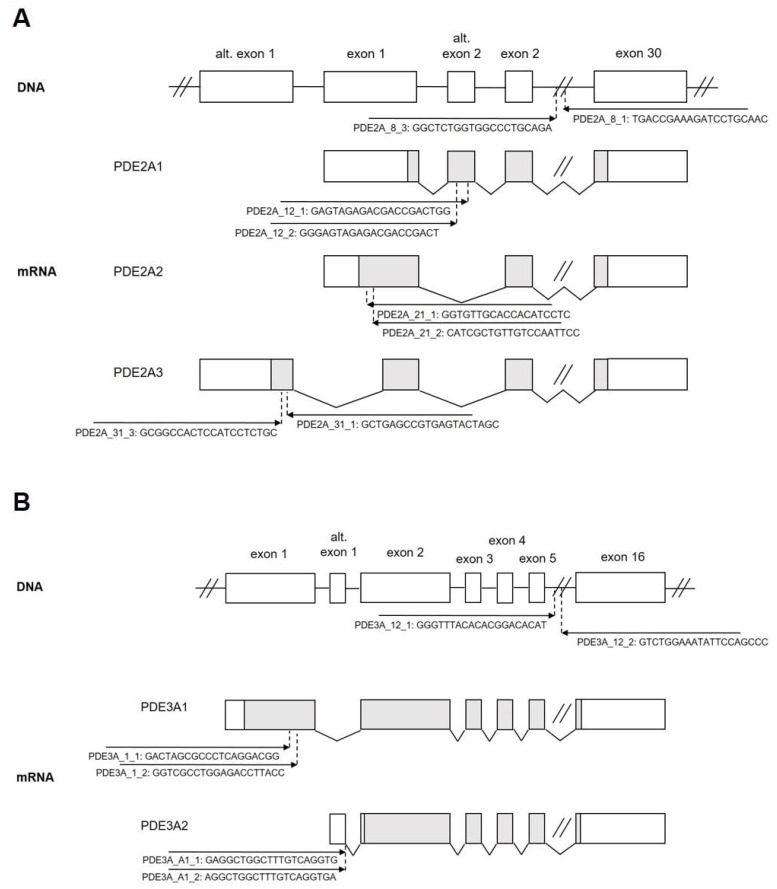
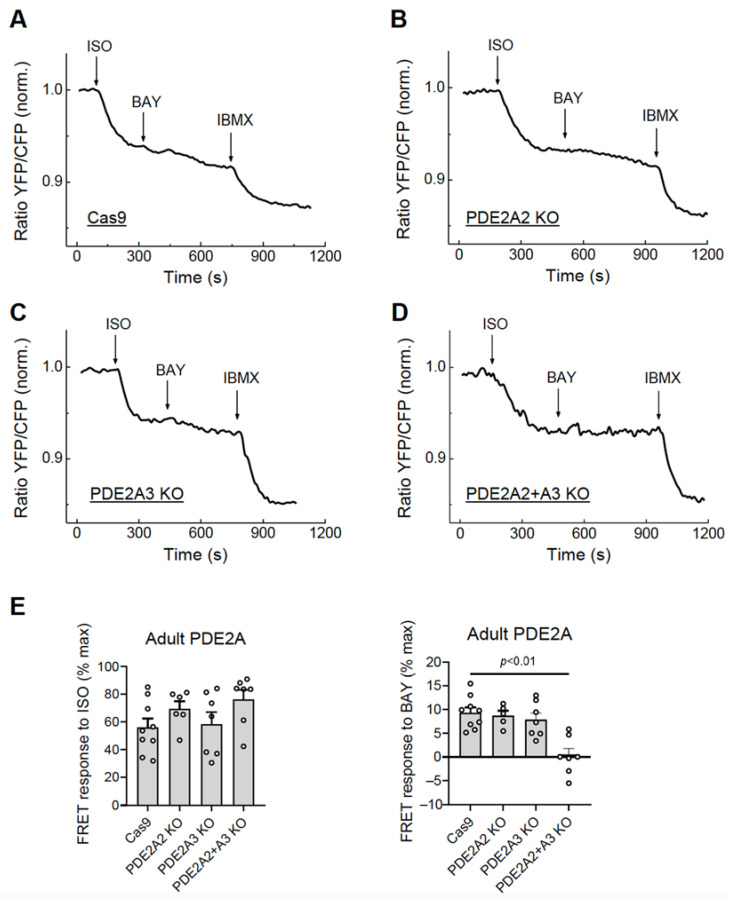
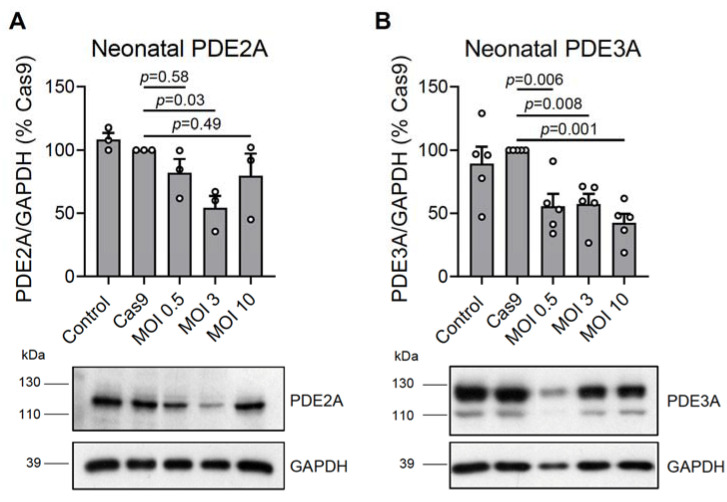
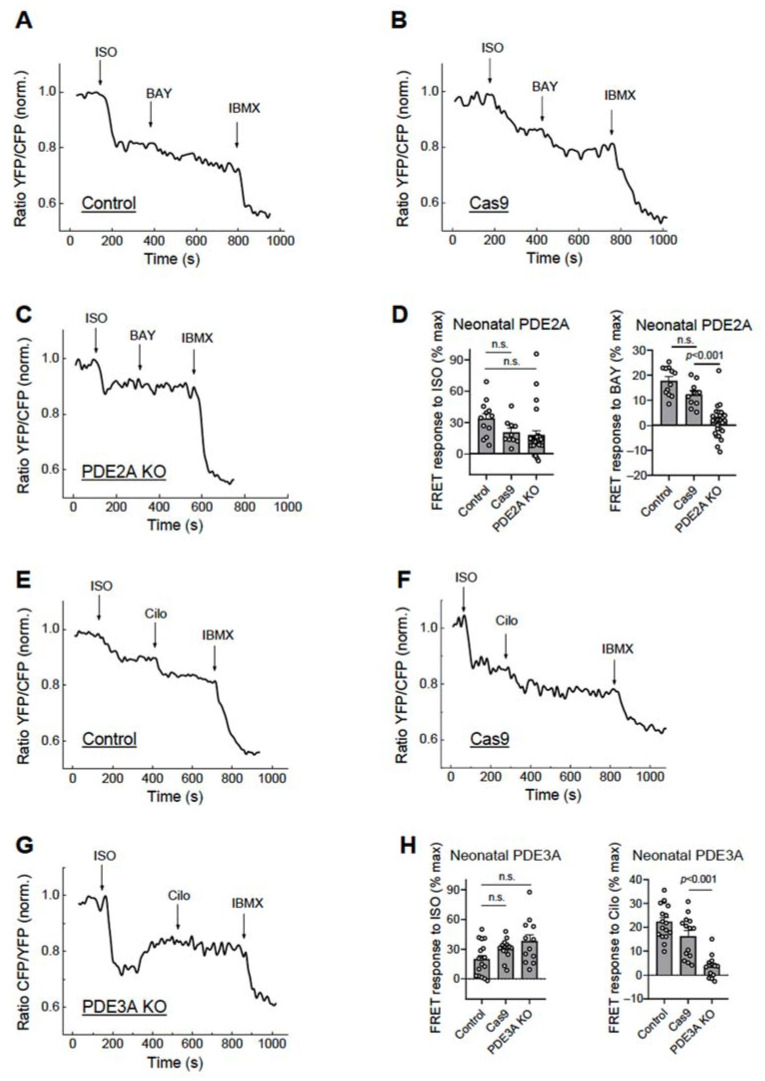
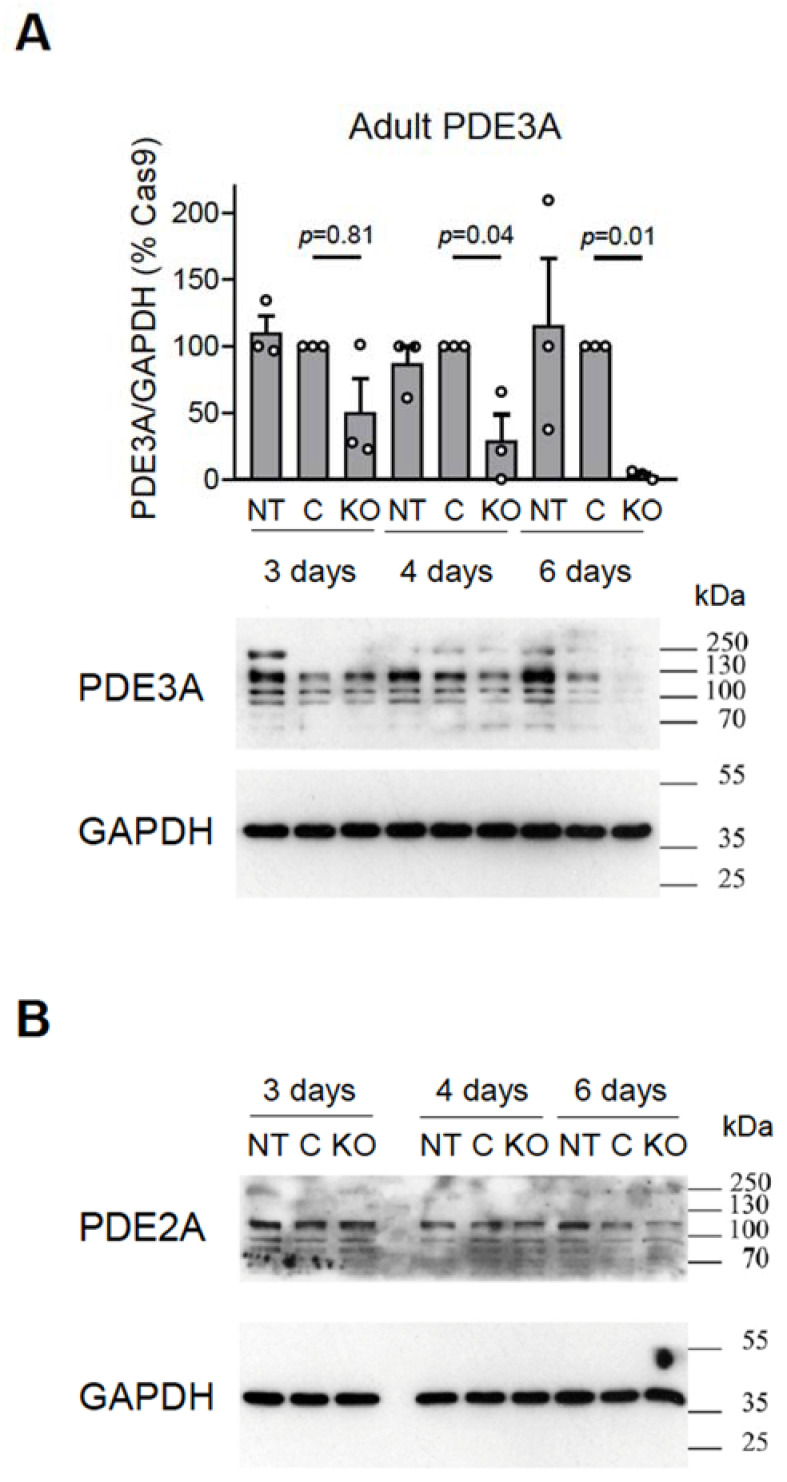
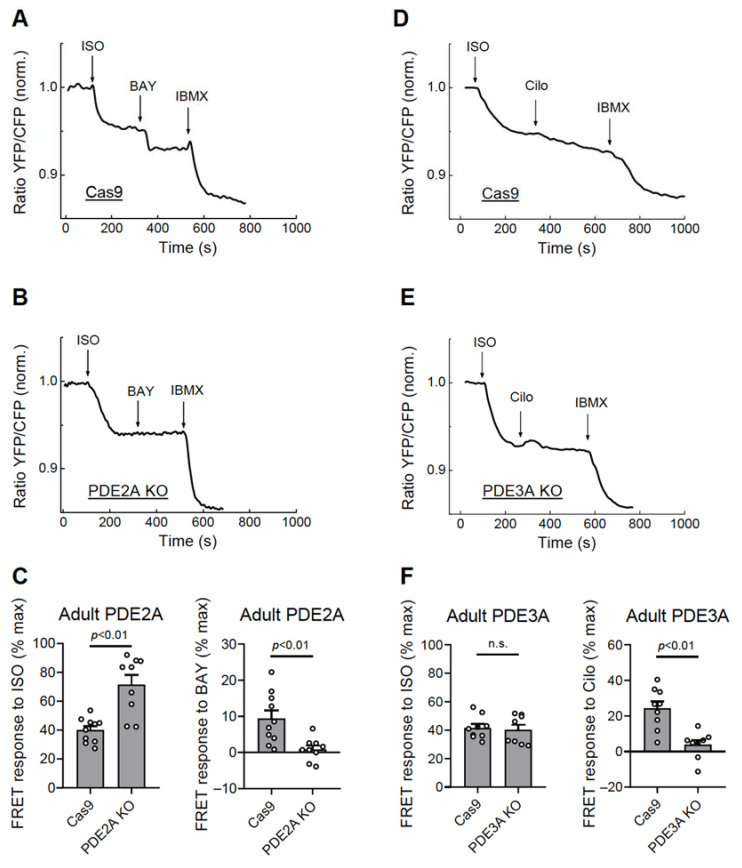
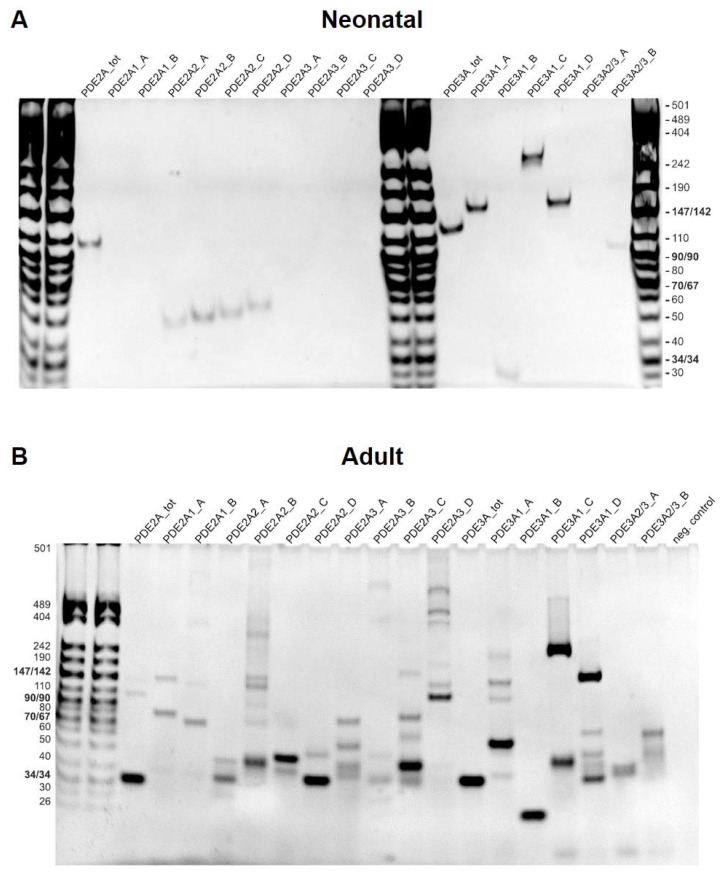
Cyclic nucleotide phosphodiesterases 2A (PDE2A) and PDE3A play an important role in the regulation of cyclic adenosine monophosphate (cAMP) and cyclic guanosine monophosphate (cGMP)-to-cAMP crosstalk. Each of these PDEs has up to three distinct isoforms. However, their specific contributions to cAMP dynamics are difficult to explore because it has been challenging to generate isoform-specific knock-out mice or cells using conventional methods. Here, we studied whether the CRISPR/Cas9 approach for precise genome editing can be used to knock out and genes and their distinct isoforms using adenoviral gene transfer in neonatal and adult rat cardiomyocytes. Cas9 and several specific gRNA constructs were cloned and introduced into adenoviral vectors. Primary adult and neonatal rat ventricular cardiomyocytes were transduced with different amounts of Cas9 adenovirus in combination with PDE2A or PDE3A gRNA constructs and cultured for up to 6 (adult) or 14 (neonatal) days to analyze PDE expression and live cell cAMP dynamics. A decline in mRNA expression for PDE2A (80%) and PDE3A (45%) was detected as soon as 3 days post transduction, with both PDEs being reduced at the protein level by >50-60% in neonatal cardiomyocytes (after 14 days) and >95% in adult cardiomyocytes (after 6 days). This correlated with the abrogated effects of selective PDE inhibitors in the live cell imaging experiments based on using cAMP biosensor measurements. Reverse transcription PCR analysis revealed that only the PDE2A2 isoform was expressed in neonatal myocytes, while adult cardiomyocytes expressed all three PDE2A isoforms (A1, A2, and A3) which contributed to the regulation of cAMP dynamics as detected by live cell imaging. In conclusion, CRISPR/Cas9 is an effective tool for the in vitro knock-out of PDEs and their specific isoforms in primary somatic cells. This novel approach suggests distinct regulation of live cell cAMP dynamics by various PDE2A and PDE3A isoforms in neonatal vs. adult cardiomyocytes.
环核苷酸磷酸二酯酶 2A(PDE2A)和 PDE3A 在调节环腺苷酸(cAMP)和环鸟苷酸(cGMP)-cAMP 串扰中发挥重要作用。这两种 PDE 都有多达三种不同的同工型。然而,由于使用传统方法难以生成同工型特异性敲除小鼠或细胞,因此很难探究它们对 cAMP 动力学的具体贡献。在这里,我们研究了 CRISPR/Cas9 精确基因组编辑方法是否可用于通过腺病毒基因转移在新生和成年大鼠心肌细胞中敲除和基因及其独特的同工型。Cas9 和几种特定的 gRNA 构建体被克隆并引入腺病毒载体。使用不同量的 Cas9 腺病毒与 PDE2A 或 PDE3A gRNA 构建体转导原代成年和新生大鼠心室心肌细胞,并培养长达 6(成年)或 14(新生)天,以分析 PDE 表达和活细胞 cAMP 动力学。转导后 3 天即可检测到 PDE2A(80%)和 PDE3A(45%)mRNA 表达下降,新生心肌细胞中两种 PDE 的蛋白水平下降超过 50-60%(14 天后),成年心肌细胞中下降超过 95%(6 天后)。这与使用 cAMP 生物传感器测量的活细胞成像实验中选择性 PDE 抑制剂的作用被阻断相关。逆转录 PCR 分析显示,只有 PDE2A2 同工型在新生肌细胞中表达,而成年心肌细胞表达所有三种 PDE2A 同工型(A1、A2 和 A3),这有助于通过活细胞成像检测到 cAMP 动力学的调节。总之,CRISPR/Cas9 是在原代体细胞中敲除 PDE 及其特定同工型的有效工具。这种新方法表明,在新生和成年心肌细胞中,各种 PDE2A 和 PDE3A 同工型对活细胞 cAMP 动力学的调节存在明显差异。