Berga-Švītiņa Egija, Maksimenko Jeļena, Miklaševičs Edvīns, Fischer Krista, Vilne Baiba, Mägi Reedik
Bioinformatics Lab, Rīga Stradiņš University, Dzirciema Street 16, LV-1007 Riga, Latvia.
Institute of Oncology, Rīga Stradiņš University, Pilsoņu Street 13, Block 13, LV-1002 Riga, Latvia.
Cancers (Basel). 2023 May 28;15(11):2957. doi: 10.3390/cancers15112957.
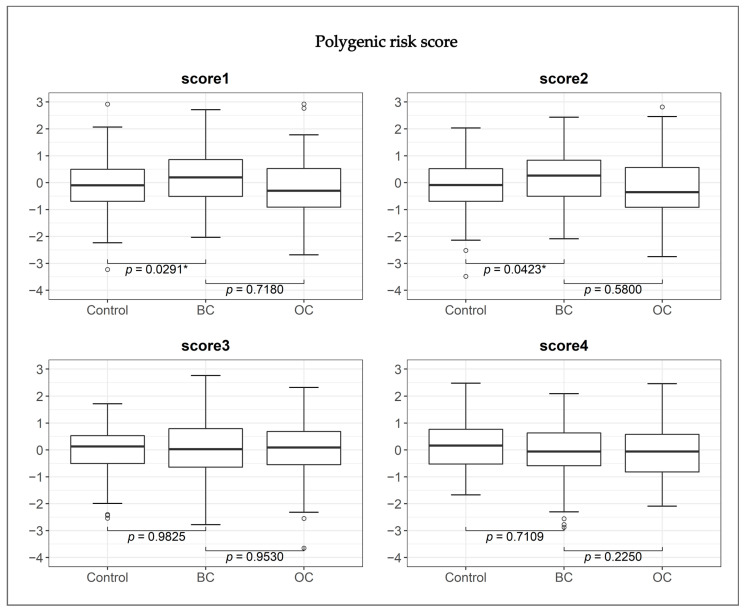
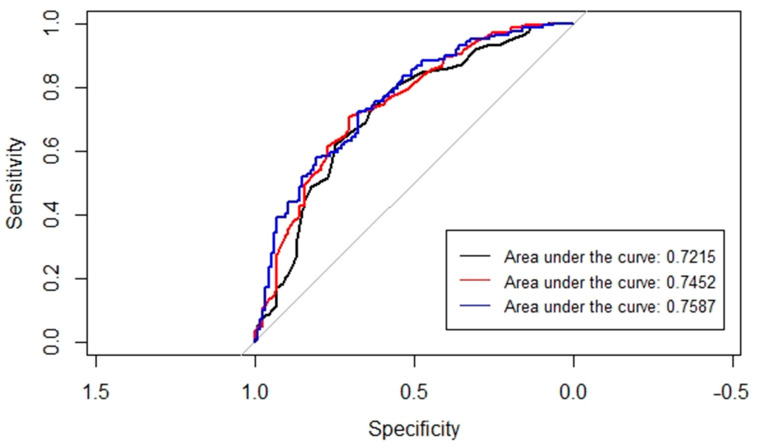
The aim of this study was to assess the power of the polygenic risk score (PRS) in estimating the overall genetic risk of women carrying germline pathogenic variants (PVs) c.4035del or c.5266dup to develop breast (BC) or ovarian cancer (OC) due to additional genetic variations. In this study, PRSs previously developed from two joint models using summary statistics of age-at-onset (BayesW model) and case-control data (BayesRR-RC model) from a genome-wide association analysis (GWAS) were applied to 406 germline PV (c.4035del or c.5266dup) carriers affected by BC or OC, compared with unaffected individuals. A binomial logistic regression model was used to assess the association of PRS with BC or OC development risk. We observed that the best-fitting BayesW PRS model effectively predicted the individual's BC risk (OR = 1.37; 95% CI = 1.03-1.81, = 0.02905 with AUC = 0.759). However, none of the applied PRS models was a good predictor of OC risk. The best-fitted PRS model (BayesW) contributed to assessing the risk of developing BC for germline PV (c.4035del or c.5266dup) carriers and may facilitate more precise and timely patient stratification and decision-making to improve the current BC treatment or even prevention strategies.
本研究的目的是评估多基因风险评分(PRS)在估计携带种系致病性变异(PV)c.4035del或c.5266dup的女性由于其他基因变异而患乳腺癌(BC)或卵巢癌(OC)的总体遗传风险方面的效能。在本研究中,将先前从两个联合模型开发的PRS应用于406名受BC或OC影响的种系PV(c.4035del或c.5266dup)携带者,并与未受影响的个体进行比较,这两个联合模型使用了来自全基因组关联分析(GWAS)的发病年龄汇总统计数据(BayesW模型)和病例对照数据(BayesRR-RC模型)。采用二项逻辑回归模型评估PRS与BC或OC发生风险的关联。我们观察到,拟合效果最佳的BayesW PRS模型有效地预测了个体的BC风险(OR = 1.37;95%CI = 1.03 - 1.81,P = 0.02905,AUC = 0.759)。然而,所应用的PRS模型均不能很好地预测OC风险。拟合效果最佳的PRS模型(BayesW)有助于评估种系PV(c.4035del或c.5266dup)携带者患BC的风险,并可能有助于更精确、及时地对患者进行分层和决策,以改进当前的BC治疗甚至预防策略。