Department of Social Medicine Population and Public Health, School of Medicine, University of California Riverside, Riverside, CA 92521, USA.
Department of Anthropology, University of California Riverside, Riverside, CA 92521, USA.
Int J Environ Res Public Health. 2023 Jun 1;20(11):6023. doi: 10.3390/ijerph20116023.
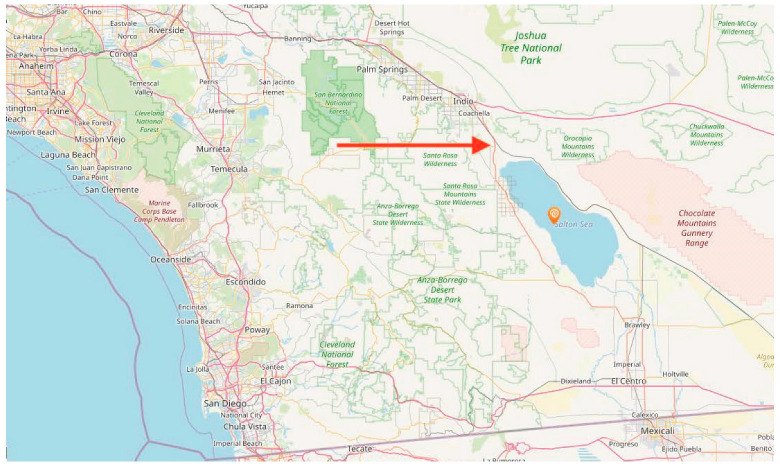
This research investigated Latinx and Indigenous Mexican caregivers' perspectives of the Salton Sea's environment (e.g., dust concentrations and other toxins) on child health conditions. The Salton Sea is a highly saline drying lakebed located in the Inland Southern California desert borderland region and is surrounded by agricultural fields. Children of Latinx and Indigenous Mexican immigrant families are especially vulnerable to the Salton Sea's environmental impact on chronic health conditions due to their proximity to the Salton Sea and structural vulnerability. From September 2020 to February 2021, we conducted semi-structured interviews and focus groups with a total of 36 Latinx and Indigenous Mexican caregivers of children with asthma or respiratory distress living along the Salton Sea. A community investigator trained in qualitative research conducted interviews in Spanish or Purépecha, an indigenous language spoken by immigrants from Michoacán, Mexico. Template and matrix analysis was used to identify themes and patterns across interviews and focus groups. Participants characterized the Salton Sea's environment as toxic, marked by exposure to sulfuric smells, dust storms, chemicals, and fires, all of which contribute to children's chronic health conditions (e.g., respiratory illnesses such as asthma, bronchitis, and pneumonia, co-presenting with allergies and nosebleeds). The findings have important environmental public health significance for structurally vulnerable child populations in the United States and globally.
本研究调查了拉丁裔和墨西哥原住民照顾者对 Salton 海环境(例如灰尘浓度和其他毒素)对儿童健康状况影响的看法。Salton 海是一个高度盐化的干涸湖床,位于南加州内陆沙漠边境地区,周围是农田。拉丁裔和墨西哥原住民移民家庭的儿童由于靠近 Salton 海和结构性脆弱性,特别容易受到 Salton 海对慢性健康状况的环境影响。2020 年 9 月至 2021 年 2 月,我们对 36 名居住在 Salton 海沿岸、患有哮喘或呼吸窘迫症的儿童的拉丁裔和墨西哥原住民照顾者进行了半结构式访谈和焦点小组讨论。一位受过定性研究培训的社区调查员用西班牙语或普埃布拉语(墨西哥米却肯州移民使用的一种土著语言)进行了访谈。模板和矩阵分析用于识别访谈和焦点小组中出现的主题和模式。参与者将 Salton 海的环境描述为有毒的,其特征是接触到硫磺味、沙尘暴、化学品和火灾,所有这些都导致了儿童的慢性健康状况(例如哮喘、支气管炎和肺炎等呼吸道疾病,同时伴有过敏和流鼻血)。这些发现对于美国和全球结构脆弱的儿童群体具有重要的环境公共卫生意义。