University of Glasgow, UK.
Lancaster University, UK.
Soc Sci Med. 2023 Jul;328:115975. doi: 10.1016/j.socscimed.2023.115975. Epub 2023 May 19.
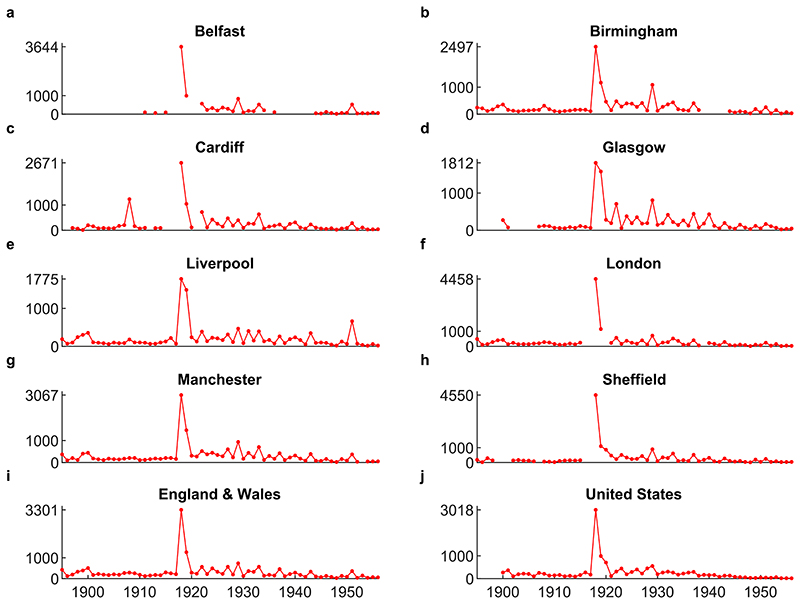
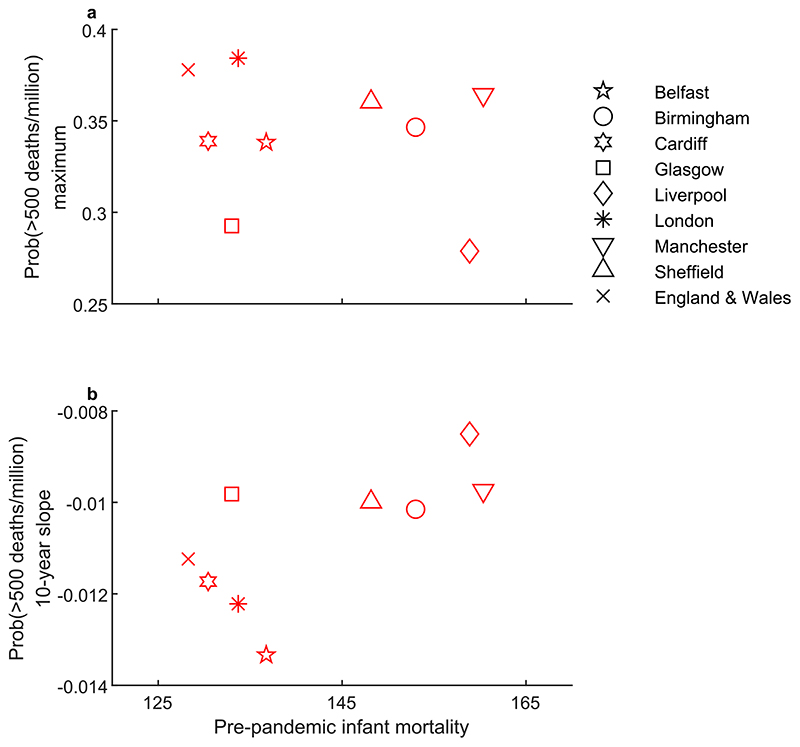
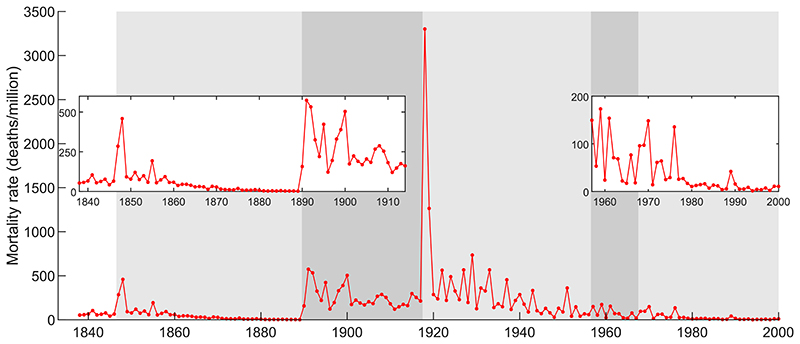
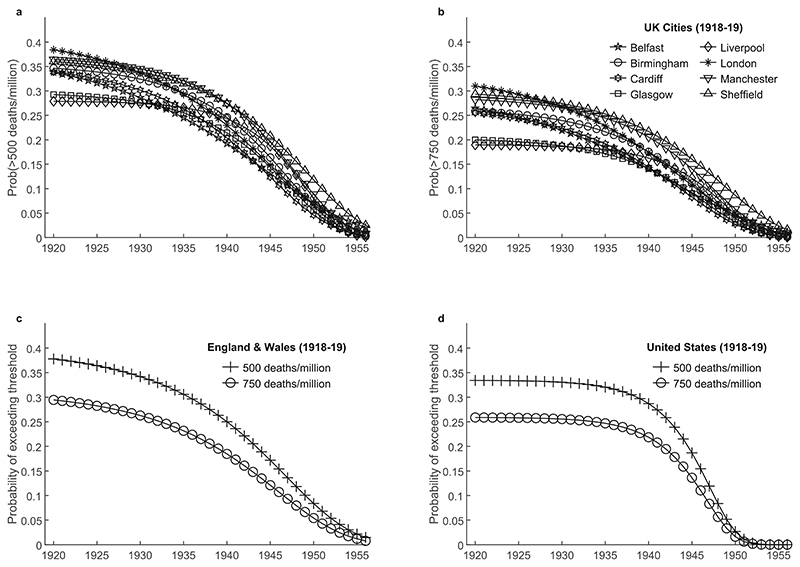
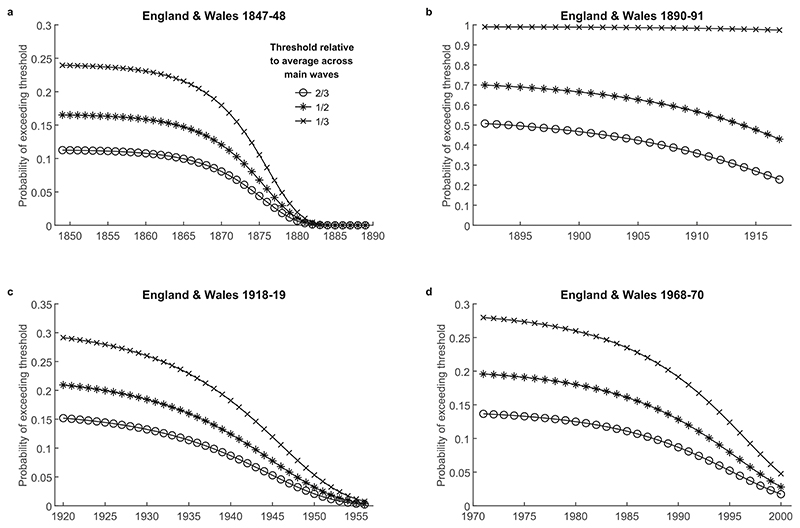
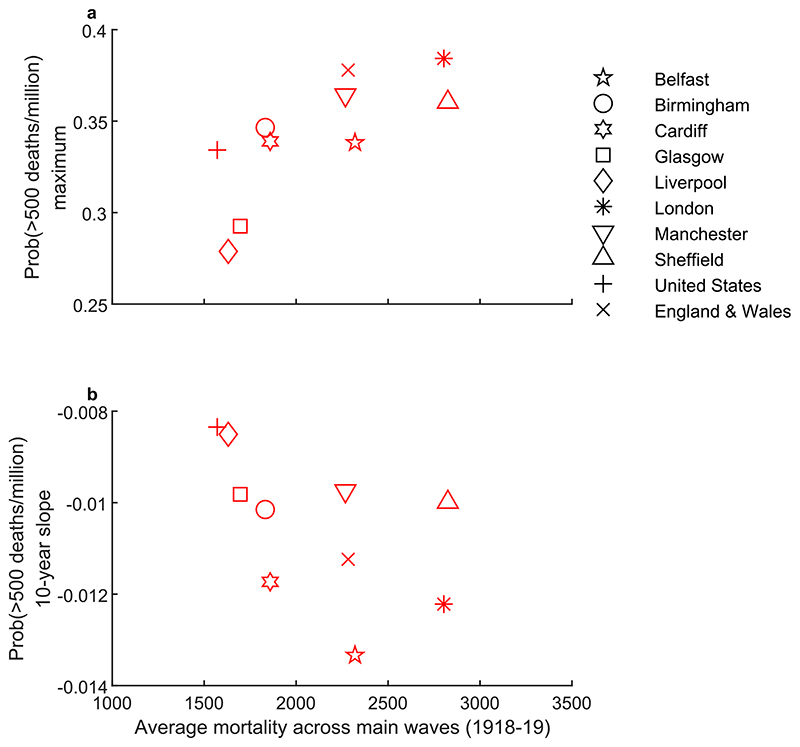
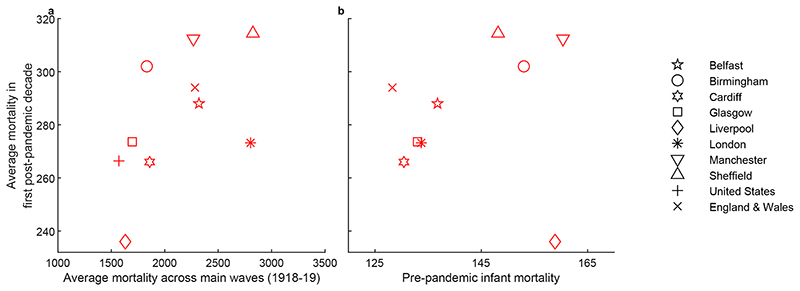
Understanding the extent and evolution of pandemic-induced mortality risk is critical given its wide-ranging impacts on population health and socioeconomic outcomes. We examine empirically the persistence and scale of influenza mortality risk following the main waves of influenza pandemics, a quantitative analysis of which is required to understand the true scale of pandemic-induced risk. We provide evidence from municipal public health records that multiple recurrent outbreaks followed the main waves of the 1918-19 pandemic in eight large cities in the UK, a pattern we confirm using data for the same period in the US and data for multiple influenza pandemics during the period 1838-2000 in England and Wales. To estimate the persistence and scale of latent post-pandemic influenza mortality risk, we model the stochastic process of mortality rates as a sequence of bounded Pareto distributions whose tail indexes evolves over time. Consistently across pandemics and locations, we find that influenza mortality risk remains elevated for around two decades after the main pandemic waves before more rapid convergence to background influenza mortality, amplifying the impact of pandemics. Despite the commonality in duration, there is heterogeneity in the persistence and scale of risk across the cities, suggesting effects of both immunity and socioeconomic conditions.
鉴于大流行导致的死亡率风险对人口健康和社会经济结果的广泛影响,了解其程度和演变至关重要。我们通过实证研究,检验了流感大流行主要浪潮过后流感死亡率风险的持续性和规模,这需要对大流行引发的风险的真实规模进行量化分析。我们从城市公共卫生记录中提供证据,表明在英国的八个大城市中,1918-19 年大流行的主要浪潮之后出现了多次反复爆发,我们使用同期美国的数据和英格兰和威尔士在 1838-2000 年期间发生的多次流感大流行的数据,证实了这一模式。为了估计潜在大流行后流感死亡率风险的持续性和规模,我们将死亡率的随机过程建模为一系列有界帕累托分布的序列,其尾部指数随时间演变。在大流行和地点方面,我们发现流感死亡率风险在主要大流行浪潮之后大约持续二十年仍处于高位,然后才更快地趋同于背景流感死亡率,从而放大了大流行的影响。尽管持续时间存在共性,但各城市的风险持续性和规模存在异质性,这表明免疫和社会经济状况都有影响。