Department of Urology, The Second Affiliated Hospital of Nanjing Medical University, Nanjing, China.
Department of Urology, The First Affiliated Hospital of Nanjing Medical University, Nanjing, China.
Oncol Res. 2023 Apr 10;31(2):181-192. doi: 10.32604/or.2023.028051. eCollection 2023.
Clear-cell renal cell carcinoma (ccRCC) is the most common malignant kidney cancer. However, the tumor microenvironment and crosstalk involved in metabolic reprogramming in ccRCC are not well-understood.
We used The Cancer Genome Atlas to obtain ccRCC transcriptome data and clinical information. The E-MTAB-1980 cohort was used for external validation. The GENECARDS database contains the first 100 solute carrier (SLC)-related genes. The predictive value of SLC-related genes for ccRCC prognosis and treatment was assessed using univariate Cox regression analysis. An SLC-related predictive signature was developed through Lasso regression analysis and used to determine the risk profiles of patients with ccRCC. Patients in each cohort were separated into high- and low-risk groups based on their risk scores. The clinical importance of the signature was assessed through survival, immune microenvironment, drug sensitivity, and nomogram analyses using R software.
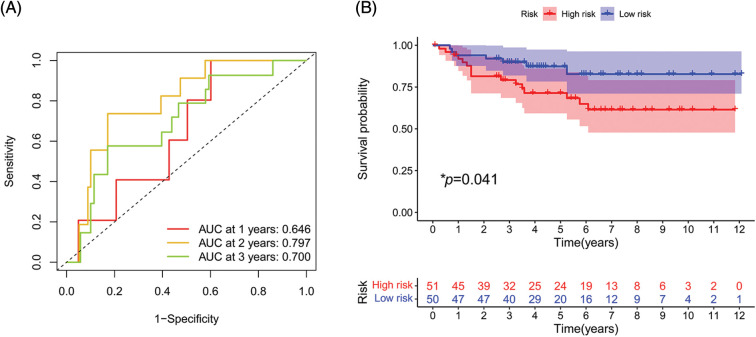
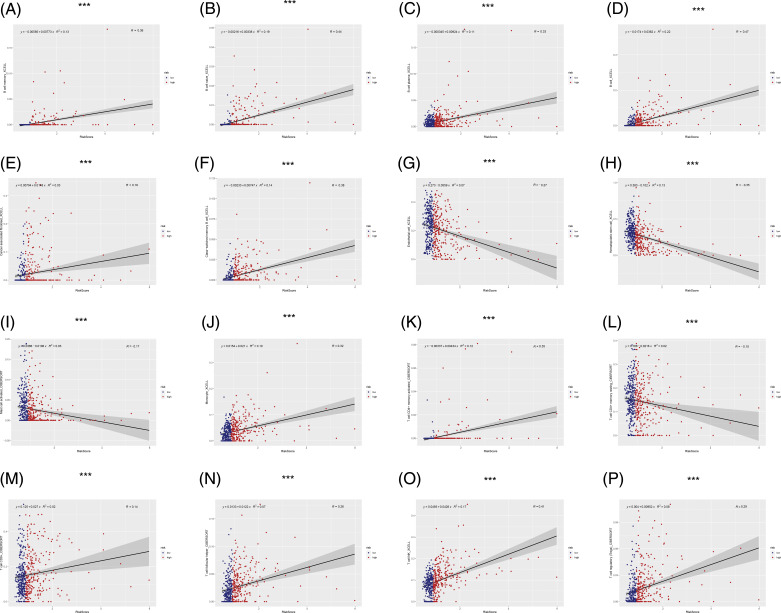
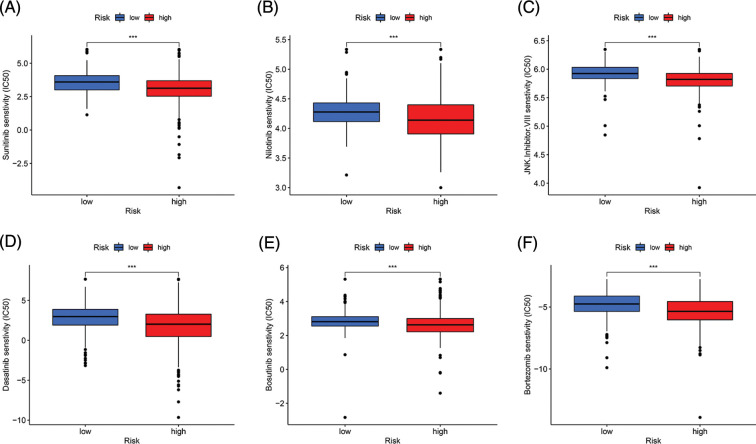
, , , , , , , and comprised the signatures of the eight SLC-related genes. Patients with ccRCC were separated into high- and low-risk groups based on the risk value in the training and validation cohorts; the high-risk group had a significantly worse prognosis ( < 0.001). The risk score was an independent predictive indicator of ccRCC in the two cohorts according to univariate and multivariate Cox regression ( < 0.05). Analysis of the immune microenvironment showed that immune cell infiltration and immune checkpoint gene expression differed between the two groups ( < 0.05). Drug sensitivity analysis showed that compared to the low-risk group, the high-risk group was more sensitive to sunitinib, nilotinib, JNK-inhibitor-VIII, dasatinib, bosutinib, and bortezomib ( < 0.001). Survival analysis and receiver operating characteristic curves were validated using the E-MTAB-1980 cohort.
SLC-related genes have predictive relevance in ccRCC and play roles in the immunological milieu. Our results provide insight into metabolic reprogramming in ccRCC and identify promising treatment targets for ccRCC.
透明细胞肾细胞癌(ccRCC)是最常见的恶性肾肿瘤。然而,ccRCC 中代谢重编程涉及的肿瘤微环境和串扰尚不清楚。
我们使用癌症基因组图谱(TCGA)获取 ccRCC 转录组数据和临床信息。E-MTAB-1980 队列用于外部验证。GENECARDS 数据库包含前 100 个溶质载体(SLC)相关基因。通过单变量 Cox 回归分析评估 SLC 相关基因对 ccRCC 预后和治疗的预测价值。通过 Lasso 回归分析开发 SLC 相关预测特征,并用于确定 ccRCC 患者的风险特征。根据风险评分,每个队列中的患者分为高风险和低风险组。使用 R 软件进行生存、免疫微环境、药物敏感性和列线图分析,评估特征的临床重要性。
筛选出与 ccRCC 预后相关的 8 个 SLC 相关基因,分别为 SLC2A1、SLC2A3、SLC2A4、SLC2A5、SLC2A8、SLC3A2、SLC4A1 和 SLC7A11,构建了由这 8 个 SLC 相关基因组成的预测 signature。根据训练和验证队列中的风险值,ccRCC 患者分为高风险和低风险组;高风险组的预后明显更差(<0.001)。单变量和多变量 Cox 回归分析显示,风险评分是两个队列中 ccRCC 的独立预测指标(<0.05)。免疫微环境分析显示,两组间免疫细胞浸润和免疫检查点基因表达存在差异(<0.05)。药物敏感性分析显示,与低风险组相比,高风险组对舒尼替尼、尼罗替尼、JNK 抑制剂-VIII、达沙替尼、博舒替尼和硼替佐米更为敏感(<0.001)。使用 E-MTAB-1980 队列进行生存分析和接收者操作特征曲线验证。
SLC 相关基因在 ccRCC 中具有预测相关性,并在免疫环境中发挥作用。我们的研究结果为 ccRCC 代谢重编程提供了新的见解,并为 ccRCC 的治疗提供了有前途的靶点。