Sichuan University of Science and Engineering, Zigong, Sichuan, China.
Sci Prog. 2023 Apr-Jun;106(2):368504231181769. doi: 10.1177/00368504231181769.
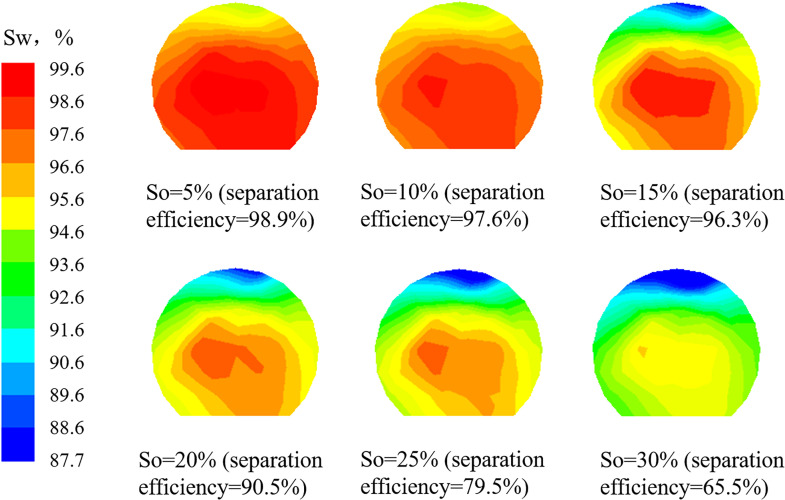
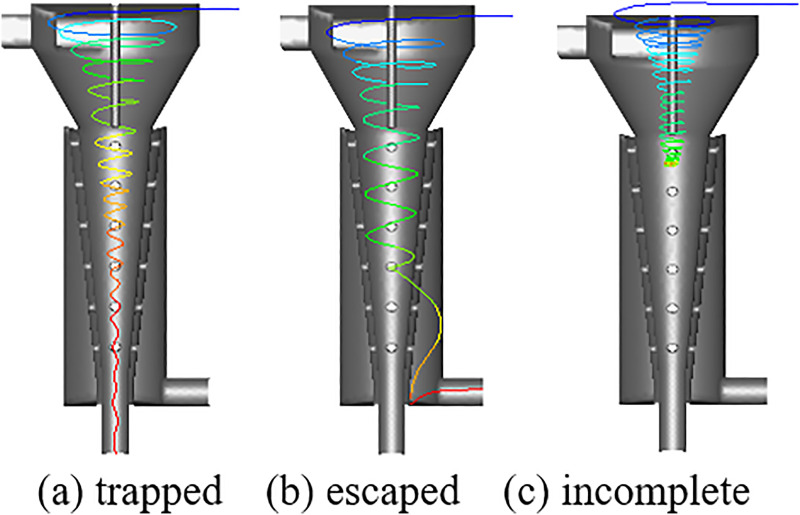
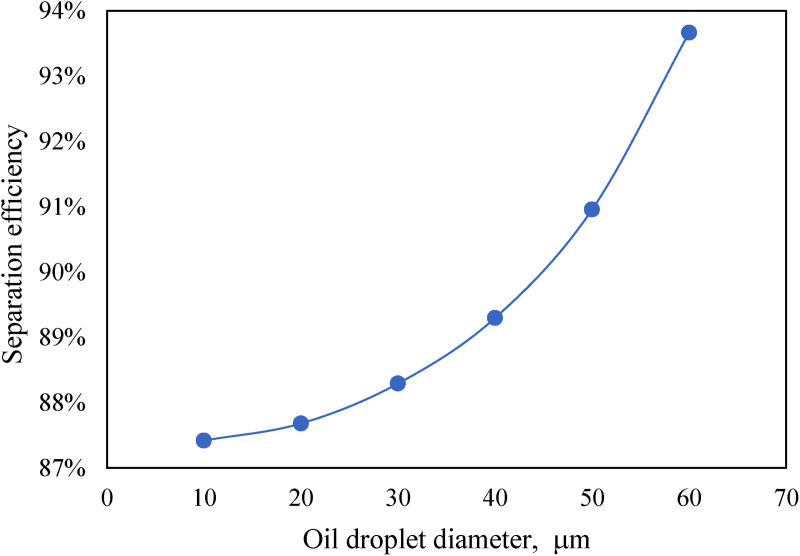
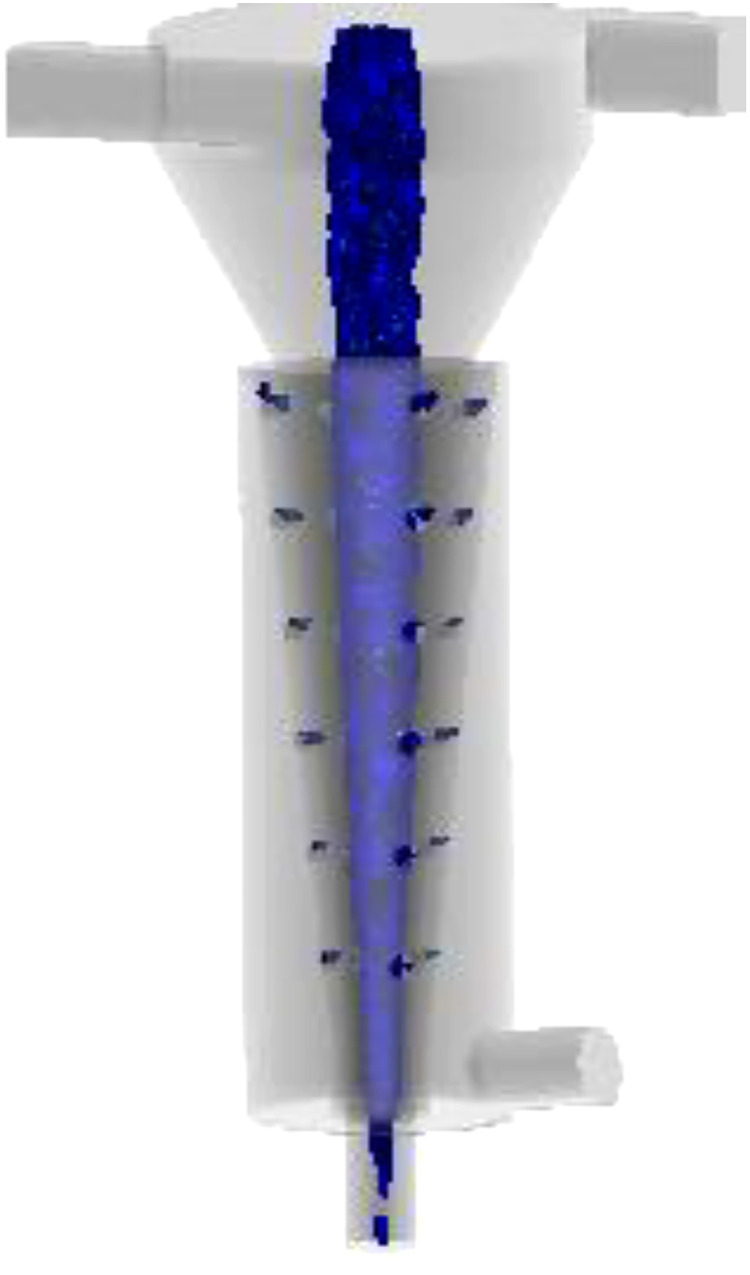
Cyclone separation is an effective method for the treatment of oily wastewater from offshore oil production platforms. There is a lack of research on the impact of dispersion on the separation efficiency of current liquid-liquid separation hydrocyclones. A numerical simulation method was used to study the effect of the oil droplet characteristic parameters on the separation efficiency of a hydrocyclone oil removal device. An analysis of the trajectory of oil droplets revealed the oil removal mechanism of the hydrocyclone oil removal device: under the guidance of tangential velocity, the oil-water mixed fluid in the equipment generates different centrifugal forces due to the density difference, so oil and water adopt different flow paths to flow out. The effects of the particle diameter, velocity, and concentration of the inlet oil droplet on the separation efficiency were investigated. The droplet size had a positive effect on the separation efficiency, the oil concentration had a negative effect on the separation efficiency, and the speed of the oil drop was directly proportional to the separation efficiency within a certain range. These studies improved the basis for the efficient application of hydrocyclone oil removal devices.
旋风分离是处理海上采油平台含油废水的有效方法。目前对于分散作用对现有液-液分离水力旋流器分离效率的影响研究还比较缺乏。采用数值模拟方法研究了液滴特征参数对水力旋流器除油装置分离效率的影响。通过分析液滴轨迹揭示了水力旋流器除油装置的除油机理:在切向速度的引导下,设备中的油水混合流体由于密度差异而产生不同的离心力,因此油和水采用不同的流动路径流出。研究了入口液滴的粒径、速度和浓度对分离效率的影响。液滴尺寸对分离效率有积极影响,油浓度对分离效率有负面影响,在一定范围内油滴速度与分离效率成正比。这些研究为水力旋流器除油装置的高效应用提供了依据。