CNRS, Université de Bordeaux, UMR5199 PACEA Bâtiment B2 Allée Geoffroy Saint Hilaire, 33615, Pessac, France.
Institute of Archaeology and Ethnography, Siberian Branch, Russian Academy of Sciences, 17 Lavrentiev Ave., Novosibirsk, Russia, 630090.
Sci Rep. 2023 Jun 12;13(1):9545. doi: 10.1038/s41598-023-36140-1.
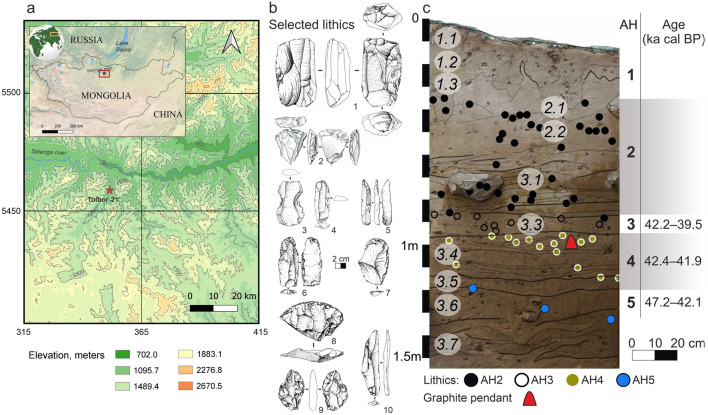
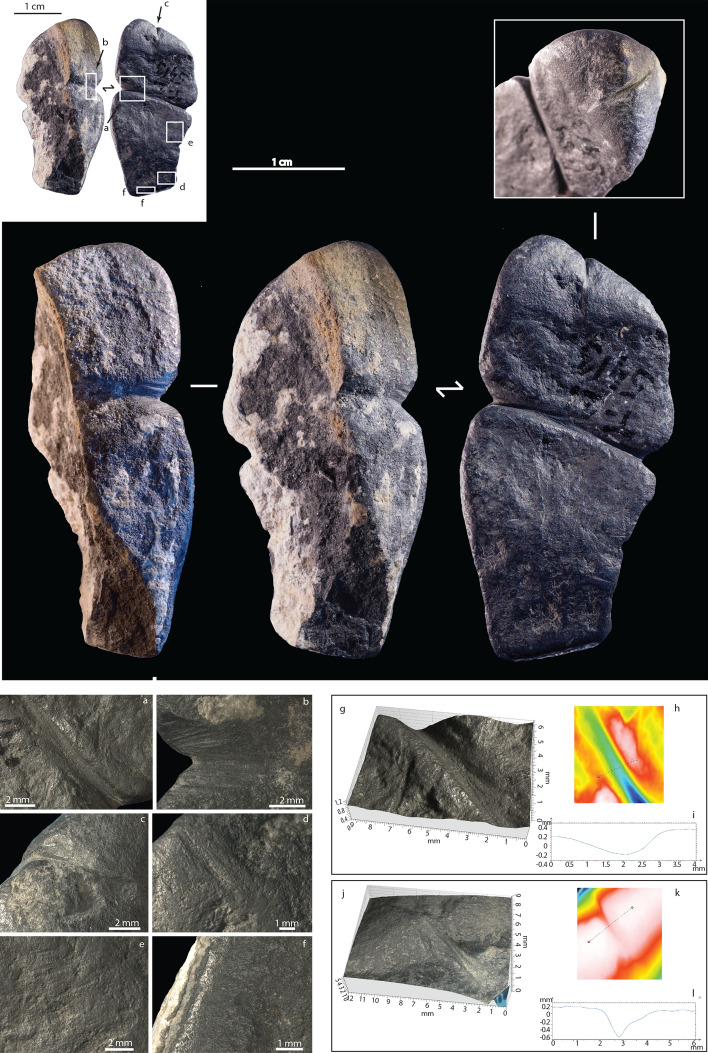
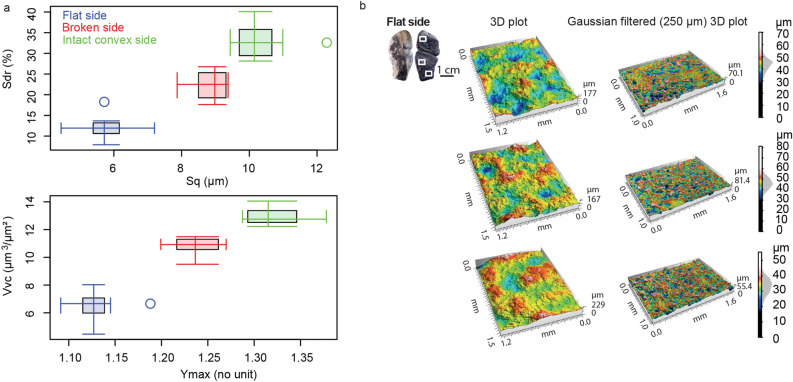
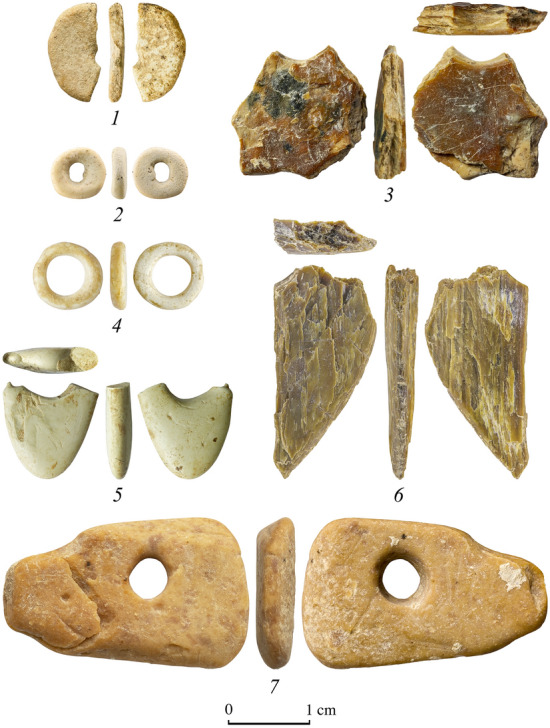
Figurative depictions in art first occur ca. 50,000 years ago in Europe, Africa, and Southeast Asia. Considered by most as an advanced form of symbolic behavior, they are restricted to our species. Here, we report a piece of ornament interpreted as a phallus-like representation. It was found in a 42,000 ca.-year-old Upper Paleolithic archaeological layer at the open-air archaeological site of Tolbor-21, in Mongolia. Mineralogical, microscopic, and rugosimetric analyses points toward the allochthonous origin of the pendant and a complex functional history. Three-dimensional phallic pendants are unknown in the Paleolithic record, and this discovery predates the earliest known sexed anthropomorphic representation. It attests that hunter-gatherer communities used sex anatomical attributes as symbols at a very early stage of their dispersal in the region. The pendant was produced during a period that overlaps with age estimates for early introgression events between Homo sapiens and Denisovans, and in a region where such encounters are plausible.
艺术中的具象描绘大约在 5 万年前首次出现在欧洲、非洲和东南亚。它们被大多数人认为是一种高级的象征性行为,仅限于人类。在这里,我们报告了一件被解释为类似阴茎的装饰品。它是在蒙古露天考古遗址 Tolbor-21 的旧石器时代晚期考古层中发现的,距今约 4.2 万年。矿物学、微观和粗糙度分析表明,吊坠具有异地起源和复杂的功能历史。在旧石器时代的记录中,三维阴茎吊坠是未知的,而这一发现早于已知最早的有性别的拟人化代表。这证明了狩猎采集社区在其早期向该地区扩散的阶段就已经将性解剖特征用作象征。吊坠的制作时间与智人和丹尼索瓦人早期基因混合事件的年龄估计相吻合,并且在这样的相遇可能发生的地区。