Max Planck Institute for Evolutionary Anthropology, Leipzig, Germany.
Department of Biology, San Francisco State University, San Francisco, CA, USA.
Nature. 2023 Jun;618(7964):328-332. doi: 10.1038/s41586-023-06035-2. Epub 2023 May 3.
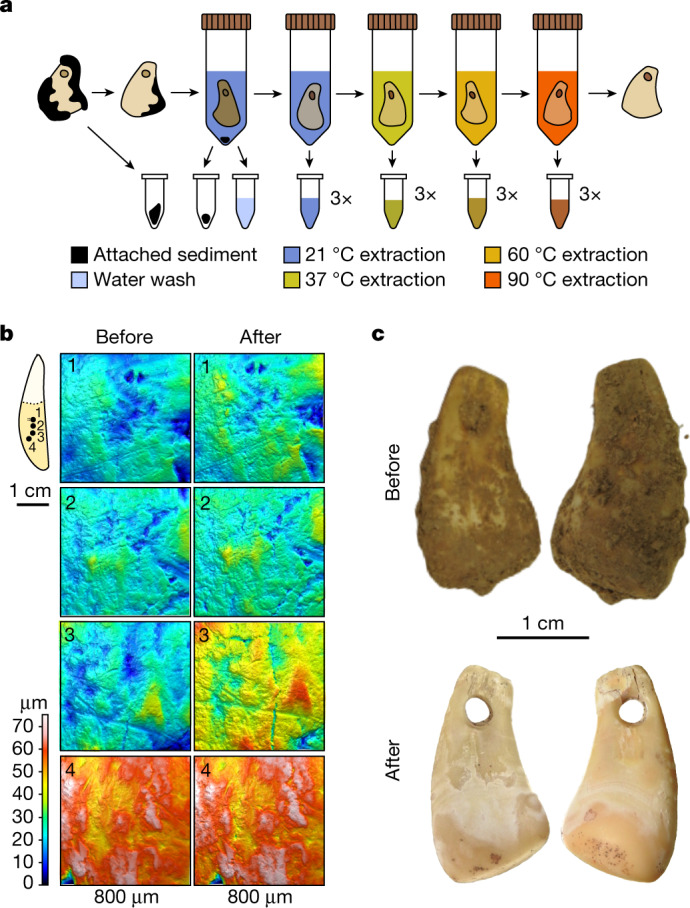
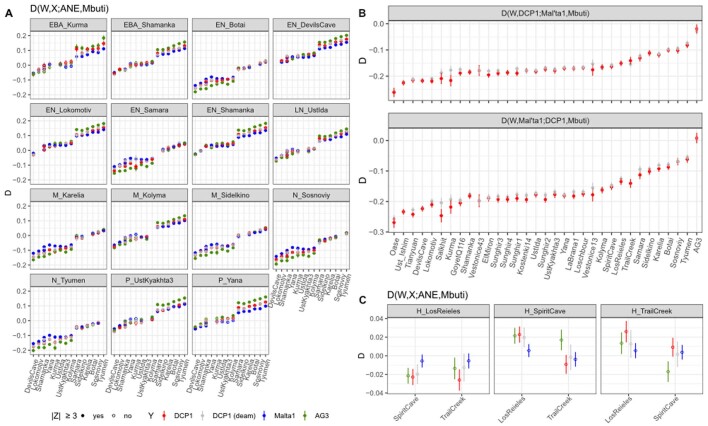
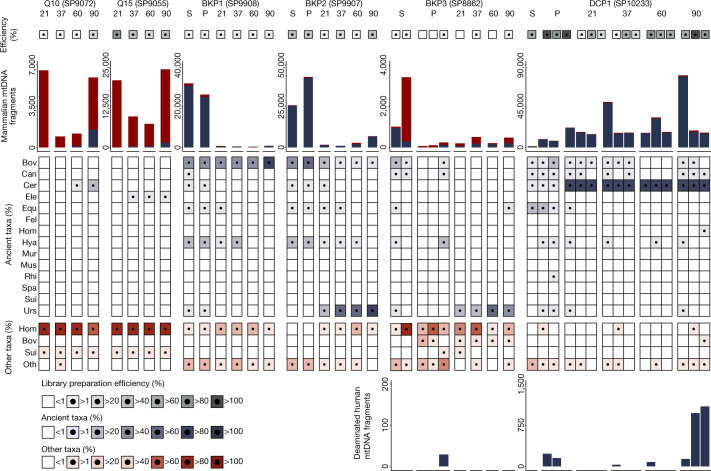
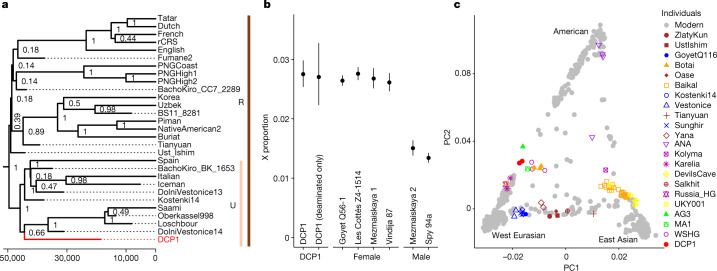
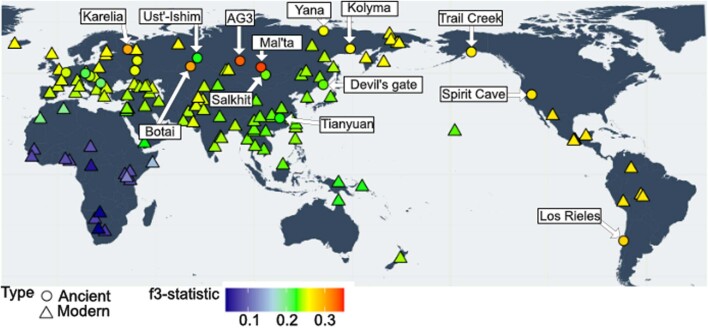
Artefacts made from stones, bones and teeth are fundamental to our understanding of human subsistence strategies, behaviour and culture in the Pleistocene. Although these resources are plentiful, it is impossible to associate artefacts to specific human individuals who can be morphologically or genetically characterized, unless they are found within burials, which are rare in this time period. Thus, our ability to discern the societal roles of Pleistocene individuals based on their biological sex or genetic ancestry is limited. Here we report the development of a non-destructive method for the gradual release of DNA trapped in ancient bone and tooth artefacts. Application of the method to an Upper Palaeolithic deer tooth pendant from Denisova Cave, Russia, resulted in the recovery of ancient human and deer mitochondrial genomes, which allowed us to estimate the age of the pendant at approximately 19,000-25,000 years. Nuclear DNA analysis identifies the presumed maker or wearer of the pendant as a female individual with strong genetic affinities to a group of Ancient North Eurasian individuals who lived around the same time but were previously found only further east in Siberia. Our work redefines how cultural and genetic records can be linked in prehistoric archaeology.
石器、骨器和牙齿制品对于我们理解更新世人类的生存策略、行为和文化至关重要。尽管这些资源丰富,但如果它们不是在这个时期罕见的埋葬中发现的,就不可能将其与可以通过形态或遗传特征进行识别的特定人类个体联系起来。因此,我们根据生物性别或遗传祖先来辨别更新世个体的社会角色的能力是有限的。在这里,我们报告了一种非破坏性的方法,用于逐渐释放古代骨骼和牙齿制品中捕获的 DNA。该方法应用于俄罗斯丹尼索瓦洞穴的一件旧石器时代鹿牙吊坠,成功恢复了古代人类和鹿的线粒体基因组,这使我们能够估计该吊坠的年龄约为 19000-25000 年。核 DNA 分析确定了吊坠的制作者或佩戴者是一位女性个体,她与生活在同一时期的一组古代北欧亚个体具有强烈的遗传亲缘关系,但此前仅在西伯利亚东部发现过这些个体。我们的工作重新定义了史前考古学中如何将文化和遗传记录联系起来。