Tianjin Medical University Nankai Hospital, Tianjin, 300070, China.
Section for HepatoPancreatoBiliary Surgery, Department of General Surgery, The Third People's Hospital of Chengdu, Affiliated Hospital of Southwest Jiaotong University and The Second Affiliated Hospital of Chengdu, Chongqing Medical University, Chengdu, 610031, China.
Sci Rep. 2023 Jun 14;13(1):9657. doi: 10.1038/s41598-023-33915-4.
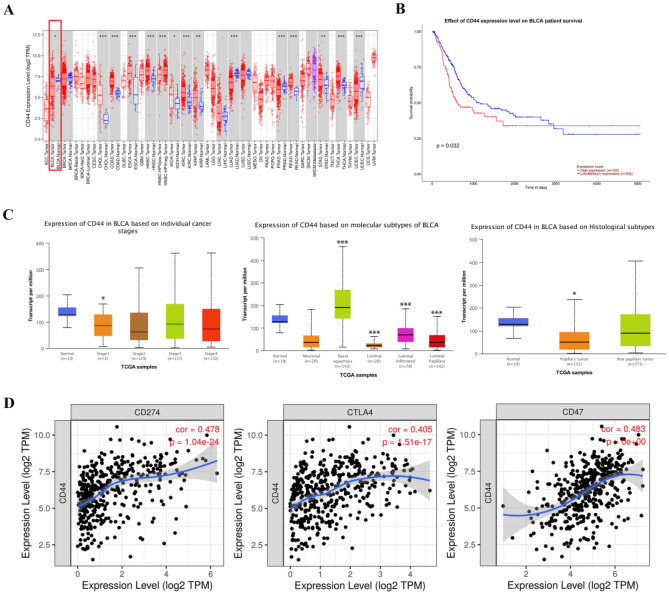
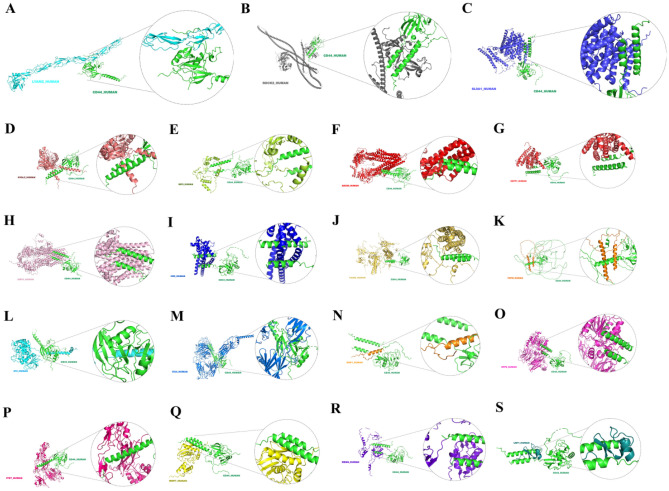
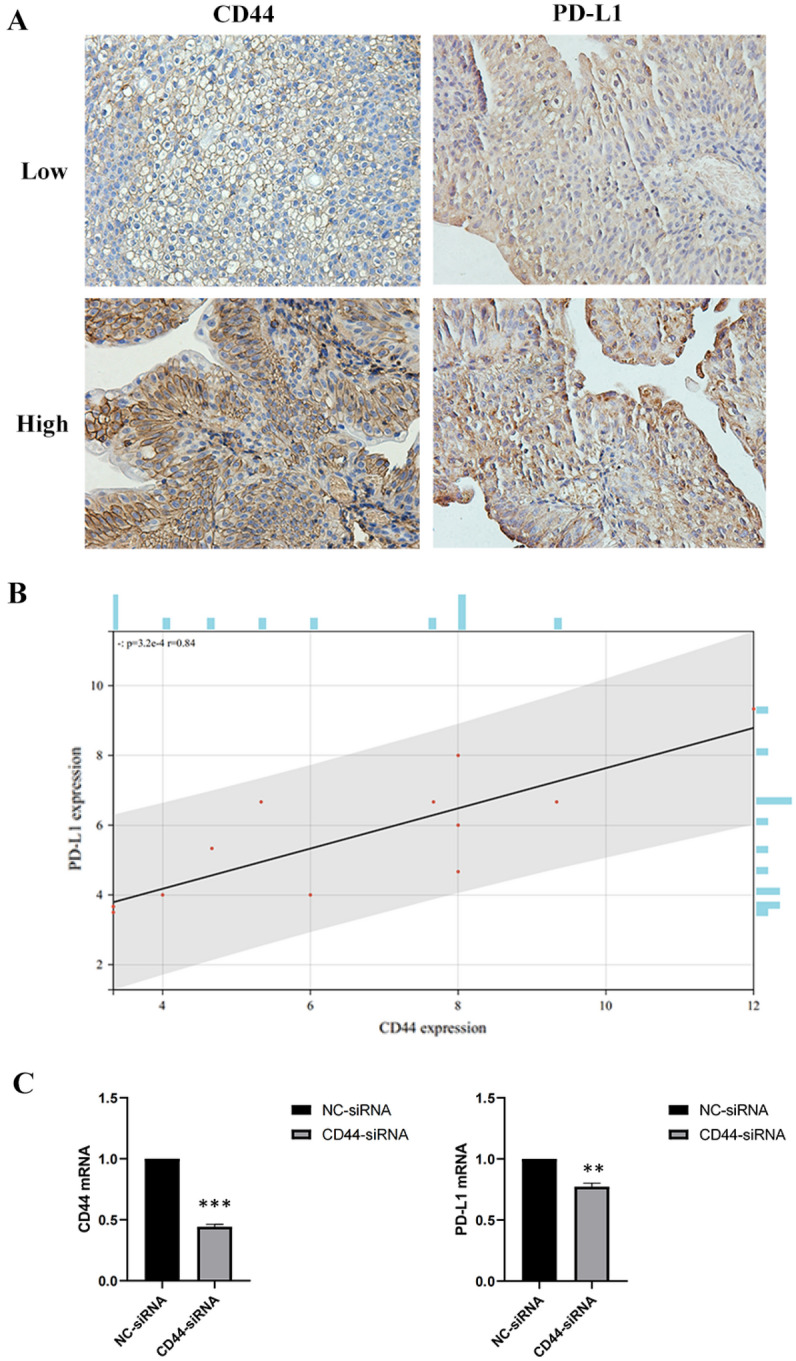
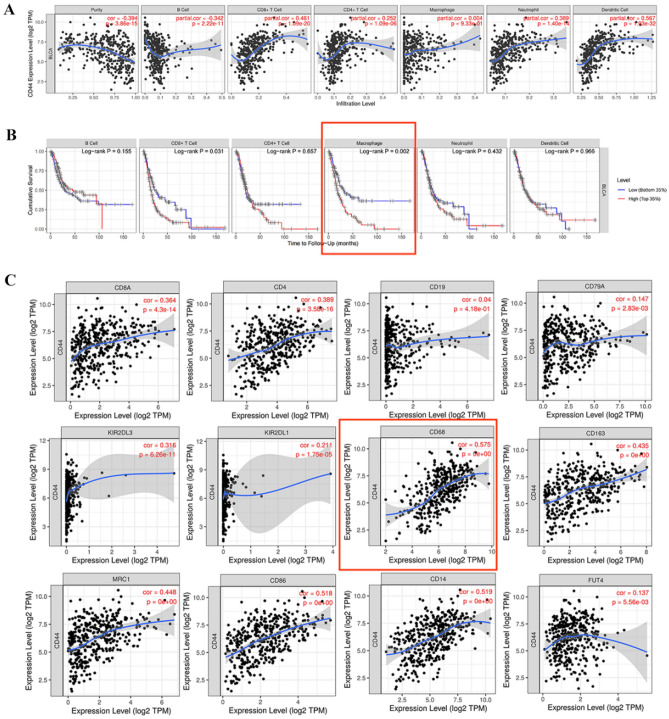
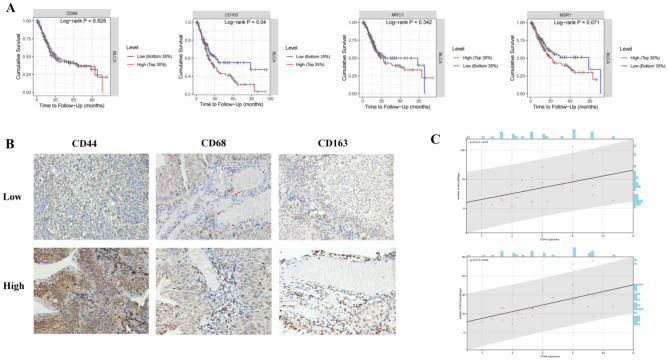
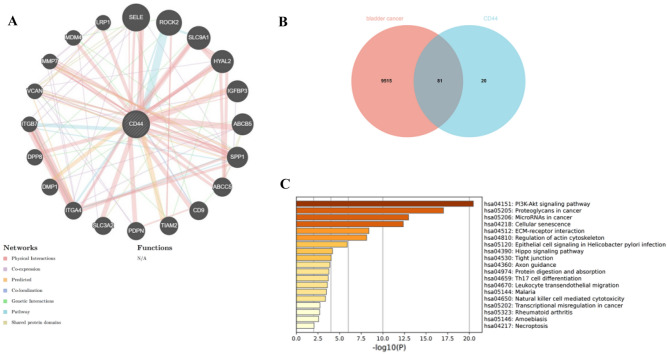
CD44 plays a key role in the communication of CSCs with the microenvironment and the regulation of stem cell properties. UALCAN was used to analyze the expression of CD44 in bladder cancer (BLCA) and normal tissue. The UALCAN was utilized to analyze the prognostic value of CD44 in BLCA. The TIMER database was used to explore the relationship between CD44 and PD-L1; CD44 and tumor-infiltrating immune cells. The regulatory effect of CD44 on PD-L1 was verified by cell experiments in vitro. IHC confirmed the results of the bioinformatics analysis. GeneMania and Metascape were used to analyze protein-protein interaction (PPI) investigations and functional enrichment analysis. We found that BLCA patients with high CD44 expression had worse survival than those with low CD44 expression (P < 0.05). IHC and the TIMER database results showed that CD44 expression was positively correlated with PD-L1 expression (P < 0.05). At the cellular level, the expression of PD-L1 was significantly inhibited after CD44 expression was inhibited by siRNA. Immune infiltration analysis showed that CD44 expression levels in BLCA were significantly correlated with immune infiltration levels of different immune cells. IHC staining results further confirmed that the expression of CD44 in tumor cells was positively associated with the number of CD68 macrophages and CD163 macrophages (P < 0.05). Our results suggest that CD44 is a positive regulator of PD-L1 in BLCA and may be a key regulator of tumor macrophages infiltration and may be involved in M2 macrophage polarization. Our study provided new insights into the prognosis and immunotherapy of BLCA patients through macrophage infiltration and immune checkpoints.
CD44 在 CSCs 与微环境的通讯以及干细胞特性的调节中发挥关键作用。UALCAN 用于分析膀胱癌 (BLCA) 和正常组织中 CD44 的表达。UALCAN 用于分析 CD44 在 BLCA 中的预后价值。TIMER 数据库用于探讨 CD44 与 PD-L1 之间的关系;CD44 与肿瘤浸润免疫细胞。通过体外细胞实验验证 CD44 对 PD-L1 的调控作用。免疫组化 (IHC) 确认了生物信息学分析的结果。GeneMania 和 Metascape 用于分析蛋白质-蛋白质相互作用 (PPI) 研究和功能富集分析。我们发现,CD44 高表达的 BLCA 患者的生存状况比 CD44 低表达的患者差 (P<0.05)。IHC 和 TIMER 数据库的结果表明,CD44 表达与 PD-L1 表达呈正相关 (P<0.05)。在细胞水平上,用 siRNA 抑制 CD44 表达后,PD-L1 的表达明显受到抑制。免疫浸润分析表明,BLCA 中 CD44 的表达水平与不同免疫细胞的免疫浸润水平显著相关。IHC 染色结果进一步证实,肿瘤细胞中 CD44 的表达与 CD68 巨噬细胞和 CD163 巨噬细胞的数量呈正相关 (P<0.05)。我们的研究结果表明,CD44 是 BLCA 中 PD-L1 的正调控因子,可能是肿瘤巨噬细胞浸润的关键调节剂,并可能参与 M2 巨噬细胞极化。我们的研究通过巨噬细胞浸润和免疫检查点为 BLCA 患者的预后和免疫治疗提供了新的见解。